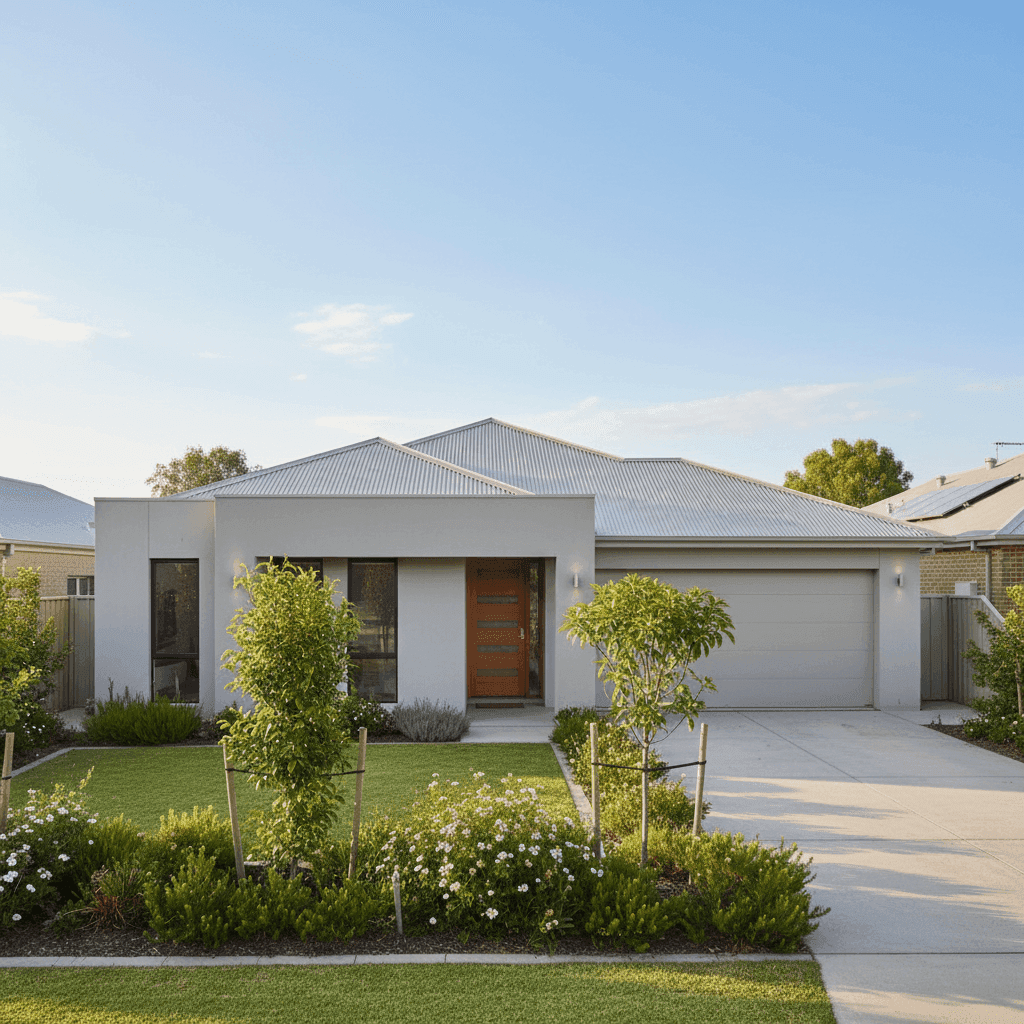
If you own a free standing home in North Wagga Wagga, NSW 2650, you've probably wondered whether you're paying a fair price for home insurance — or whether there's a better deal out there. This article breaks down a real home and contents insurance quote for a three-bedroom, two-bathroom property in the suburb, compares it against local, state, and national benchmarks, and offers practical tips to help you get the most from your cover.
---
Is This Quote Fair?
The quote in question comes in at $2,740 per year (or roughly $256 per month) for a combined home and contents policy — $550,000 in building cover and $50,000 for contents, each with a $2,000 excess. CoverClub's pricing algorithm rates this as CHEAP, meaning it sits well below the average for the area.
To put that in perspective: the suburb average premium in North Wagga Wagga sits at a striking $14,073 per year, with a median of $14,698. That means this quote is coming in at less than one-fifth of what many local homeowners are paying. Even at the 25th percentile — the cheapest quarter of quotes in the suburb — premiums average around $9,293 per year. At $2,740, this policy is exceptional value by almost any local measure.
It's worth noting that the suburb sample size for this comparison is 16 quotes, so while the data is directionally useful, a larger dataset would paint an even clearer picture. That said, the gap between this quote and the local average is so substantial that the "cheap" rating is well justified.
---
How North Wagga Wagga Compares
Zooming out beyond the suburb reveals some interesting patterns. Check out the full North Wagga Wagga insurance stats for a deeper look at how premiums are distributed locally.
| Benchmark | Premium |
|---|---|
| This quote | $2,740/yr |
| Suburb average | $14,073/yr |
| Suburb median | $14,698/yr |
| NSW average | $9,528/yr |
| NSW median | $3,770/yr |
| National average | $5,347/yr |
| National median | $2,764/yr |
| LGA (Narrandera) average | $2,038/yr |
Across all of NSW, the average home insurance premium is $9,528 per year, though the median drops considerably to $3,770 — a sign that a relatively small number of very expensive policies pull the average upward. Nationally, the average sits at $5,347, with a median of $2,764.
This quote of $2,740 actually falls just below the national median, which is a strong result. Interestingly, the LGA average for the Narrandera local government area is $2,038 — even lower than this quote — suggesting that properties across the broader region tend to attract relatively affordable premiums compared to the rest of NSW.
The elevated suburb averages in North Wagga Wagga are likely influenced by flood risk. The suburb sits on the floodplain of the Murrumbidgee River, and flood-affected properties can attract dramatically higher premiums, which skews the local averages upward. A property that sits on higher ground or outside a designated flood zone — as appears to be the case here — can secure cover at a fraction of what flood-exposed neighbours might pay.
---
Property Features That Affect Your Premium
Several characteristics of this property work in its favour from an insurance pricing perspective.
Concrete external walls are among the most resilient building materials available. They offer excellent resistance to fire, impact, and general weathering, which insurers tend to reward with lower premiums compared to timber-framed or weatherboard homes.
Steel/Colorbond roofing is another positive. Colorbond is purpose-built for the Australian climate — it handles heat, heavy rain, and high winds well, and it's far less susceptible to storm damage than older roofing materials like terracotta tiles. Insurers generally view it favourably.
Slab foundation construction is standard for the region and typically presents fewer risks than older pier-and-beam or strip footings, particularly in areas with reactive soils.
Tiled flooring throughout is another minor plus — tiles are durable, water-resistant, and far less prone to damage from leaks or flooding than carpet or timber floors.
The ducted climate control system does add some value to the property and, by extension, the contents and building sum insured — but it's a fairly standard inclusion in modern homes and unlikely to significantly affect the premium on its own.
On the risk-reduction side, the absence of a pool and solar panels keeps the profile simple. Pools introduce liability considerations, and solar installations (particularly older ones) can be a fire risk or complicate claims — so not having either is a mild positive.
The property was built in 2002, placing it in a sweet spot: modern enough to meet contemporary building codes, but not so new that it carries the premium costs sometimes associated with high-end finishes or cutting-edge systems.
---
Tips for Homeowners in North Wagga Wagga
1. Confirm your flood zone status Given how dramatically flood risk affects premiums in this suburb, it's worth confirming exactly where your property sits relative to flood mapping. If you're outside a designated flood zone, make sure your insurer knows — and consider whether you need flood cover included or excluded from your policy.
2. Review your sum insured regularly Building costs have risen sharply across Australia in recent years. Make sure your $550,000 building sum insured still reflects what it would actually cost to rebuild your home today. Underinsurance is one of the most common — and costly — mistakes homeowners make.
3. Consider your excess carefully Both the building and contents excess on this policy sit at $2,000. A higher excess generally means a lower premium, but you'll need to be comfortable covering that amount out of pocket if you need to make a claim. Review your financial position and adjust accordingly.
4. Don't set and forget Insurance markets shift, and so do your circumstances. Even if this quote is excellent value right now, it's worth comparing at renewal time each year. A policy that was competitive 12 months ago may not be the best option today — and loyalty doesn't always pay in the insurance world.
---
Ready to Compare?
Whether you're renewing your current policy or shopping for cover on a new property, it pays to see what's available. Get a home insurance quote through CoverClub and see how your premium stacks up against the suburb, state, and national benchmarks — in minutes, for free.