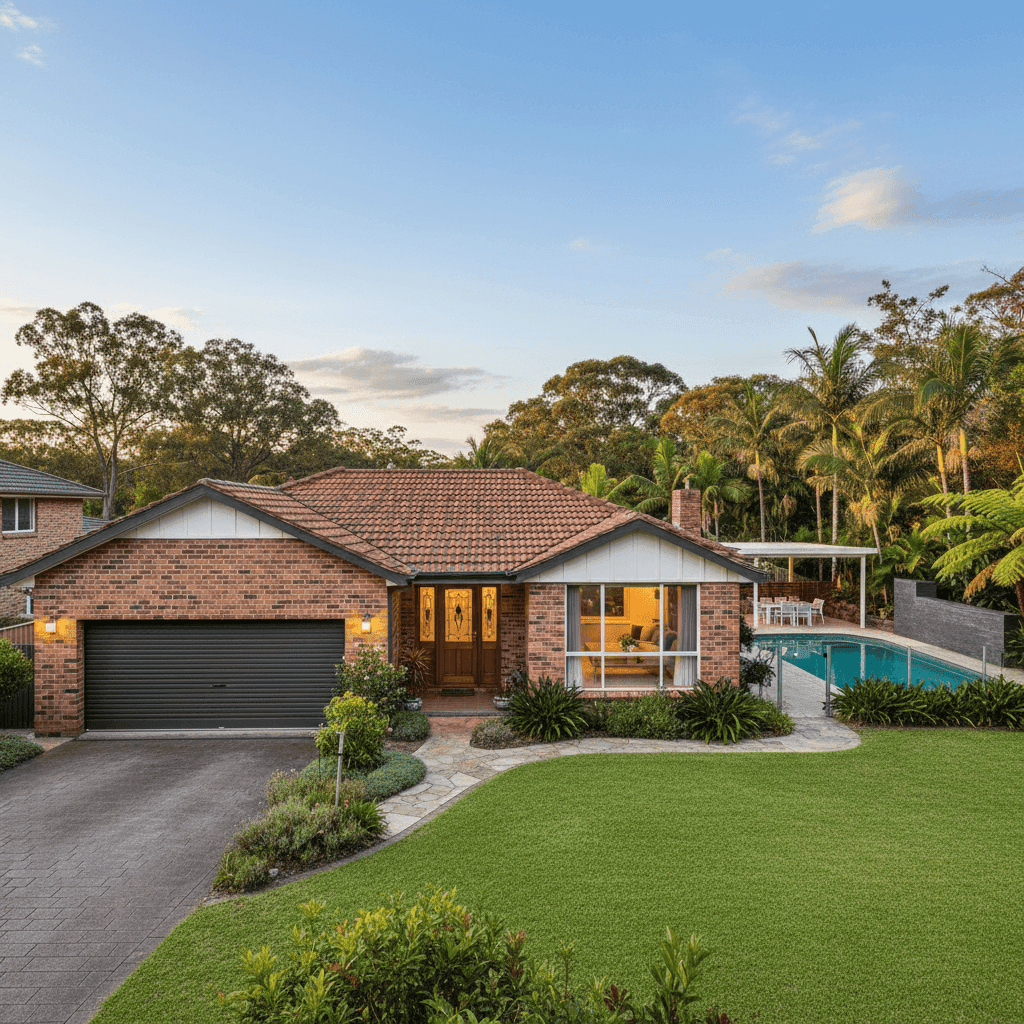
North Wahroonga is one of Sydney's leafy Upper North Shore suburbs — a well-established residential pocket known for its generous block sizes, mature tree canopy, and a strong mix of post-war and mid-century homes. If you own a free standing home here, understanding what you should be paying for building insurance is genuinely worthwhile, particularly given how much premiums can vary across NSW and nationally. This article breaks down a real building-only insurance quote for a five-bedroom, three-bathroom brick veneer home in North Wahroonga (postcode 2076), and puts it in context so you can make a more informed decision.
---
Is This Quote Fair?
The quote in question comes in at $4,437 per year (or $425 per month) for building-only cover, with a $1,000 building excess and a sum insured of $1,126,000. Our price rating for this quote is CHEAP — below average — which is a meaningful result worth unpacking.
To be clear, "cheap" here doesn't mean cut-price or inadequate cover. It means the premium sits below what most comparable homeowners are paying, both across NSW and nationally. For a property of this size and construction quality, that's a genuinely positive outcome.
When you look at the NSW state average premium of $9,528 per year, this quote is less than half that figure. Even against the NSW median of $3,770, the quote is only modestly higher — and given the property's size (235 sqm), above-average fittings, and a pool, paying close to the median is a strong result.
At the national level, the average premium sits at $5,347 per year, with a national median of $2,764. This quote lands between those two benchmarks, which again reflects well on the pricing — especially for a larger, well-appointed home.
---
How North Wahroonga Compares
Suburb-level comparison data isn't available for North Wahroonga specifically, but the Hornsby LGA average premium of $3,958 per year gives us a useful local anchor. This quote, at $4,437, sits modestly above the LGA average — roughly 12% higher — which is entirely reasonable given the property's size and features.
You can explore more detailed North Wahroonga insurance statistics here, including how premiums in the 2076 postcode trend over time.
Here's a quick snapshot of how this quote stacks up:
| Benchmark | Premium |
|---|---|
| This Quote | $4,437/yr |
| Hornsby LGA Average | $3,958/yr |
| NSW State Median | $3,770/yr |
| National Average | $5,347/yr |
| NSW State Average | $9,528/yr |
The wide gap between the NSW average and median is worth noting. It signals that a relatively small number of high-premium properties — often in flood, bushfire, or storm-prone areas — are pulling the state average upward significantly. North Wahroonga, sitting in a comparatively lower-risk zone, benefits from that distinction.
---
Property Features That Affect Your Premium
Several characteristics of this property directly influence how insurers price the risk. Understanding these factors helps you see why your premium lands where it does — and where there might be room to move.
Brick Veneer Construction Brick veneer walls are generally viewed favourably by insurers. They offer solid fire resistance and structural durability compared to timber-framed or weatherboard exteriors, which can translate into more competitive premiums. For a home built in 1970, brick veneer also suggests the structure has aged well and is unlikely to carry the elevated risk profile of older fibrous cement or asbestos-containing materials.
Tiled Roof A tiled roof is another positive signal for insurers. Tiles are durable, fire-resistant, and perform well in storm conditions — all factors that reduce the likelihood of a significant claim. They do add weight to the structure, but on a slab foundation, that's rarely a concern.
Slab Foundation Concrete slab foundations are common in post-war Australian homes and are generally considered low-risk from an insurer's perspective. They offer good resistance to movement and are less susceptible to pest-related damage than timber stumped foundations.
Timber and Laminate Flooring While attractive and common in above-average quality homes, timber and laminate flooring can be costly to repair or replace after water damage events. This may factor into the sum insured calculation and, to a lesser extent, the premium — particularly for building-only policies where internal fixtures are covered.
Swimming Pool The presence of a pool adds some complexity to a building insurance policy. Pools themselves can be damaged by ground movement, storm events, or equipment failure, and some policies include pool cover as standard while others treat it as an optional extra. It's worth confirming exactly what your policy covers in relation to the pool structure and associated equipment.
Above-Average Fittings Higher-quality fittings — think stone benchtops, quality cabinetry, premium tapware — increase the cost to rebuild or repair, which is reflected in the $1,126,000 sum insured. Getting this figure right is critical; underinsurance is one of the most common and costly mistakes homeowners make.
---
Tips for Homeowners in North Wahroonga
1. Review Your Sum Insured Annually Construction costs in NSW have risen significantly over recent years. A sum insured set even two or three years ago may no longer reflect current rebuild costs. Use a building cost calculator or ask your insurer to review the figure — particularly for a larger home with above-average fittings.
2. Understand What Your Policy Covers for the Pool Not all building policies automatically include the pool structure and filtration equipment. Read your Product Disclosure Statement carefully and confirm whether storm damage, ground movement, or accidental damage to the pool is included or needs to be added.
3. Consider the Bushfire Risk Context Parts of the Upper North Shore and Hornsby LGA sit in or near bushfire-prone areas. Check your property's bushfire attack level (BAL) rating with your local council, and ensure your insurer is aware of it. Some policies exclude or limit cover for bushfire damage if the risk hasn't been properly disclosed.
4. Compare Quotes Before Renewal Even if your current premium is rated as competitive, the insurance market shifts regularly. Insurers update their risk models, and a quote that's good value today may not be next year. Using a comparison service like CoverClub at renewal time takes only a few minutes and could save you hundreds.
---
Ready to Compare Your Options?
Whether you're reviewing an existing policy or shopping for cover on a new purchase, it pays to see what the broader market looks like. CoverClub makes it easy to compare home insurance quotes across Australia — just enter your address and get started. Get a quote today at CoverClub and make sure your North Wahroonga home is properly protected at the right price.