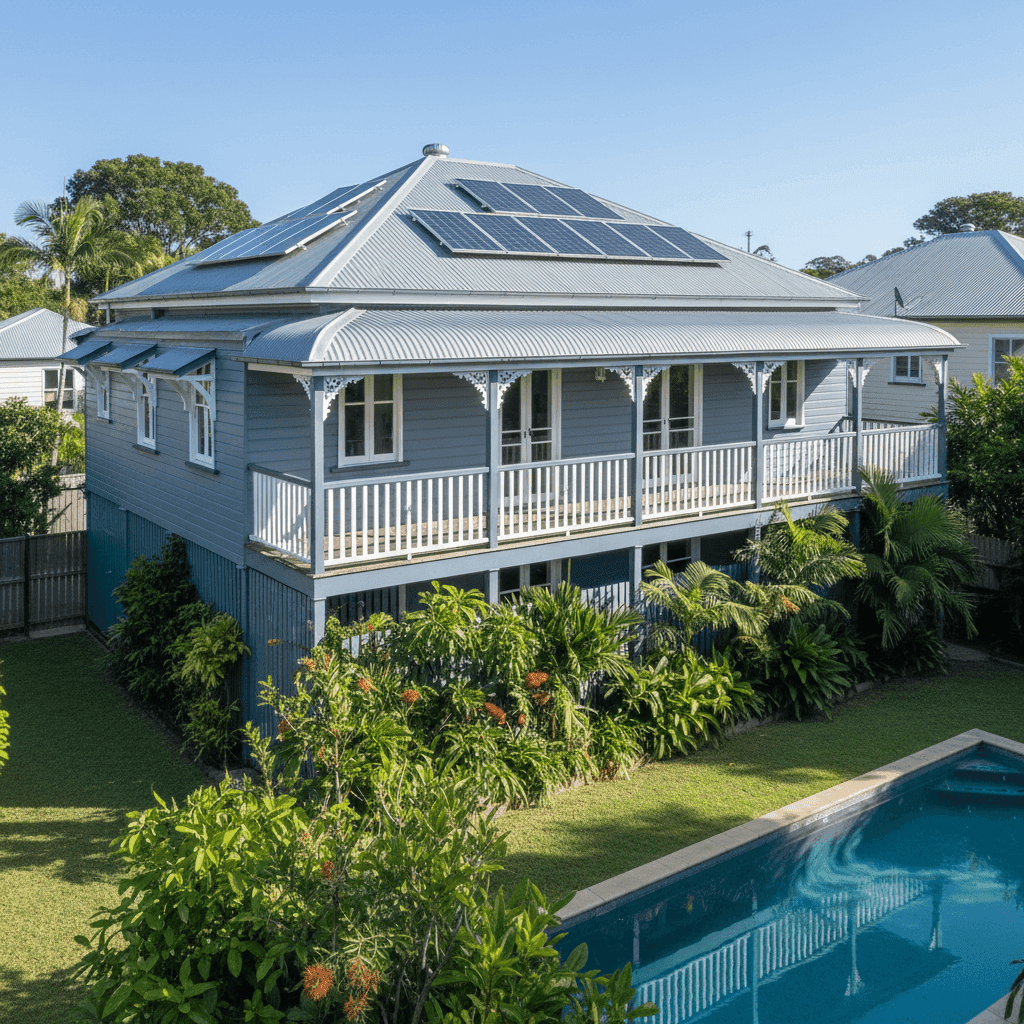
North Ward is one of Townsville's most sought-after suburbs — perched on the slopes of Castle Hill, with sweeping views of the Coral Sea and a strong mix of classic Queenslander architecture. It's exactly the kind of suburb where home insurance gets interesting. A recently quoted building-only policy for a 4-bedroom, 2-bathroom free standing home here came in at $7,966 per year (or $763/month). That's a significant figure, and it warrants a closer look.
---
Is This Quote Fair?
Our price rating for this quote is EXPENSIVE — Above Average, and the numbers back that up.
At $7,966 per year, this premium sits noticeably above the North Ward suburb average of $5,820/yr and well above the suburb median of $5,702/yr. In fact, it exceeds even the 75th percentile for the suburb ($6,638/yr), meaning it's priced higher than at least three-quarters of comparable quotes in the area.
That said, "expensive" is always relative. Compared to the Queensland state average of $9,129/yr, this quote is actually more affordable — though it's worth noting the QLD median sits at just $3,903/yr, which reflects enormous variation across the state. High-risk coastal and cyclone-prone postcodes like 4810 naturally skew the state average upward.
Against the national average of $5,347/yr and a national median of $2,764/yr, this quote is substantially more expensive — but that's largely a function of where this property sits geographically, and the risks that come with it.
The bottom line: this is not an outrageous quote for North Ward, but it is on the higher end of what locals are paying. There's likely room to shop around.
---
How North Ward Compares
Here's a snapshot of how this quote stacks up across different benchmarks:
| Benchmark | Premium |
|---|---|
| This Quote | $7,966/yr |
| North Ward Suburb Average | $5,820/yr |
| North Ward Suburb Median | $5,702/yr |
| North Ward 25th Percentile | $4,925/yr |
| North Ward 75th Percentile | $6,638/yr |
| Townsville LGA Average | $7,340/yr |
| QLD State Average | $9,129/yr |
| QLD State Median | $3,903/yr |
| National Average | $5,347/yr |
| National Median | $2,764/yr |
A few things stand out here. The Townsville LGA average of $7,340/yr is the closest benchmark to this quote, which makes sense — North Ward sits within Townsville City, and the LGA-level data captures the cyclone and weather risk that defines this region. The gap between the QLD average ($9,129) and median ($3,903) is also striking, and illustrates just how polarised Queensland premiums are between low-risk southern suburbs and high-risk tropical and coastal areas.
With only 18 quotes in the suburb sample, the North Ward data is relatively limited, so individual property characteristics can shift results considerably. You can explore the full North Ward suburb stats here.
---
Property Features That Affect Your Premium
Several characteristics of this property are likely pushing the premium higher than the suburb average. Here's what insurers are factoring in:
🌀 Cyclone Risk Area
North Ward falls within a designated cyclone risk zone — one of the most significant premium drivers in tropical Queensland. Insurers apply substantial loadings to properties in these areas due to the potential for catastrophic wind and storm damage. This alone can add thousands of dollars to an annual premium compared to properties in southern Queensland.
🏠 Weatherboard Construction (circa 1910)
Weatherboard timber walls are more vulnerable to wind, moisture, and fire than brick or masonry. Combined with a construction year of 1910, this property is over 110 years old — which raises questions for insurers around the condition of structural elements, wiring, and plumbing. Older homes can be more costly to repair or rebuild, and sourcing period-appropriate materials adds to that equation.
🏗️ Elevated on Poles (Queenslander Style)
The classic Queenslander raised on stumps or poles is iconic — but it introduces unique risks. Sub-floor spaces can be vulnerable to flooding and wind uplift, and the elevated structure requires specialist knowledge to repair. Elevated homes in cyclone-prone areas attract additional scrutiny from underwriters.
💰 High Sum Insured ($1,236,000)
At 315 sqm, this is a large home, and the building sum insured of $1,236,000 reflects both the size and the cost of rebuilding a period Queenslander with quality finishes. A higher sum insured directly increases the base premium — and it's essential to get this figure right. Underinsurance is a serious risk, particularly for older homes where rebuild costs can be far higher than expected.
☀️ Solar Panels & Pool
Solar panels and a swimming pool are both covered under the building sum insured in most policies, but they add to the overall replacement value and can influence premiums. Pools also introduce liability considerations that some insurers factor into their pricing.
🏚️ Steel/Colorbond Roof
On the positive side, a Colorbond steel roof is one of the better roofing materials for cyclone-prone areas. It's durable, lightweight, and performs well in high winds compared to terracotta tiles. This may be one factor moderating the premium relative to what it could otherwise be.
---
Tips for Homeowners in North Ward
If you're looking to reduce your home insurance costs without compromising on cover, here are some practical steps worth considering:
- Shop around — seriously. With a $2,146/yr gap between this quote and the suburb average, there's meaningful savings potential. Different insurers assess cyclone risk, construction type, and building age very differently. Getting multiple quotes through a comparison platform like CoverClub takes minutes and could save you significantly.
- Review your sum insured carefully. Make sure your building sum insured reflects the actual cost to rebuild — not the market value of the property. An independent quantity surveyor can provide a rebuild cost estimate, which ensures you're neither overpaying on premium nor exposed to underinsurance in the event of a total loss.
- Consider a higher excess. Opting for a higher voluntary excess (above the standard $1,000) can reduce your annual premium. If you have the financial buffer to cover a larger out-of-pocket amount in a claim, this is often a cost-effective trade-off.
- Invest in cyclone-proofing improvements. Some insurers offer premium discounts for homes that have undergone cyclone mitigation upgrades — such as roof tie-downs, storm shutters, or reinforced connections. Check with your insurer whether any improvements qualify for a discount, and keep documentation of any work completed.
---
Find a Better Deal on CoverClub
Whether this quote is your first or your fifth, it pays to compare. CoverClub aggregates real insurance data from across Australia, giving you suburb-level benchmarks and the ability to see how your quote stacks up before you commit. If you own a home in North Ward or anywhere in Queensland, get a quote today and see what the market is actually offering for your property.