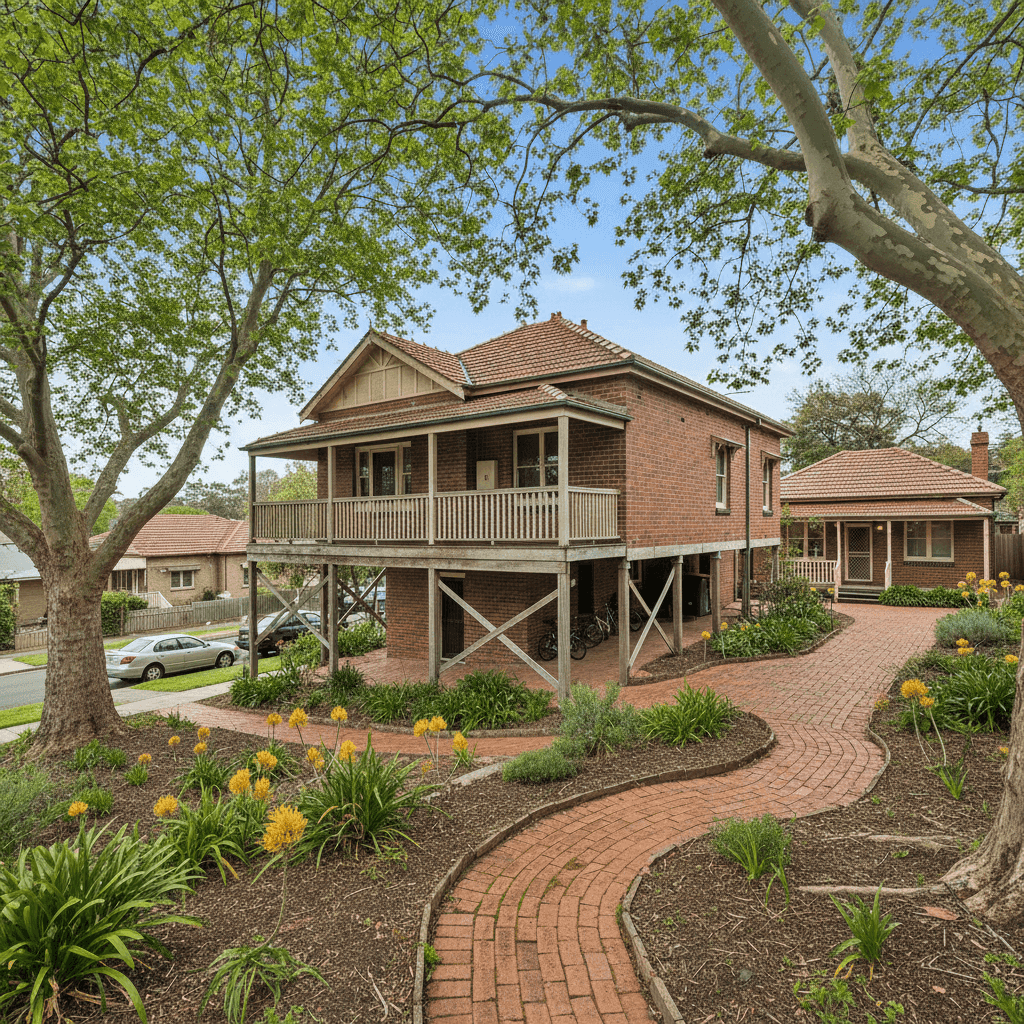
Northcote is one of Melbourne's most beloved inner-north suburbs — a leafy, character-rich pocket of Victoria where federation-era architecture sits comfortably alongside modern renovations. If you own a townhouse here, you're sitting on a significant asset, and making sure it's properly protected with the right home insurance policy is just as important as the property itself. This article breaks down a real home and contents insurance quote for a 3-bedroom townhouse in Northcote (VIC 3070), and puts the numbers into context so you can judge whether you're getting a fair deal.
---
Is This Quote Fair?
The annual premium for this property came in at $1,761 per year (or $173/month), covering a building sum insured of $596,000 and contents valued at $39,000, both with a $1,000 excess.
CoverClub's pricing engine has rated this quote as Fair — Around Average, and the data backs that up. Looking at recent quotes for Northcote, the suburb average sits at $1,667/yr and the median at $1,613/yr. That means this quote lands about $94 above the suburb average — a modest premium that's well within the normal range of variation.
To put it another way: 25% of comparable Northcote quotes came in under $1,211/yr, while 75% were under $2,068/yr. At $1,761, this policy sits comfortably in the upper-middle band — not the cheapest available, but nowhere near the top of the market either. For a property with a granny flat, ducted climate control, and a stump foundation on a 214 sqm footprint, that positioning makes sense.
The "Fair" rating is a reasonable outcome here. There's likely room to shop around and potentially find a lower premium, but this quote isn't out of step with what Northcote homeowners are typically paying.
---
How Northcote Compares
One of the most striking things about this quote is just how competitive inner-Melbourne premiums are relative to the broader market.
| Benchmark | Average Premium |
|---|---|
| Northcote (3070) | $1,667/yr |
| LGA: Moreland | $1,551/yr |
| Victoria (state) | $3,000/yr |
| National | $5,347/yr |
Northcote homeowners are paying, on average, 44% less than the Victorian state average and a remarkable 69% less than the national average. That's a significant difference, and it reflects the relatively low natural hazard risk profile of inner Melbourne compared to many other parts of Australia.
When you zoom out to Victoria-wide insurance data, the state average of $3,000/yr is heavily influenced by regional areas with higher flood, bushfire, and storm exposure. And at the national level, the $5,347/yr average reflects the outsized premiums paid in cyclone-prone parts of Queensland and Northern Australia, as well as flood-affected river towns.
For Northcote residents, the absence of cyclone risk and the suburb's relatively stable ground conditions mean insurers price these properties more favourably. The LGA average for Moreland ($1,551/yr) is even slightly lower than the Northcote suburb average, suggesting some micro-level variation within the local government area.
---
Property Features That Affect Your Premium
Several characteristics of this particular townhouse will be influencing the quoted premium — some working in the owner's favour, others adding modest complexity.
Brick veneer construction and tiled roof are generally viewed positively by insurers. Brick veneer is durable, fire-resistant, and widely understood by underwriters. Tiled roofs similarly have a solid track record for longevity. Together, these materials suggest a lower rebuild risk compared to, say, timber cladding or a corrugated iron roof in poor condition.
Construction year: 1956. This is where things get nuanced. A mid-century build means the property is nearly 70 years old, and while many homes of this era have been well-maintained or renovated, insurers often apply a loading for older properties due to the potential for ageing wiring, plumbing, or structural elements. The stump foundation is common for this era in Victoria, and while stumps can be inspected and replaced, they do introduce a variable that newer slab-on-ground homes don't carry.
Elevated by at least 1 metre. The elevated foundation actually works in this property's favour from a flood and moisture perspective. Homes raised off the ground are less susceptible to inundation from surface water, which can reduce risk in the eyes of some insurers.
Granny flat on the property. A secondary dwelling increases the overall replacement cost and complexity of a claim. The $596,000 building sum insured needs to account for both the main townhouse and the granny flat — if it doesn't, the property could be underinsured. It's worth confirming with your insurer that the granny flat is explicitly covered under the policy.
Ducted climate control is a moderately high-value fixed asset that adds to the overall building replacement cost. At standard fittings quality, this is already factored into the sum insured, but it's worth double-checking that the system is covered for mechanical breakdown or storm damage depending on your policy type.
No pool, no solar panels — two features that can add complexity and cost to a policy. Their absence keeps things straightforward.
---
Tips for Homeowners in Northcote
1. Get the granny flat explicitly confirmed in your policy. Secondary dwellings are a common source of claim disputes. Before renewing or switching, call your insurer and confirm in writing that the granny flat is covered under the building sum insured — including any outbuildings, fencing, and shared structures.
2. Review your sum insured annually. With construction costs rising across Melbourne, the cost to rebuild a 214 sqm townhouse with a granny flat may have increased since you last set your sum insured. Use a building cost calculator or speak to a quantity surveyor to make sure $596,000 still reflects current rebuild costs — not just market value.
3. Consider increasing your excess to reduce your premium. Both the building and contents excess on this policy are set at $1,000. If you have the financial buffer to absorb a higher out-of-pocket cost in the event of a claim, increasing the excess to $2,000 or more can meaningfully reduce your annual premium.
4. Shop the market at renewal time. With 58 quotes in the Northcote dataset, there's a healthy spread of pricing. The gap between the 25th percentile ($1,211/yr) and this quote ($1,761/yr) is over $550 annually. Loyalty doesn't always pay in insurance — comparing at least two or three quotes each year is one of the simplest ways to avoid overpaying.
---
Compare Your Home Insurance Quote Today
Whether you're reviewing your current policy or shopping for the first time, CoverClub makes it easy to see how your premium stacks up against real data from your suburb and state. Get a home insurance quote now and find out if you're paying a fair price — or if there's a better deal waiting for you.