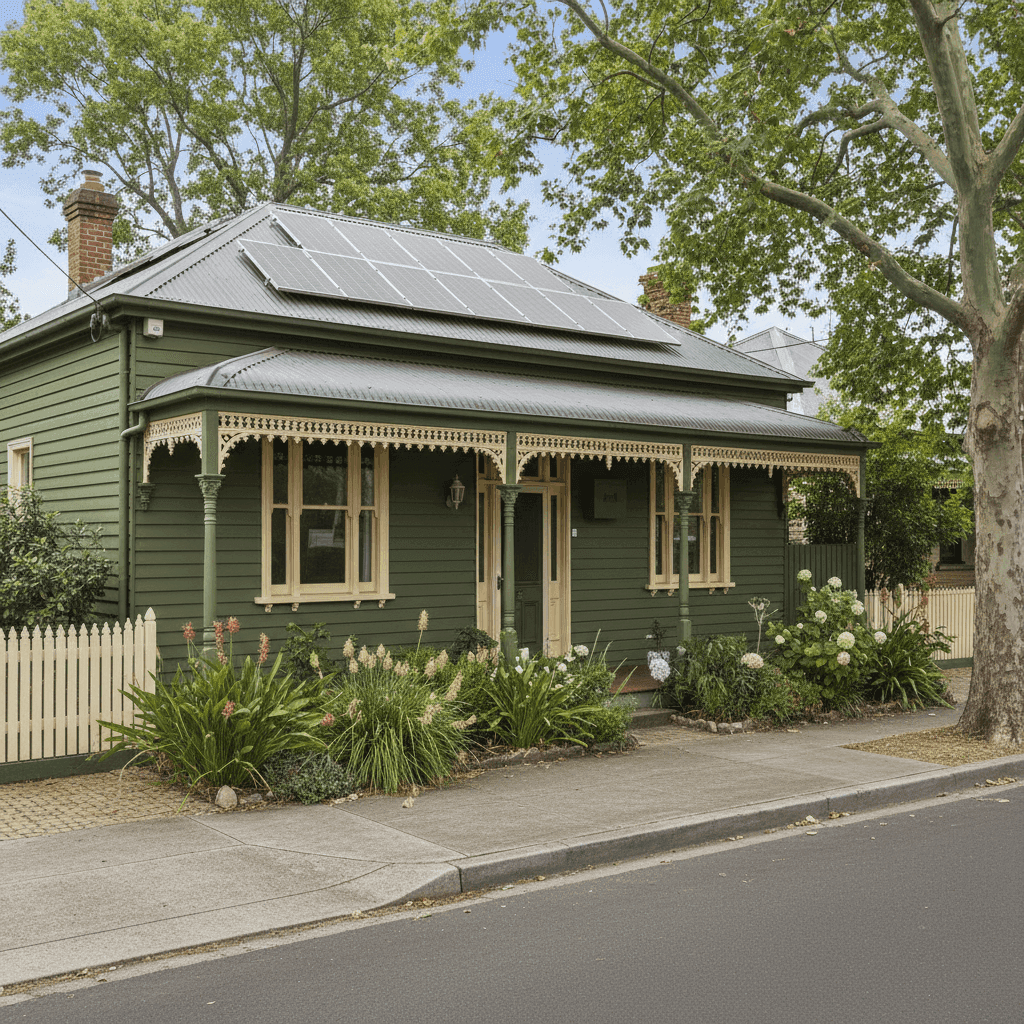
Northcote is one of Melbourne's most sought-after inner-north suburbs — a leafy, character-filled pocket of Victoria known for its Federation and Edwardian streetscapes, independent cafés, and strong community feel. It's also home to a significant number of heritage-listed properties, including the type of weatherboard terrace we're analysing here. If you own or are considering purchasing a similar home in the area, understanding what drives your insurance premium is an important part of protecting your investment.
This article breaks down a real home and contents insurance quote for a 3-bedroom, 2-bathroom terrace in Northcote (postcode 3070), built in 1902, and compares it against local, state, and national benchmarks.
---
Is This Quote Fair?
The annual premium for this property came in at $2,039 per year (or $195/month), covering both building (sum insured: $756,000) and contents ($50,000), each with a $1,000 excess. Our price rating for this quote is Fair — Around Average.
That assessment holds up well under scrutiny. The quote sits above the Northcote suburb average of $1,667/year and the median of $1,613/year, but falls just below the suburb's 75th percentile of $2,068/year. In practical terms, this means roughly three-quarters of comparable quotes in the area come in at a similar price or less — but the premium is far from excessive given the property's characteristics (more on those below).
It's worth noting that a "fair" rating doesn't necessarily mean you can't do better. Insurance pricing varies considerably between providers, and shopping around can yield meaningful savings even for properties that present higher risk factors.
---
How Northcote Compares
One of the most striking takeaways from this quote is just how favourably Northcote stacks up against broader benchmarks. Here's a quick snapshot:
| Benchmark | Average Premium |
|---|---|
| Northcote (suburb avg) | $1,667/yr |
| LGA – Moreland | $1,551/yr |
| Victoria (state avg) | $3,000/yr |
| National average | $5,347/yr |
Northcote homeowners are paying, on average, nearly half what Victorian homeowners pay statewide, and a fraction of the national average. Much of that national figure is skewed upward by high-risk regions — particularly cyclone-prone areas of Queensland and Western Australia, and flood-affected zones across New South Wales — where premiums can be dramatically elevated.
Victoria as a whole sits at a $3,000/year average, which reflects the state's exposure to bushfire risk in regional and outer-suburban areas. Inner-Melbourne suburbs like Northcote benefit from lower natural disaster risk profiles, which keeps premiums comparatively grounded.
You can explore the full breakdown for this postcode at our Northcote suburb stats page, compare it against Victorian averages, or see where it sits in the national picture.
---
Property Features That Affect Your Premium
Several characteristics of this particular property have a meaningful influence on its insurance pricing — some pushing the premium up, others helping to keep it in check.
Heritage Overlay
This property sits under a Heritage Overlay, which is common in Northcote's older residential streets. Heritage-listed homes can be more expensive to repair or rebuild to the required standard, as materials and construction methods must often match the original. This is reflected in the relatively high building sum insured of $756,000 for a 139 sqm terrace — and it's a figure that should be reviewed carefully to ensure it accurately reflects the cost of a compliant rebuild, not just market value.
Weatherboard Timber Construction
Weatherboard walls are a hallmark of Victorian-era homes and add charm, but they also present a higher fire risk compared to brick veneer or full brick construction. Insurers factor this in when calculating premiums, and it's one reason timber-clad homes in Melbourne's inner suburbs can attract slightly higher rates than their brick counterparts.
Timber and Laminate Flooring
Similarly, timber flooring — while beautiful and a key feature of period homes — adds to the replacement cost calculation and can be susceptible to water damage. Ensuring your sum insured accounts for the cost of quality timber floor replacement is essential.
Stump Foundation
Homes on stumps (also called pier foundations) are common in older Melbourne suburbs. While they offer good ventilation and are structurally sound when maintained, they can be more vulnerable to movement and pest damage over time. Regular inspections are advisable.
Solar Panels
The presence of solar panels is a positive from a sustainability standpoint, but it's worth confirming with your insurer that they are explicitly covered under your policy — either as part of the building sum insured or as a separate item. Not all standard policies automatically cover solar systems for damage or theft.
Ducted Climate Control
Ducted heating and cooling systems are a valuable fixture and should be included in your building sum insured. These systems can be costly to repair or replace, particularly in older homes where retrofitting is more complex.
No Pool, No Cyclone Risk
The absence of a swimming pool removes a common source of liability claims, and Northcote's location well outside any cyclone risk zone means this property avoids one of the biggest premium drivers in Australia.
---
Tips for Homeowners in Northcote
1. Review your building sum insured regularly With a heritage-listed property, rebuild costs can escalate quickly — especially if council requirements mandate period-appropriate materials and craftsmanship. Don't rely on last year's figure; use a current building cost estimator or consult a quantity surveyor to make sure you're not underinsured.
2. Confirm solar panels are covered Ask your insurer directly whether your solar panel system is included in your building cover, and for how much. If it's not explicitly listed, you may need to add it as a specified item or seek a policy that includes it as standard.
3. Shop around — even if your current quote seems reasonable A "fair" rating means you're not being gouged, but it doesn't mean you're getting the best deal available. Premiums for identical properties can vary by hundreds of dollars between insurers. Comparing at least three to four quotes annually is a good habit.
4. Consider a higher excess to reduce your premium If you have a solid emergency fund and are comfortable absorbing a larger out-of-pocket cost in the event of a claim, increasing your excess from $1,000 to $2,000 or more can noticeably reduce your annual premium. Just make sure the saving is genuine and not offset by hidden policy limitations.
---
Find a Better Deal with CoverClub
Whether you're reviewing your existing policy or insuring a property for the first time, CoverClub makes it easy to compare home and contents insurance quotes tailored to your specific property. Our suburb-level data means you'll always know whether the price you're being offered is genuinely competitive. Get a quote today and see how much you could save.