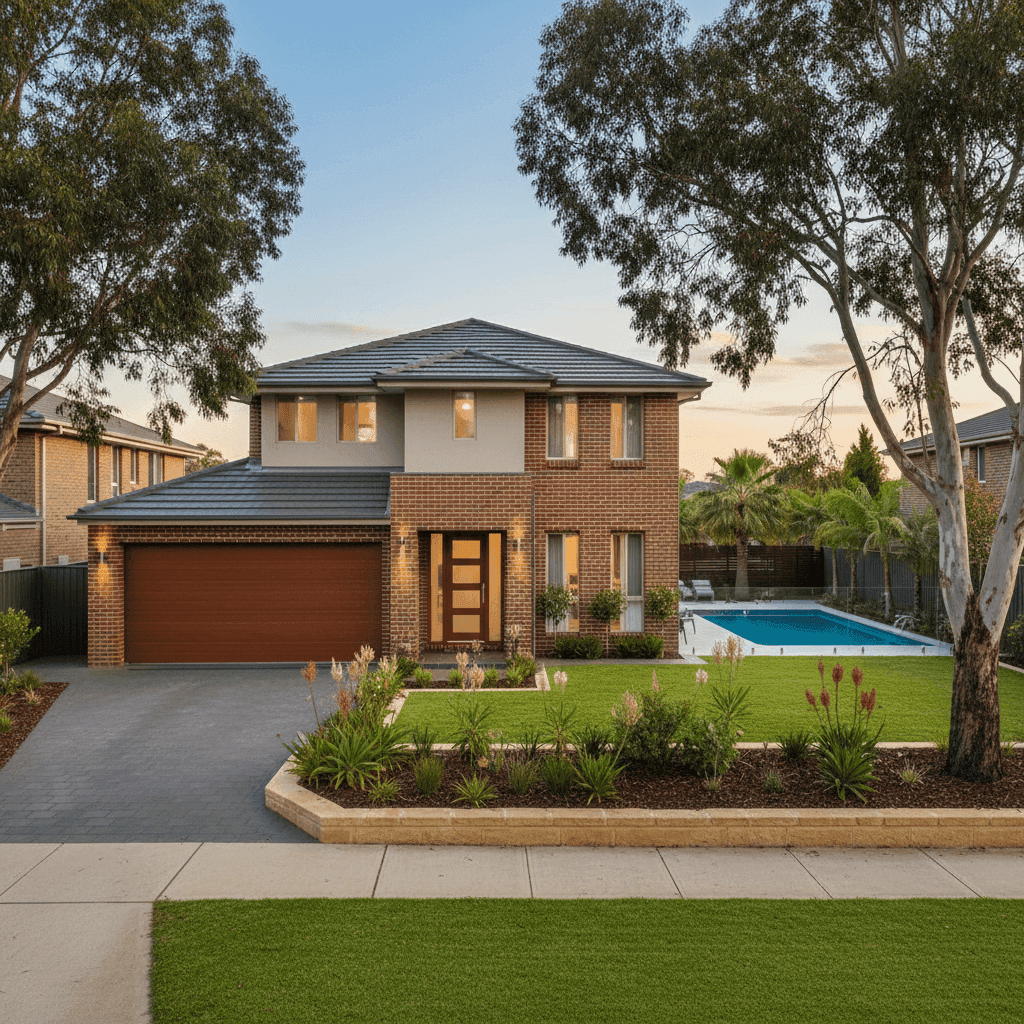
If you own a free standing home in Norwest, NSW 2153, you're likely paying close attention to the rising cost of home insurance. Norwest is a well-established suburb in Sydney's Hills District, known for its mix of family homes, business parks, and the popular Norwest Marketplace. With property values holding strong in the area, making sure your home and contents are adequately covered — and that you're not overpaying for that cover — is more important than ever.
This article breaks down a real home and contents insurance quote for a five-bedroom, three-bathroom free standing home in Norwest, compares it against local, state, and national benchmarks, and offers practical tips to help you get the best value on your policy.
---
Is This Quote Fair?
The quote in question comes in at $2,116 per year (or $213/month) for combined home and contents cover, with a building sum insured of $1,000,000 and contents valued at $120,000. Both the building and contents excess are set at $5,000.
Our price rating for this quote is FAIR — Around Average, and the data backs that up.
Compared to the Norwest suburb average of $2,305/yr, this quote sits $189 below the local average — a meaningful saving without any obvious red flags in coverage. It also falls comfortably within the interquartile range for the suburb (between $1,862 and $2,562 per year), meaning it's neither suspiciously cheap nor unnecessarily expensive.
A "Fair" rating doesn't mean you should stop shopping around, but it does suggest this quote reflects a reasonable market price for the property profile. If your priority is peace of mind that you're not being gouged, this quote provides that reassurance.
---
How Norwest Compares
To put this quote in proper context, it helps to zoom out and look at the broader insurance landscape.
| Benchmark | Premium |
|---|---|
| This Quote | $2,116/yr |
| Norwest Suburb Average | $2,305/yr |
| Norwest Suburb Median | $2,400/yr |
| LGA (Parramatta) Average | $2,031/yr |
| NSW State Average | $9,528/yr |
| NSW State Median | $3,770/yr |
| National Average | $5,347/yr |
| National Median | $2,764/yr |
A few things stand out here. The NSW state average of $9,528/yr is dramatically higher than what Norwest homeowners are typically paying — this is largely driven by high-risk properties in flood-prone, bushfire-affected, or cyclone-exposed regions of the state, which pull the average up significantly. The state median of $3,770/yr is a more grounded figure, and Norwest still comes in well below it.
Similarly, the national average of $5,347/yr reflects the outsized influence of Queensland and Northern Territory premiums, where natural disaster risk is considerably higher. The national median of $2,764/yr is closer to what most Australian homeowners in low-to-moderate risk areas actually pay.
Norwest's position — with a suburb median of $2,400/yr — reflects its relatively benign risk profile. It's not a cyclone zone, it's not flood-prone in the way many coastal or riverside suburbs are, and bushfire risk, while present in parts of the Hills District, is generally lower for established residential streets in Norwest proper.
It's worth noting that the suburb sample size here is 13 quotes, which gives a reasonable directional picture but isn't a huge dataset. As more quotes are collected, these averages will become increasingly reliable. You can explore the latest local data on the Norwest suburb stats page.
---
Property Features That Affect Your Premium
Every insurer prices risk differently, but certain property characteristics consistently influence what you'll pay. Here's how the features of this particular home factor in:
Brick Veneer Construction Brick veneer is one of the most common external wall materials in Sydney's suburban homes, and insurers generally view it favourably. It offers good fire resistance and structural durability, which can help keep premiums more competitive compared to timber-framed or lightweight cladding alternatives.
Tiled Roof Terracotta or concrete tile roofs are considered low-to-moderate risk by most insurers. They're durable, fire-resistant, and widely understood by assessors. This is a neutral-to-positive factor for premium pricing.
Slab Foundation A concrete slab foundation is standard for homes built in this era and is generally regarded as structurally sound. It doesn't carry the same subsidence or pest-related risks as some older pier-and-beam foundations, which is a mild positive for insurers.
Built in 1999 At around 25 years old, this home sits in a sweet spot — old enough to have avoided some of the more expensive modern construction costs, but not so old that ageing systems (plumbing, wiring, roofing) become a significant concern for insurers. Properties from this era are generally well-regarded.
Swimming Pool A pool adds liability risk and can increase your premium modestly. Insurers factor in the potential for accidents, legal liability, and the cost of pool-related damage (e.g., fence damage, equipment failure). It's worth confirming your policy explicitly covers pool-related public liability.
Ducted Climate Control Ducted air conditioning systems are expensive to repair or replace, and their presence can nudge contents or building sum insured calculations upward. Ensuring your building sum insured accurately reflects replacement cost — including systems like this — is important.
Timber and Laminate Flooring These flooring types can be costly to replace, particularly solid timber. They're a relevant factor in both building and contents valuation, and underinsuring in this area is a common mistake.
---
Tips for Homeowners in Norwest
1. Review Your Building Sum Insured Annually Construction costs have risen sharply in recent years. A $1,000,000 building sum insured is substantial, but it's worth cross-checking against current per-square-metre rebuild costs in Sydney (which can exceed $3,000–$4,000/sqm for quality finishes). Use an independent building calculator or speak with a quantity surveyor if you're unsure.
2. Don't Overlook Pool Liability Cover If you have a swimming pool, confirm that your policy includes adequate public liability cover — ideally $20 million or more. Accidents involving pools can result in significant legal costs, and not all standard policies treat pool liability the same way.
3. Consider the Impact of Your Excess Both the building and contents excess on this quote are set at $5,000 — which is on the higher end. A higher excess typically lowers your premium, but it also means more out-of-pocket costs if you need to make a claim. Make sure this level of excess is genuinely affordable for your household before locking it in.
4. Compare at Renewal, Not Just Once Insurance markets shift constantly. Even if this quote is fair today, your renewal premium in 12 months may look quite different. Set a reminder to compare quotes before your policy renews — it only takes a few minutes and can save you hundreds of dollars.
---
Compare Home Insurance Quotes in Norwest
Whether you're reviewing your current policy or shopping for the first time, comparing multiple quotes is the single most effective way to ensure you're getting fair value. CoverClub makes it easy to see how your premium stacks up against real data from your suburb and beyond.
Get a home insurance quote today at CoverClub and find out whether you're paying a fair price — or whether there's a better deal waiting for you.