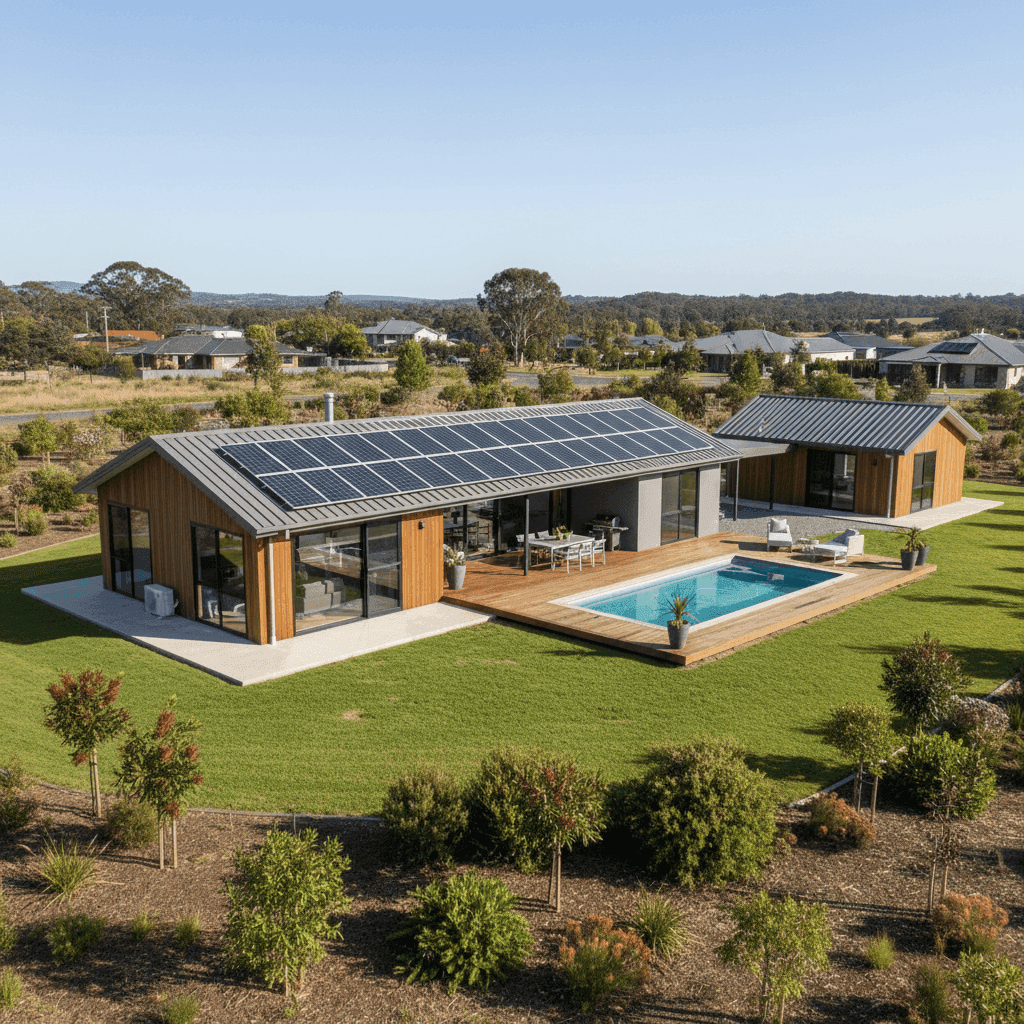
Nungurner is a peaceful lakeside locality tucked along the Gippsland Lakes in Victoria's East Gippsland region — a beautiful place to own a home, but one that comes with its own set of insurance considerations. This article breaks down a real home and contents insurance quote for a four-bedroom free-standing home in Nungurner (VIC 3909), compares it against local, state, and national benchmarks, and offers practical guidance for homeowners looking to get the best value on their cover.
---
Is This Quote Fair?
The quote in question sits at $3,362 per year (or roughly $322 per month) for combined home and contents cover, with a $655,000 building sum insured and $70,000 in contents cover. Both the building and contents excess are set at $2,000.
Our price rating for this quote is Expensive (Above Average) — and the data backs that up.
Compared to the Nungurner suburb average of $2,438/yr, this quote is running about 38% higher. It also sits above the suburb's 75th percentile of $3,152/yr, meaning it's pricier than at least three-quarters of comparable quotes in the area. That's a meaningful gap worth investigating before simply accepting the renewal or binding the policy.
That said, context matters. The quote does cover a well-appointed property with several features — a pool, solar panels, ducted climate control, and a granny flat — all of which can legitimately push a premium upward. We'll unpack those factors shortly.
---
How Nungurner Compares
Understanding where Nungurner sits relative to broader benchmarks helps frame whether this premium is a local quirk or part of a wider trend.
| Benchmark | Average Premium | Median Premium |
|---|---|---|
| Nungurner (3909) | $2,438/yr | $2,555/yr |
| East Gippsland LGA | $3,003/yr | — |
| Victoria | $3,000/yr | $2,718/yr |
| National | $5,347/yr | $2,764/yr |
A few things stand out here. First, Nungurner's suburb average of $2,438/yr is notably lower than both the East Gippsland LGA average ($3,003/yr) and the broader Victorian state average of $3,000/yr. This suggests that within the region, Nungurner properties may attract relatively competitive base rates — at least at the median level.
Second, the national average of $5,347/yr is dramatically higher, largely skewed by high-risk areas in Queensland and northern Australia where cyclone and flood exposure drives premiums up significantly. The national median of $2,764/yr is a more useful comparison point for a Victorian property like this one.
With a quote of $3,362/yr, this homeowner is paying above the Nungurner suburb average, above the suburb's 75th percentile, and above the Victorian state average — placing it firmly in "expensive" territory relative to peers. It's worth shopping around. You can explore local benchmarks in more detail at the Nungurner suburb stats page.
---
Property Features That Affect Your Premium
Several characteristics of this property are likely contributing to the above-average premium. Here's how each one typically influences pricing:
Pool
A swimming pool increases liability exposure and can also raise the cost of rebuilding or repairing the property. Most insurers factor in pools when calculating the sum insured and may apply additional loadings for liability cover.
Solar Panels
Rooftop solar systems add value to a home and, in the event of storm damage or fire, can be expensive to replace. Insurers generally include solar panels under building cover, but their presence increases the overall replacement cost — which flows through to a higher premium.
Granny Flat
A secondary dwelling on the property adds significant replacement value. Whether it's a self-contained studio or a full secondary residence, the granny flat increases the total insured structure, which is likely reflected in the $655,000 building sum insured and the premium itself.
Ducted Climate Control
Ducted HVAC systems are expensive to install and replace. Their inclusion in the building's fixtures and fittings adds to the overall replacement cost estimate.
Steel/Colorbond Roof
Colorbond roofing is generally viewed favourably by insurers — it's durable, fire-resistant, and performs well in adverse weather. This may actually be a moderating factor on the premium, relative to tile or older roofing materials.
Slab Foundation & Timber/Laminate Flooring
A concrete slab foundation is a solid, low-risk construction type. Timber and laminate flooring, while appealing aesthetically, can be more susceptible to water damage than tiles — a consideration for a property near the Gippsland Lakes.
Construction Year (2011)
A home built in 2011 is relatively modern and would have been constructed under updated building codes. This generally works in favour of the insured, as newer builds tend to have better structural integrity and fire safety compliance.
Proximity to Gippsland Lakes
While Nungurner isn't classified as a cyclone risk area, its location near the Gippsland Lakes means flood and storm surge risk could be a factor depending on the specific land parcel. Insurers assess flood risk at an address level, and waterfront or near-water properties can attract higher premiums or specific exclusions.
---
Tips for Homeowners in Nungurner
1. Compare multiple quotes before renewing Given that this quote sits above the suburb's 75th percentile, there's a real chance a competing insurer would price the same risk more competitively. Use a comparison platform like CoverClub to see multiple quotes side by side without having to ring around individually.
2. Review your sum insured carefully At $655,000, the building sum insured is substantial — and rightly so given the pool, solar, and granny flat. However, over-insuring can unnecessarily inflate your premium. Consider getting an independent building replacement cost estimate to ensure the figure is accurate rather than overstated.
3. Consider a higher excess to reduce your premium Both the building and contents excess on this policy are set at $2,000. Opting for a higher voluntary excess (say, $2,500 or $3,000) can meaningfully reduce your annual premium. Just make sure the excess amount is one you could comfortably cover out of pocket in the event of a claim.
4. Ask about discounts for security and safety features Many insurers offer discounts for properties with monitored alarm systems, deadbolts, or fire suppression equipment. If your home has any of these features, make sure your insurer is aware — it could shave dollars off your premium without reducing your cover.
---
Ready to Find a Better Rate?
If your home insurance renewal is coming up — or you're simply curious whether you're paying too much — it pays to compare. CoverClub makes it easy to benchmark your premium against real quotes from across your suburb and state. Get a home insurance quote today and see how much you could save.