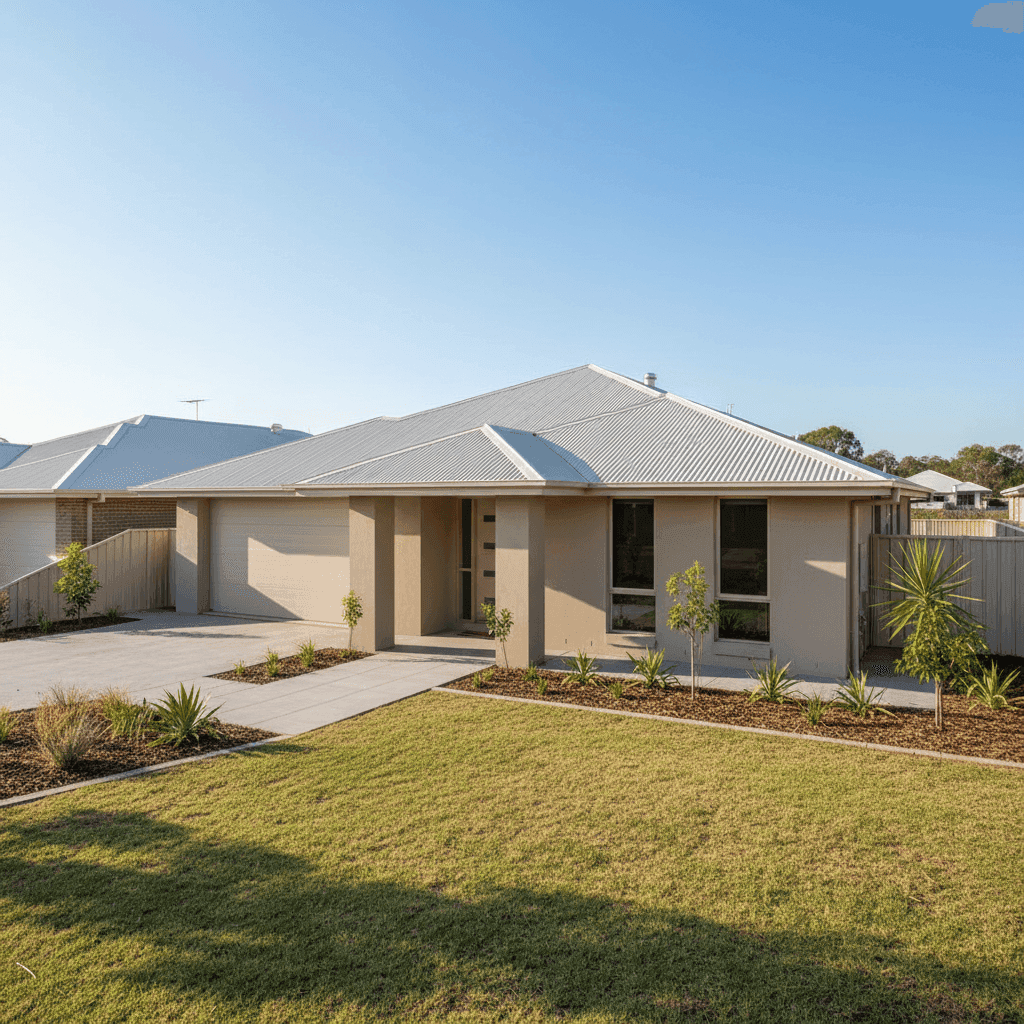
If you own a free standing home in Oak Valley, QLD 4811, you already know that finding the right home insurance at a fair price can feel like a challenge — especially in Queensland, where premiums are notoriously high. This article breaks down a real building insurance quote for a three-bedroom, one-bathroom free standing home in Oak Valley, comparing it against local, state, and national benchmarks so you can make a more informed decision about your cover.
---
Is This Quote Fair?
The quote in question comes in at $2,539 per year (or $243/month) for building-only cover, with a $1,000 building excess and a sum insured of $312,000. Our analysis rates this as CHEAP — below average for the area.
That's genuinely good news for this homeowner. Queensland is one of the most expensive states in the country for home insurance, driven by extreme weather events, flood exposure, and cyclone risk across much of the north. Against that backdrop, landing a sub-$2,600 annual premium for building cover in the Townsville region is a solid outcome.
To put it plainly: this quote is well below both the Queensland state median and the national average, suggesting the homeowner is getting reasonable value for their cover. Of course, "cheap" doesn't always mean "right" — it's still worth reviewing the policy terms, inclusions, and exclusions carefully to ensure the cover actually meets your needs.
---
How Oak Valley Compares
Let's look at the numbers in context:
| Benchmark | Annual Premium |
|---|---|
| This Quote | $2,539 |
| National Median | $2,764 |
| National Average | $5,347 |
| QLD State Median | $3,903 |
| QLD State Average | $9,129 |
| Townsville LGA Average | $7,340 |
The figures are striking. The Queensland state average sits at a steep $9,129 per year — more than three and a half times this quote. Even the state median of $3,903 is notably higher. Compared to national benchmarks, this quote tracks below both the median ($2,764) and the average ($5,347).
The Townsville LGA average of $7,340 per year reflects the elevated risk profile of the broader region. Properties in and around Townsville often attract higher premiums due to the area's exposure to tropical weather, storm surge, and historically significant flood events. The fact that this particular quote comes in well under the LGA average suggests the specific property characteristics are working in the homeowner's favour.
Unfortunately, there is no suburb-level data available for Oak Valley at this time, so we can't make a more granular comparison. As more data becomes available, you'll be able to explore Oak Valley-specific insurance statistics on CoverClub.
---
Property Features That Affect Your Premium
Several characteristics of this property likely contribute to its relatively competitive premium:
Concrete external walls are generally viewed favourably by insurers. Concrete is highly resistant to fire, impact, and wind damage — all significant considerations in Queensland. Compared to timber-framed or clad homes, concrete construction typically attracts lower premiums.
Steel/Colorbond roofing is another positive. Colorbond is a durable, low-maintenance material that handles heat, rain, and wind well. It's widely used across Queensland precisely because it performs well in harsh conditions, and insurers tend to price it more competitively than older or more vulnerable roofing materials.
Slab foundation removes the risk of underfloor flooding or pest damage that can affect homes on stumps or piers — a factor that can quietly inflate premiums in some properties.
Tile flooring is durable and resistant to water damage, reducing the likelihood of costly claims related to moisture or flooding.
Standard fittings keep the replacement cost estimate grounded. High-end or bespoke fittings can push the sum insured — and therefore the premium — significantly higher.
No pool, no solar panels, and no ducted climate control also simplify the risk profile. Each of these features adds potential liability or replacement cost to a policy, so their absence helps keep the premium lean.
Construction year (1982) is worth noting. Homes built in the early 1980s may have older electrical wiring, plumbing, or structural elements that some insurers flag as higher risk. However, the combination of concrete construction and Colorbond roofing likely offsets much of that concern here.
It's also worth noting that this property is not in a designated cyclone risk area, which is a meaningful factor in Queensland. Properties within cyclone zones — particularly those in Far North Queensland — routinely attract significantly higher premiums. Being outside that zone is a clear advantage.
---
Tips for Homeowners in Oak Valley
1. Review your sum insured regularly Your building is insured for $312,000. It's worth checking whether this figure accurately reflects the current cost to rebuild your home from scratch — not its market value. Construction costs have risen sharply in recent years, and being underinsured can leave you significantly out of pocket after a major claim. Tools like the Cordell Sum Sure calculator can help you estimate a more accurate rebuild figure.
2. Consider adding contents cover This quote covers the building only. If you haven't already arranged separate contents insurance, it's worth exploring. Contents cover protects your furniture, appliances, clothing, and personal belongings — none of which are included under a building-only policy. Bundling building and contents with the same insurer can sometimes attract a discount.
3. Compare quotes at renewal time Even if you're happy with your current premium, the insurance market shifts constantly. Loyalty doesn't always pay — insurers frequently offer better rates to new customers than to existing ones. Make it a habit to compare at least two or three quotes before renewing each year.
4. Understand your excess Your building excess is set at $1,000. A higher excess generally means a lower premium, and vice versa. If you have the financial capacity to absorb a larger out-of-pocket cost in the event of a claim, you might find that increasing your excess brings your annual premium down further.
---
Ready to Compare?
Whether you're reviewing your current policy or shopping for cover for the first time, CoverClub makes it easy to compare home insurance quotes side by side. Get a quote today and see how much you could save on your Oak Valley home insurance.