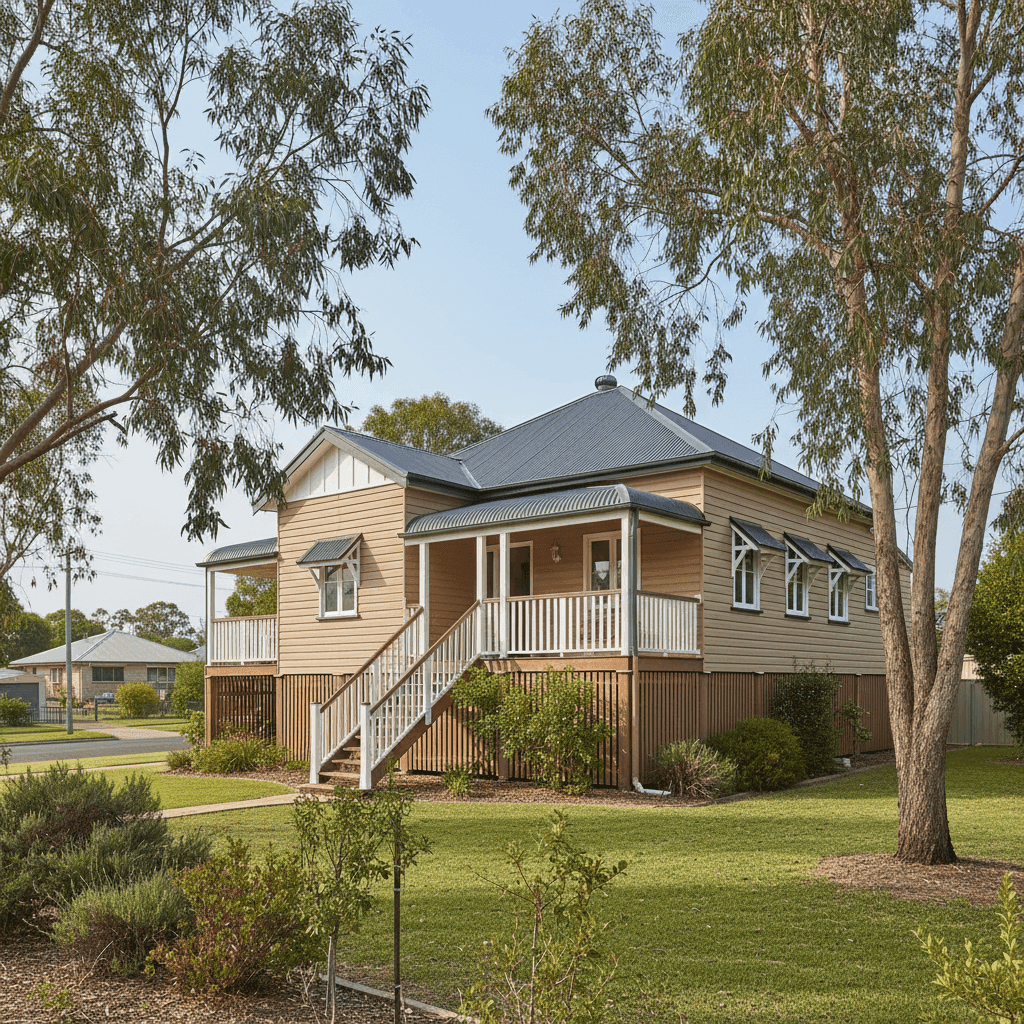
If you own a free standing home in Oakey, QLD 4401, you've probably wondered whether your home insurance premium is competitive — or whether you're quietly paying too much. Oakey is a regional town in the Darling Downs, roughly 30 kilometres west of Toowoomba, and like many regional Queensland communities, its insurance landscape has some interesting quirks worth understanding. This article breaks down a real home and contents insurance quote for a four-bedroom weatherboard home in Oakey, compares it against local, state, and national benchmarks, and offers practical tips to help you get the most out of your cover.
---
Is This Quote Fair?
The quote in question comes in at $3,136 per year (or $300 per month) for combined home and contents cover, with a building sum insured of $650,000 and contents valued at $40,000. Both the building and contents excess are set at $1,000.
Our price rating for this quote is FAIR — Around Average.
That assessment holds up when you dig into the numbers. The suburb average premium for Oakey sits at $4,470 per year, and the median is slightly higher at $4,562 per year. At $3,136, this quote lands well below both figures — sitting closer to the 25th percentile ($2,316/yr) than the 75th percentile ($6,430/yr). In practical terms, that means this quote is cheaper than the majority of policies being written for comparable homes in the same postcode.
So why "fair" rather than "great"? Context matters. The spread of premiums in Oakey is wide — from around $2,316 at the lower end to $6,430 at the upper end — which reflects the variety of property types, ages, and risk profiles across the suburb. This particular home, with its 1945 construction date, weatherboard walls, and stump foundation, carries characteristics that can push premiums higher (more on that below). Given those factors, landing below the suburb average is a genuinely solid outcome.
---
How Oakey Compares
To put this quote in proper perspective, it helps to zoom out and look at the broader picture. You can explore detailed pricing data on the Oakey suburb stats page, the Queensland state overview, and national home insurance statistics.
Here's a quick snapshot:
| Benchmark | Average Premium | Median Premium |
|---|---|---|
| Oakey (4401) | $4,470/yr | $4,562/yr |
| Toowoomba LGA | $2,479/yr | — |
| Queensland | $9,129/yr | $3,903/yr |
| National | $5,347/yr | $2,764/yr |
A few things stand out here. Queensland's average premium of $9,129 per year looks alarming — but that figure is heavily skewed by high-risk coastal and cyclone-prone areas in far north Queensland, which can attract eye-watering premiums. The state median of $3,903 is a far more representative figure for most Queenslanders, and this quote sits just above it.
Compared to the Toowoomba LGA average of $2,479, the Oakey quote is higher — but Toowoomba's average likely reflects a broader mix of newer, brick-construction suburban homes that are generally cheaper to insure. Oakey's older housing stock, including many pre-war and post-war timber homes, tends to carry higher rebuild costs and risk profiles.
Nationally, the median premium of $2,764 is lower than this quote, but again, national figures blend vastly different risk environments — from low-risk suburban Melbourne to flood-prone river towns and cyclone corridors. Oakey's regional Queensland location, with its exposure to storm and hail events, justifies a premium above the national median.
---
Property Features That Affect Your Premium
Several characteristics of this particular property have a meaningful influence on what insurers charge. Understanding them helps you make sense of your quote — and potentially take steps to reduce your risk profile over time.
Age of construction (1945): Homes built in the 1940s present higher rebuild risk for insurers. Older electrical wiring, plumbing, and structural materials may not meet current building codes, and sourcing period-appropriate materials for repairs can be costly. This is one of the more significant premium drivers for this property.
Weatherboard timber walls: Weatherboard is a classic Queensland building material, but it's more susceptible to fire, termite damage, and general wear than brick or clad alternatives. Insurers factor in the higher replacement and repair costs associated with timber-framed exteriors.
Stump foundation: Homes on stumps (also called raised or elevated homes) are a hallmark of Queensland's architectural heritage, offering natural ventilation and some protection from ground-level flooding. The elevation of less than 1 metre here provides modest flood mitigation benefit, though it also introduces specific structural risks — particularly around subfloor maintenance and stump deterioration over time.
Steel/Colorbond roof: On the positive side, a Colorbond roof is a strong asset from an insurance perspective. It's durable, fire-resistant, and performs well in high-wind events. This likely helps moderate the premium compared to older tile or corrugated iron roofing.
Timber and laminate flooring: Flooring type contributes to overall rebuild cost calculations. Timber floors, particularly in older homes, can be expensive to replace or match, which feeds into the building sum insured.
Building size (205 sqm) and sum insured ($650,000): A $650,000 building sum insured for a 205 sqm home works out to roughly $3,170 per square metre — a reasonable figure for a weatherboard home of this age and specification in regional Queensland, factoring in demolition, site preparation, and construction costs.
---
Tips for Homeowners in Oakey
1. Review your building sum insured regularly. Construction costs have risen sharply in recent years, and many older homes are underinsured without their owners realising it. Use a building cost calculator or ask your insurer to reassess your sum insured annually — being underinsured at claim time can be a costly mistake.
2. Maintain your subfloor and stumps. For homes on stump foundations, regular inspection of the subfloor space is essential. Deteriorating stumps, moisture damage, and pest activity can all affect structural integrity and may influence your ability to make a successful claim if damage is deemed to result from poor maintenance.
3. Shop around — but compare like for like. With a wide premium range in Oakey (from $2,316 to $6,430), there's genuine variation in what insurers will charge for similar properties. When comparing quotes, ensure you're matching the same sum insured, excess levels, and cover inclusions. A cheaper premium with a higher excess or fewer inclusions may not represent better value.
4. Ask about storm and hail cover specifics. The Darling Downs region experiences significant storm and hail activity, particularly during summer. Make sure your policy explicitly covers storm damage to your roof, gutters, and external walls — and check whether there are any sub-limits that might apply to weatherboard or timber structures.
---
Compare Your Own Quote at CoverClub
Whether you're a long-time Oakey local or new to the area, it pays to know where your premium stands. CoverClub makes it easy to benchmark your home insurance quote against real data from your suburb and beyond. Get a quote today and see how your current cover stacks up — you might be surprised by what you find.