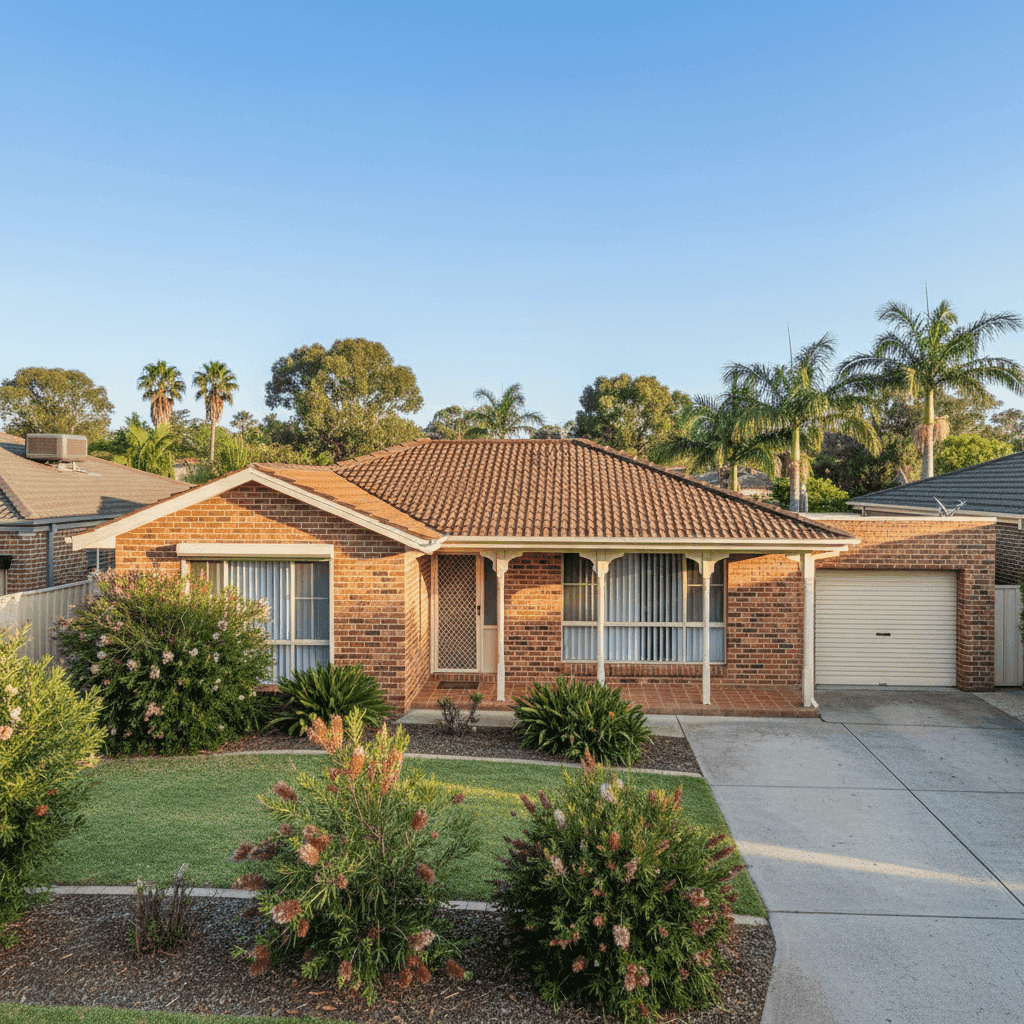
If you own a free standing home in Oakhurst, NSW 2761, you're likely paying close attention to the rising cost of home insurance. Oakhurst is a well-established residential suburb in the City of Blacktown, characterised by solid brick homes and quiet streets — but that doesn't necessarily mean insurance premiums are low. In this article, we analyse a real building-only insurance quote for a four-bedroom, brick veneer home in Oakhurst and put the numbers into context so you can make a more informed decision.
---
Is This Quote Fair?
The quote in question comes in at $1,803 per year (or $173/month) for building-only cover on a four-bedroom, one-bathroom free standing home built in 1990, with a sum insured of $700,000 and a $1,000 building excess.
Our rating for this quote is Expensive — Above Average.
To understand why, it helps to look at what other homeowners in the same postcode are paying. Based on quotes collected for Oakhurst (NSW 2761), the suburb average sits at $1,244/year and the median is $1,131/year. This quote lands well above both benchmarks — around 45% above the suburb average and nearly 60% above the median.
Even compared to the suburb's 75th percentile of $1,636/year, this quote exceeds that threshold by over $160. In other words, this premium is higher than what roughly three-quarters of comparable Oakhurst homeowners are paying. That's a meaningful gap worth investigating.
---
How Oakhurst Compares to the Rest of NSW and Australia
One important piece of context: home insurance costs vary enormously across New South Wales — and Australia more broadly. Looking at NSW state-wide data, the average annual premium is $9,528 and the median is $3,770. Those figures are heavily skewed by high-risk areas such as flood-prone regions, coastal zones, and bushfire corridors across the state.
Measured against the national picture, the Australian average is $5,347/year and the national median is $2,764/year.
By those yardsticks, $1,803/year for a suburban Oakhurst home actually looks quite reasonable — even modest. But the more meaningful comparison is always local. When you're living in a suburb like Oakhurst, where most homes share similar construction styles, risk profiles, and land characteristics, the suburb-level data tells the most accurate story.
It's also worth noting that the Blacktown LGA average is $2,242/year, which sits above this quote. That suggests some parts of Blacktown carry higher premiums — potentially due to flood mapping, older housing stock, or proximity to bushland — and Oakhurst's relatively contained risk profile keeps its suburb average lower than the broader LGA.
| Benchmark | Annual Premium |
|---|---|
| This Quote | $1,803 |
| Oakhurst Suburb Average | $1,244 |
| Oakhurst Suburb Median | $1,131 |
| Oakhurst 75th Percentile | $1,636 |
| Blacktown LGA Average | $2,242 |
| NSW State Average | $9,528 |
| National Average | $5,347 |
---
Property Features That Affect Your Premium
Every property is different, and insurers weigh up a range of factors when calculating your premium. Here's how the features of this particular home come into play:
Brick Veneer Construction Brick veneer is one of the most common wall types in Western Sydney and is generally viewed favourably by insurers. It offers solid fire resistance and structural durability, which can help moderate premiums compared to timber-framed or clad homes.
Tiled Roof Terracotta or concrete tile roofs are considered a lower-risk roofing material than alternatives like Colorbond or older corrugated iron. Tiles are durable and widely understood by assessors, so this feature typically doesn't attract a loading on your premium.
Slab Foundation A concrete slab foundation is standard for homes of this era in Western Sydney and is generally regarded as low-risk by insurers. It reduces the likelihood of subsidence-related claims compared to older pier-and-beam or strip footing systems.
Construction Year: 1990 At around 35 years old, this home sits in a mid-age bracket. It's old enough that some building components — plumbing, electrical, and roofing — may be approaching the end of their service life, which can influence an insurer's risk assessment. However, homes from this era were built to solid standards and are generally well-regarded.
Ducted Climate Control The presence of ducted air conditioning is worth noting. While it adds to the replacement value of the home (contributing to a higher sum insured), it can also be a source of claims if the system is damaged during a storm or electrical event. Some insurers factor this into their pricing.
Sum Insured: $700,000 The building is insured for $700,000, which is on the higher end for a 130 sqm home — even accounting for construction costs in Sydney. It's worth reviewing whether this figure accurately reflects the cost to rebuild your home from scratch (not its market value), as over-insuring can unnecessarily inflate your premium.
---
Tips for Homeowners in Oakhurst
1. Shop around — seriously The gap between this quote ($1,803) and the suburb median ($1,131) is over $670 per year. That's not a rounding error; it's a meaningful difference that can be closed by comparing multiple insurers. Use CoverClub to get a quote and see what other providers are offering for your specific property.
2. Review your sum insured Make sure your building sum insured reflects the actual cost to rebuild — not the market value or an inflated estimate. Tools like the Cordell Sum Sure calculator can help you arrive at a more accurate figure. Reducing an over-inflated sum insured could lower your premium without leaving you underinsured.
3. Consider your excess This quote carries a $1,000 building excess. In many cases, opting for a higher voluntary excess (say, $2,000 or $2,500) can reduce your annual premium noticeably. If your home is well-maintained and you're unlikely to make small claims, a higher excess can be a smart trade-off.
4. Ask about discounts Many insurers offer discounts for things like paying annually instead of monthly, bundling building and contents cover, or holding multiple policies. It's always worth asking — these savings are rarely advertised upfront but can add up quickly.
---
Compare Your Home Insurance Today
Whether this quote reflects your own situation or you're simply doing your research, the most powerful thing you can do is compare. CoverClub makes it easy to see what home insurance actually costs for properties like yours in Oakhurst and across NSW. Get a quote today and find out if you're getting a fair deal — or paying more than you need to.