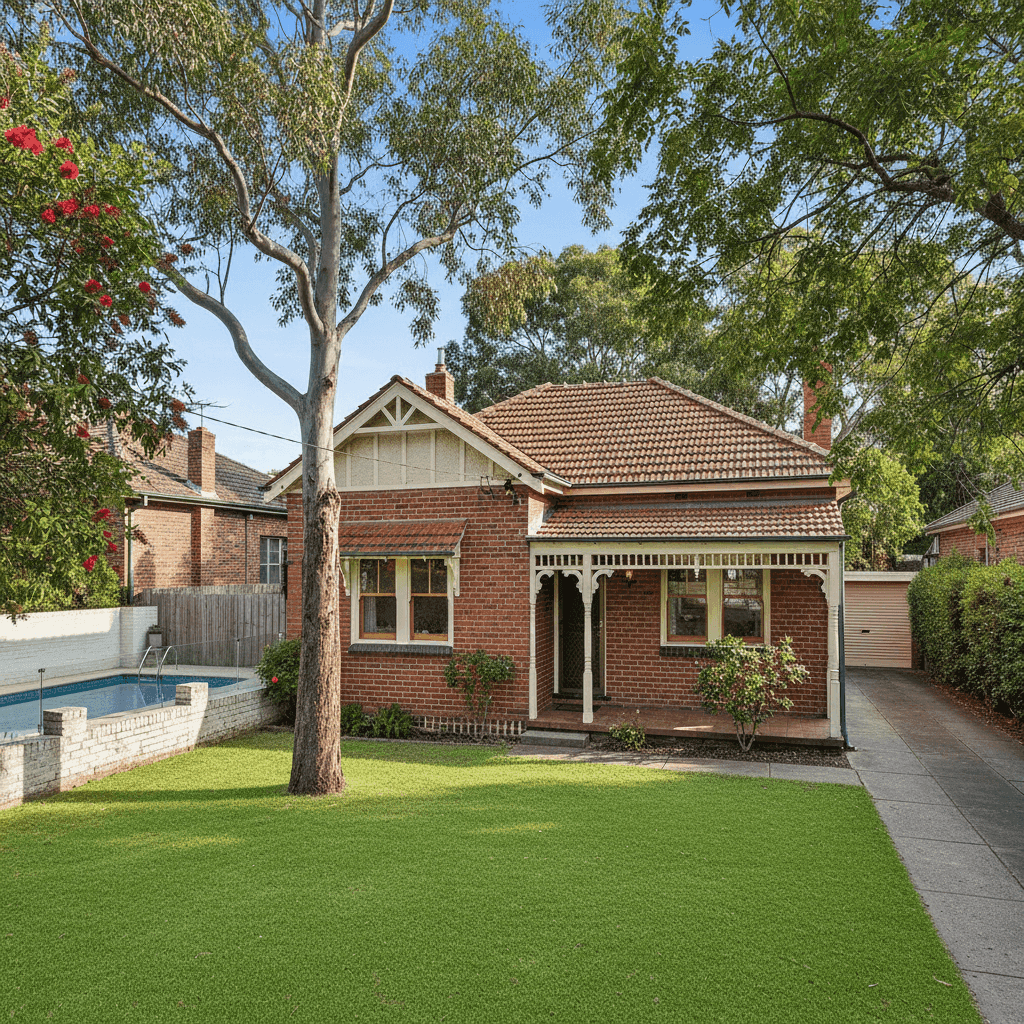
Oakleigh is a well-established suburb in Melbourne's south-east, known for its Greek community, bustling market precinct, and streets lined with character homes that date back decades. For owners of a four-bedroom, free-standing home in this postcode, understanding what drives your insurance premium — and whether you're paying a fair price — is an important part of protecting one of your most valuable assets.
This article breaks down a real home and contents insurance quote for a property in Oakleigh (VIC 3166), compares it against local, state, and national benchmarks, and offers practical tips to help you get better value on your cover.
---
Is This Quote Fair?
The quote in question comes to $3,440 per year (or $330 per month) for combined home and contents insurance, covering a building sum insured of $1,300,000 and contents valued at $300,000. Both the building and contents excess are set at $500.
Based on available market data, this premium is rated Expensive — above average for the Oakleigh area. The suburb average sits at just $1,759 per year, and the median is even lower at $1,394 per year. That puts this quote more than double the local median.
However, context matters enormously here. Several features of this particular property — which we'll explore in detail below — justify a higher-than-average premium. The $1,300,000 building sum insured is notably high, and the property carries a heritage overlay, both of which meaningfully increase insurer risk and replacement cost estimates. When you account for these factors, the gap between this quote and the suburb average becomes more understandable, even if there may still be room to shop around.
---
How Oakleigh Compares
To put this quote in perspective, here's how Oakleigh's insurance costs stack up against broader benchmarks:
| Benchmark | Premium |
|---|---|
| This quote | $3,440/yr |
| Oakleigh suburb average | $1,759/yr |
| Oakleigh suburb median | $1,394/yr |
| Oakleigh 25th percentile | $1,111/yr |
| Oakleigh 75th percentile | $1,820/yr |
| Monash LGA average | $1,672/yr |
| VIC state average | $3,000/yr |
| VIC state median | $2,718/yr |
| National average | $5,347/yr |
| National median | $2,764/yr |
A few things stand out from this data. First, Oakleigh's suburb-level premiums are noticeably lower than both the Victorian state average and the national average. This reflects the suburb's relatively low exposure to extreme weather events such as cyclones, flooding, and bushfires — risks that drive premiums sky-high in other parts of Australia.
Second, this particular quote actually sits closer to the Victorian state average ($3,000/yr) than to the Oakleigh suburb average, which suggests the property's individual characteristics are pulling the premium upward beyond what a typical Oakleigh home would attract.
It's also worth noting that the national average of $5,347 per year provides some reassurance — homeowners in far more hazard-prone regions of Australia are paying considerably more. By that measure, this Oakleigh quote, while above average locally, is still well below the national norm.
---
Property Features That Affect Your Premium
Several characteristics of this property have a direct bearing on the premium quoted. Understanding these can help you have a more informed conversation with insurers.
Heritage Overlay
This is arguably the single biggest premium driver beyond the high sum insured. Properties under a heritage overlay — as this one is — are subject to strict council controls that require the use of period-appropriate materials and specialist tradespeople during any restoration or repair. In the event of a claim, rebuilding or repairing to heritage standards is significantly more expensive than standard construction. Insurers price this risk accordingly.
High Building Sum Insured ($1,300,000)
At 214 square metres, this is a substantial home, and the $1,300,000 building sum insured reflects both the size and the elevated cost of heritage-compliant reconstruction. A higher sum insured directly increases your premium, as it represents the maximum liability the insurer takes on.
Stump Foundation
Built in 1960 and sitting on stumps, this home has a raised foundation — elevated by less than one metre. Stumped homes can be more susceptible to subfloor moisture, pest ingress, and movement over time, all of which insurers factor into their risk assessments. On the positive side, some elevation can reduce flood-related risk.
Brick Veneer Walls and Tiled Roof
Brick veneer is a common and generally well-regarded construction type for insurers — it offers solid fire resistance and durability. Combined with a tiled roof, this property has a construction profile that is neither high-risk nor particularly discounted by underwriters. It's a neutral-to-positive factor in the overall premium calculation.
Swimming Pool
The presence of a pool adds both asset value and liability exposure to the policy. Pools require additional coverage considerations, and any damage to pool infrastructure or associated liability incidents will be factored into the premium.
Ducted Climate Control
Ducted heating and cooling systems represent a meaningful contents and building asset. These systems can be costly to repair or replace, and their inclusion in the insured property increases the overall replacement cost estimate.
Age of Construction (1960)
Older homes often attract higher premiums due to aging infrastructure — including plumbing, electrical wiring, and roofing materials — that may be more prone to failure or harder to source materials for during repairs.
---
Tips for Homeowners in Oakleigh
1. Review Your Building Sum Insured Carefully
With a heritage overlay in play, it's critical that your sum insured genuinely reflects the cost of rebuilding to heritage specifications — not just standard market rates. Underinsurance is a serious risk for heritage properties. Consider engaging a quantity surveyor to get an accurate rebuild estimate, then make sure your policy matches it.
2. Shop Around — Especially for Heritage Properties
Not all insurers treat heritage overlays the same way. Some specialise in or are more comfortable with older character homes, and their pricing can vary significantly. Use a comparison platform like CoverClub to see multiple quotes side by side and identify whether another insurer would price this risk more competitively.
3. Ask About Excess Adjustments
Both the building and contents excess on this policy are set at $500. Increasing your excess — say, to $1,000 or $2,000 — can meaningfully reduce your annual premium. If you have sufficient savings to cover a higher out-of-pocket cost in the event of a claim, this is often a smart trade-off.
4. Bundle and Consolidate
Home and contents insurance is already bundled here, which typically attracts a discount compared to holding two separate policies. If you also hold car insurance or landlord insurance, ask your insurer whether a multi-policy discount applies — many providers offer meaningful savings for consolidating cover.
---
Ready to Compare?
Whether you're renewing your current policy or buying insurance for the first time, it pays to compare. Premiums for the same property can vary by hundreds — sometimes thousands — of dollars between insurers. Get a home insurance quote on CoverClub and see how your options stack up in minutes.