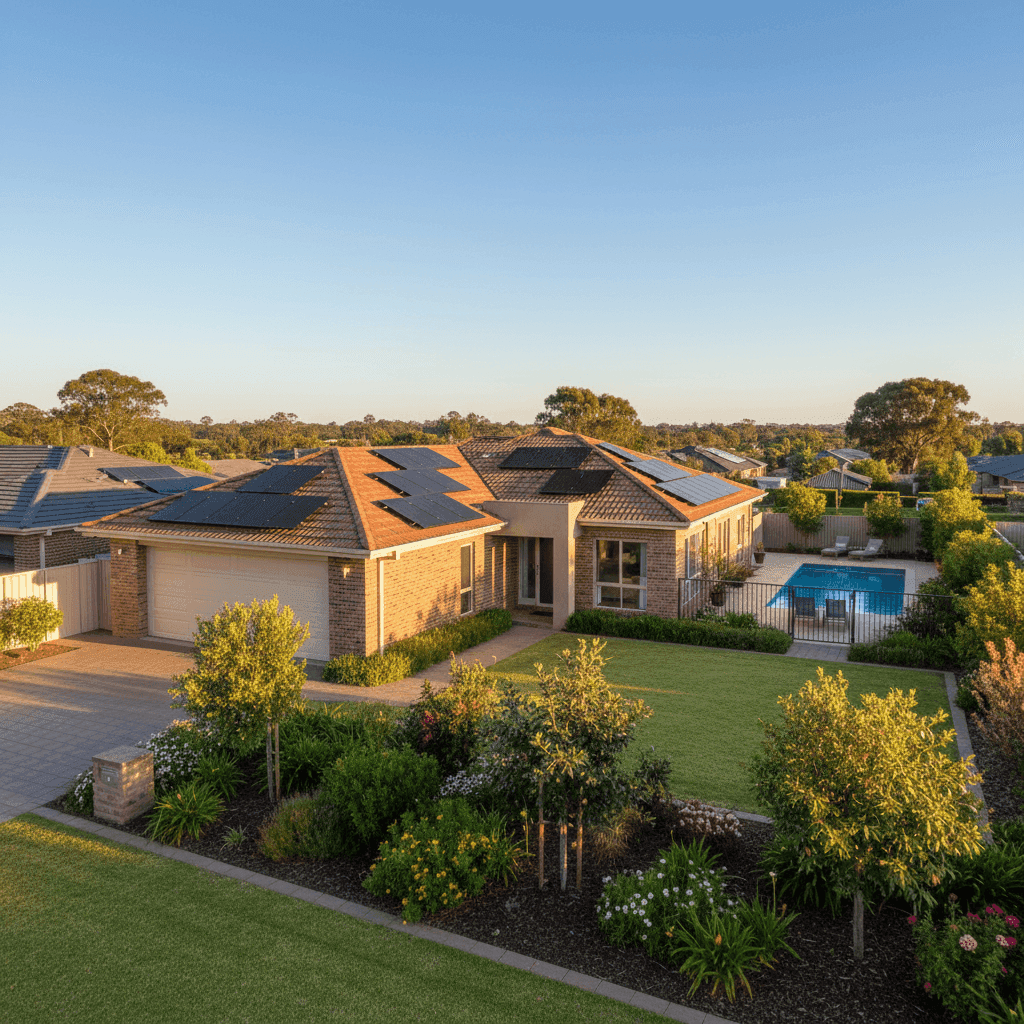
If you own a free standing home in Oakville, NSW 2765, you're likely already aware that insuring a well-appointed property in Sydney's north-west comes with its own set of considerations. From ageing construction to modern upgrades like solar panels and pools, there's a lot that insurers weigh up when calculating your premium. In this article, we break down a real home and contents insurance quote for a four-bedroom home in Oakville — and help you understand whether it represents good value.
---
Is This Quote Fair?
The quote in question comes in at $5,760 per year (or $545/month), covering both building and contents for a four-bedroom, two-bathroom free standing home. The building is insured for $1,900,000 and contents for $249,900, with a $1,000 excess on both.
Our price rating for this quote is CHEAP — below average — which is great news for the homeowner. But what does that actually mean in context?
To put it plainly: this premium sits below the suburb's 25th percentile of $5,953/yr, meaning it's cheaper than at least 75% of comparable quotes we've seen in Oakville. When a quote lands below the lowest quartile of local pricing, that's a genuine indicator of strong value — not just a marginal saving.
It's also worth noting that the sum insured here is substantial. A building replacement value of $1.9 million is significant, and yet the premium still undercuts the local average. That's a combination worth paying attention to.
---
How Oakville Compares
Understanding your premium in isolation only tells part of the story. Here's how Oakville stacks up against broader benchmarks:
| Benchmark | Premium |
|---|---|
| This Quote | $5,760/yr |
| Oakville Suburb Average | $6,546/yr |
| Oakville Suburb Median | $6,747/yr |
| Oakville 25th Percentile | $5,953/yr |
| NSW State Average | $9,528/yr |
| NSW State Median | $3,770/yr |
| National Average | $5,347/yr |
| National Median | $2,764/yr |
| Penrith LGA Average | $2,220/yr |
A few things stand out here. The NSW state average of $9,528/yr is notably high — driven upward by extreme premium outliers in flood-prone, bushfire-affected, and coastal areas across the state. The state median of $3,770/yr tells a more balanced story, but even so, this Oakville quote sits comfortably in context.
Compared to the national average of $5,347/yr, this quote is only slightly higher — reasonable given the higher property values and replacement costs typical of Greater Sydney. The Penrith LGA average of $2,220/yr is notably lower, likely reflecting a mix of simpler properties and lower sum-insured figures across that broader area.
You can explore more localised data on the Oakville suburb stats page to see how premiums in your postcode are trending.
> Note: The Oakville suburb sample size is 5 quotes, so these local figures should be treated as indicative rather than definitive. As more data is collected, these benchmarks will become more precise.
---
Property Features That Affect Your Premium
Every property is different, and insurers assess a wide range of characteristics when pricing a policy. Here's how the features of this particular home are likely influencing the premium:
Double Brick Construction
Double brick walls are generally viewed favourably by insurers. They offer strong resistance to fire, wind, and structural damage compared to timber or lightweight cladding. This construction type can contribute to lower premiums — it's one of the more durable external wall options available.
Tiled Roof
A tiled roof is a standard, well-regarded roofing material in Australia. It's durable, fire-resistant, and widely understood by insurers. Compared to older materials like asbestos sheeting or corrugated iron in poor condition, tiles typically attract more competitive pricing.
Slab Foundation
A concrete slab foundation is common in post-war Australian construction and is generally considered low-risk from an insurance perspective. It doesn't carry the same concerns as older stumped or timber-framed foundations prone to subsidence or termite damage.
1985 Construction Year
Homes built in the mid-1980s are at an interesting crossroads for insurers. They're old enough to have ageing systems (plumbing, electrical wiring) that can increase risk, but generally built to standards that pre-date some of the cost-cutting seen in later decades. Owners of homes this age should ensure their sum insured reflects current rebuild costs, which can be higher than expected.
Above-Average Fittings Quality
With above-average fittings throughout, the contents and internal finishes of this home carry a higher replacement value. This is reflected in the $249,900 contents figure — and it's important that this figure is kept up to date as you add new appliances, furniture, or renovations.
Swimming Pool
A pool adds both value and liability to a property. Insurers may factor in the cost of pool repairs or damage (e.g., from subsidence or storm events) and in some cases, public liability considerations. It's worth confirming your policy explicitly covers pool-related damage.
Solar Panels
Solar panels are an increasingly common feature on Australian homes, but they're not always automatically covered under standard building policies. Check whether your insurer covers panels for accidental damage, storm damage, or electrical faults — and whether the coverage extends to inverters and battery systems if applicable.
Ducted Climate Control
Ducted air conditioning systems are expensive to repair or replace. At above-average fittings quality, this system should be factored into your sum insured for building cover to avoid being underinsured in the event of a major claim.
---
Tips for Homeowners in Oakville
1. Review your sum insured annually With a building insured at $1.9 million, it's critical to keep this figure aligned with current construction costs. Building costs in Greater Sydney have risen sharply in recent years — a sum insured that was accurate two years ago may already be inadequate. Use a building cost calculator or speak to a quantity surveyor if you're unsure.
2. Confirm your solar panels are covered Ask your insurer directly whether solar panels are included under your building cover, and to what limit. Some policies cap coverage for panels or exclude certain types of damage. Given the cost of a full rooftop system, this is not a detail to overlook.
3. Check your pool is explicitly included Pool structures, equipment, and associated liability can vary significantly between policies. Review the product disclosure statement (PDS) carefully or ask your insurer to clarify exactly what pool-related damage is and isn't covered.
4. Don't set and forget your contents value Above-average fittings and a well-appointed home means your contents figure needs regular attention. Make a habit of updating your contents sum insured after significant purchases — electronics, appliances, jewellery, and outdoor furniture all add up quickly.
---
Compare Your Options at CoverClub
Whether you're renewing your policy or shopping around for the first time, it pays to compare. A quote that looks reasonable today might not be the best available — and with premiums varying significantly across insurers, a few minutes of comparison can translate into hundreds of dollars in savings.
Get a home insurance quote at CoverClub and see how your property stacks up against real market data for Oakville and beyond.