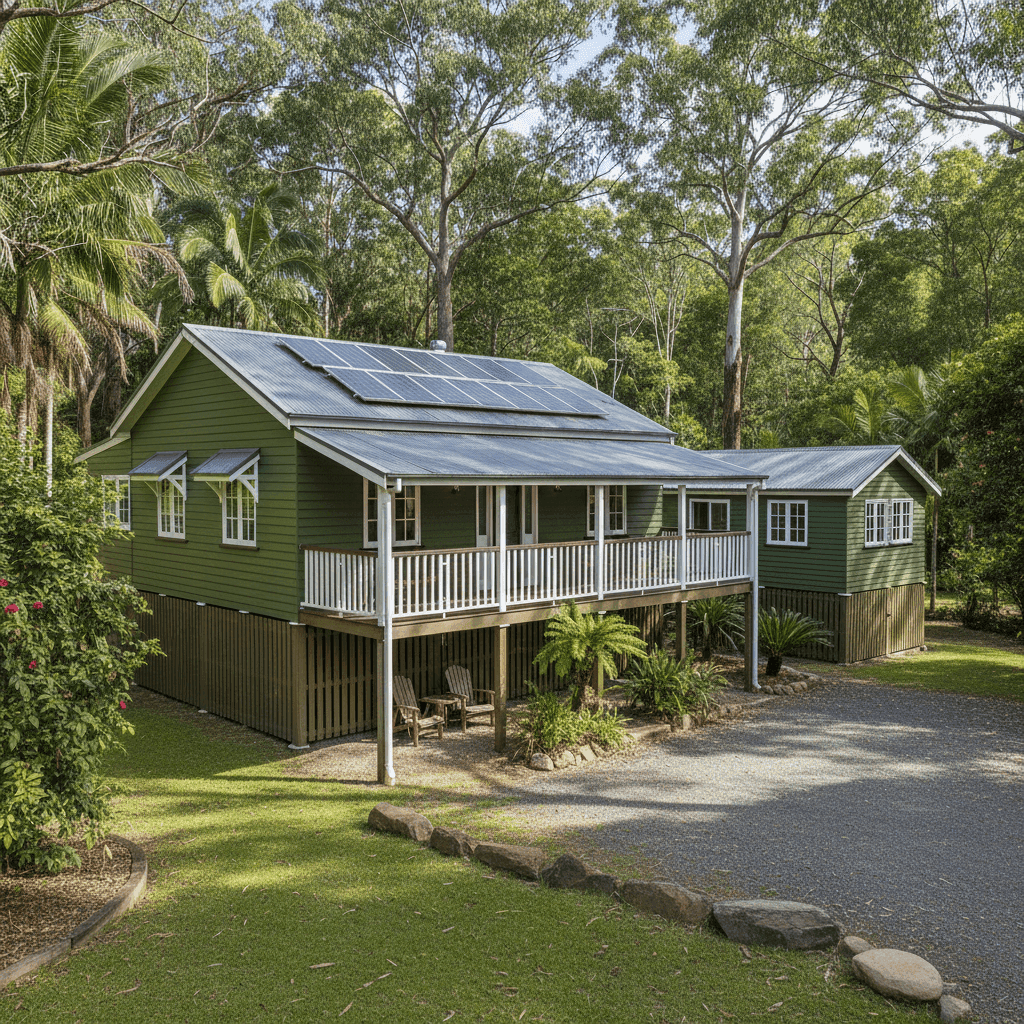
Nestled in the lush hinterland behind the Sunshine Coast, Obi Obi is a quiet rural locality in Queensland's Gympie Local Government Area. It's the kind of place where older character homes sit on generous blocks, surrounded by subtropical greenery — and where getting home insurance right really matters. This article breaks down a real home and contents insurance quote for a 3-bedroom, 3-bathroom free-standing home in Obi Obi (QLD 4574), helping you understand what's driving the price and whether it represents fair value.
---
Is This Quote Fair?
The annual premium for this property came in at $3,474 per year (or $344/month), covering a building sum insured of $596,000 and $60,000 in contents. Our price rating for this quote is Expensive — Above Average.
To put that in context, the suburb average for Obi Obi sits at $2,738/year, with a median of $2,489. This quote lands well above both figures, and even pushes past the 75th percentile of $3,362 — meaning it's pricier than roughly three-quarters of comparable quotes in the area.
That said, several features of this particular property help explain the higher premium. The home was built in 1950, features weatherboard timber walls, a steel/Colorbond roof, and sits on stumps — elevated by at least one metre. It also has solar panels and a granny flat on the property. Each of these characteristics carries underwriting implications that insurers factor into their pricing.
So while the quote is above the local average, it isn't entirely out of left field given the property profile. The key question is whether you could find a more competitive rate for the same level of cover — and the answer is almost certainly yes.
---
How Obi Obi Compares
Understanding where your premium sits relative to broader benchmarks is essential context when evaluating any quote. Here's how Obi Obi stacks up:
| Benchmark | Premium |
|---|---|
| This Quote | $3,474/yr |
| Obi Obi Suburb Average | $2,738/yr |
| Obi Obi Suburb Median | $2,489/yr |
| Obi Obi 25th Percentile | $1,947/yr |
| Obi Obi 75th Percentile | $3,362/yr |
| Gympie LGA Average | $5,581/yr |
| QLD State Average | $9,129/yr |
| QLD State Median | $3,903/yr |
| National Average | $5,347/yr |
| National Median | $2,764/yr |
A few things stand out here. First, the QLD state average of $9,129/year is extraordinarily high — a figure heavily skewed by cyclone-prone coastal and far-north Queensland postcodes where premiums can reach tens of thousands of dollars annually. The median of $3,903 is a more useful comparison point, and this quote sits just below that.
Compared to the national average of $5,347, this quote looks relatively reasonable. But compared to the Obi Obi suburb median of $2,489, there's a gap of nearly $1,000 per year — suggesting there may be room to shop around for a better deal without sacrificing coverage.
It's also worth noting that the Gympie LGA average of $5,581 is notably higher than the Obi Obi suburb average, indicating that other parts of the LGA — likely lower-lying or more flood-exposed areas — attract significantly higher premiums. Obi Obi's hinterland position appears to offer some pricing advantage relative to the broader region.
(Based on a sample of 28 quotes in the Obi Obi area.)
---
Property Features That Affect Your Premium
Several characteristics of this property are likely contributing to a higher-than-median premium. Here's what insurers are paying attention to:
Age and Construction
Built in 1950, this home is over 70 years old. Older homes typically attract higher premiums because ageing materials, plumbing, and electrical systems carry a greater risk of failure or damage. Weatherboard timber walls, while charming and characteristic of Queensland's heritage housing stock, are considered more susceptible to fire, rot, and storm damage than brick or rendered masonry — which insurers price accordingly.
Elevated on Stumps
Being elevated by at least one metre on stumps is a double-edged sword. On the positive side, it can offer meaningful protection against flood and surface water inundation — a real consideration in hinterland Queensland. On the other hand, the subfloor space introduces additional exposure points, and the structural complexity of a raised home can increase rebuild costs. The $596,000 building sum insured reflects this.
Steel/Colorbond Roof
Colorbond roofing is generally viewed favourably by insurers — it's durable, fire-resistant, and performs well in storms. This may be partially offsetting some of the premium increases from other risk factors.
Solar Panels
The presence of solar panels adds replacement value to the structure and introduces some additional risk (particularly from storm damage or fire near inverters). Most insurers cover rooftop solar as part of the building, but it does contribute to the overall sum insured.
Granny Flat
A secondary dwelling on the property increases the total rebuild cost and the complexity of the risk. Insurers will want to know whether the granny flat is occupied, rented, or used for personal use — as rental income from a granny flat can sometimes require a separate or endorsed policy.
Above-Average Fittings
The property is noted as having above-average fittings quality. Higher-end fixtures, finishes, and appliances mean a higher cost to repair or replace — and this flows directly into the building sum insured and, ultimately, the premium.
---
Tips for Homeowners in Obi Obi
If you're a homeowner in Obi Obi or the surrounding Sunshine Coast hinterland, here are some practical steps to help manage your insurance costs without cutting corners on coverage:
- Shop around every renewal. The gap between the cheapest and most expensive quotes in Obi Obi spans from roughly $1,947 to over $3,362 per year. Loyalty rarely pays in insurance — comparing quotes annually is one of the most effective ways to avoid overpaying.
- Review your building sum insured carefully. Underinsurance is a serious risk, but so is over-insuring. Make sure your sum insured reflects the actual cost to rebuild your home (not its market value), factoring in the elevated construction, weatherboard materials, and any granny flat. A quantity surveyor's report can help you get this right.
- Clarify your granny flat coverage. If the granny flat is rented out — even informally — your standard home insurance policy may not cover it adequately. Speak with your insurer or broker to confirm you have the right endorsements in place, or consider a separate landlord policy for that dwelling.
- Ask about discounts for security and maintenance. Some insurers offer premium reductions for homes with security systems, smoke alarms, or documented maintenance histories. Given the age of this property, demonstrating that the home has been well-maintained can work in your favour at renewal time.
---
Compare Your Options at CoverClub
Whether you're reviewing an existing policy or shopping for cover for the first time, it pays to see what the market has to offer. CoverClub makes it easy to compare home and contents insurance quotes for properties across Queensland and beyond. Get a quote today and find out whether you could be paying less for the same peace of mind — or explore the latest insurance stats for Obi Obi to see how your current premium stacks up.