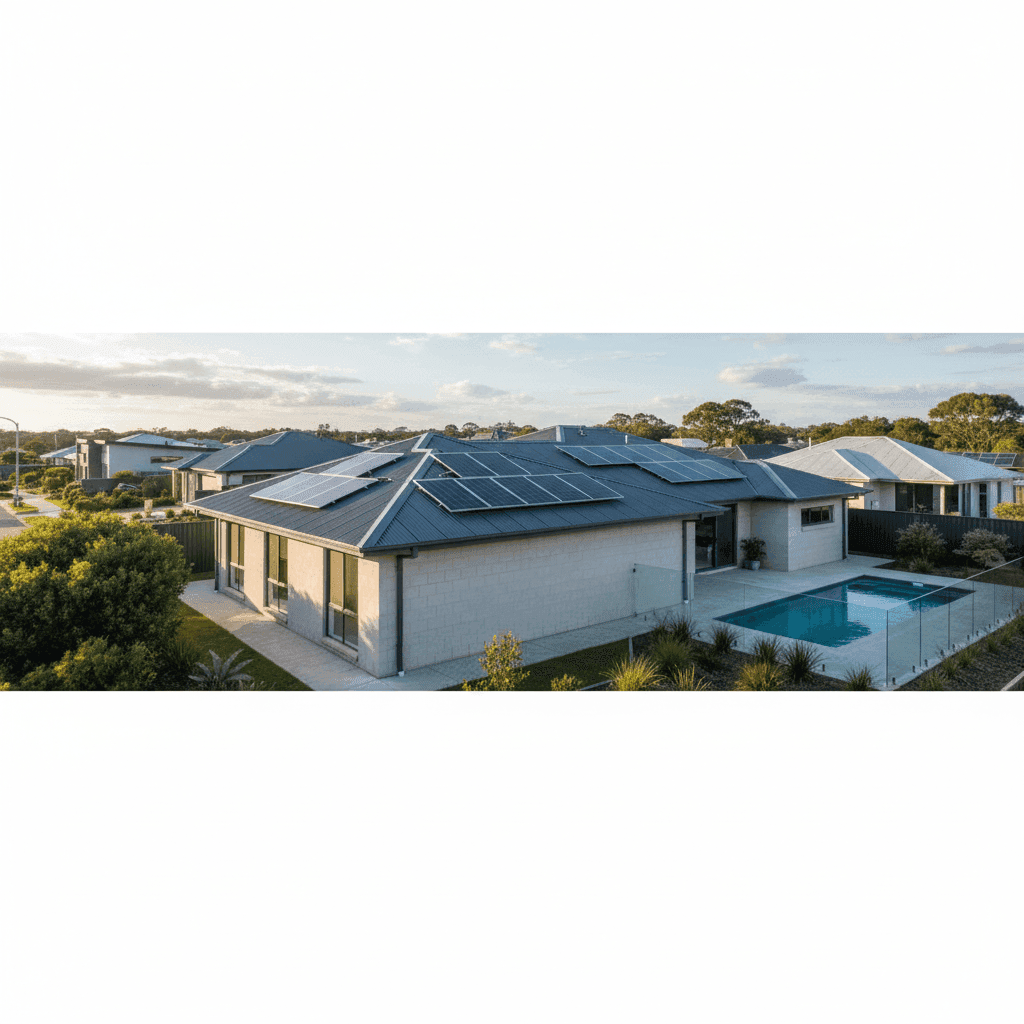
Ocean Grove is one of the Surf Coast's most sought-after coastal communities — a relaxed seaside town sitting on the Bellarine Peninsula about 100 km south-west of Melbourne. Its blend of newer estates, beachside lifestyle, and steady population growth makes it an increasingly popular place to put down roots. For homeowners here, understanding what you should expect to pay for home and contents insurance is just as important as finding the right property in the first place.
This article breaks down a real home and contents insurance quote for a four-bedroom, three-bathroom free-standing home in Ocean Grove, examining how it stacks up against local, state, and national benchmarks — and what property-specific factors are likely influencing the price.
---
Is This Quote Fair?
The quote in question comes in at $1,649 per year (or approximately $158 per month) for combined home and contents cover, with a building sum insured of $695,000 and contents valued at $105,000. Both the building and contents excess are set at $1,000.
Our price rating for this quote is FAIR — Around Average.
To put that in context: the suburb average for Ocean Grove (3226) sits at $2,294 per year, with a median of $2,048. This quote lands below both figures, placing it in the lower half of the pricing distribution for the suburb. The 25th percentile for Ocean Grove is $1,419/yr, meaning roughly a quarter of comparable quotes come in cheaper — but three-quarters are more expensive.
So while there may be room to push the price a little lower, this is genuinely competitive for the area. Paying below the suburb average and median for a well-appointed modern home with a pool, solar panels, and ducted climate control is a solid outcome.
---
How Ocean Grove Compares
One of the most useful things you can do when evaluating any insurance quote is to zoom out and look at the broader picture. Here's how this quote sits across three levels of comparison:
| Benchmark | Average Premium | Median Premium |
|---|---|---|
| Ocean Grove (3226) | $2,294/yr | $2,048/yr |
| Greater Geelong LGA | $1,754/yr | — |
| Victoria | $3,000/yr | $2,718/yr |
| National | $5,347/yr | $2,764/yr |
A few things stand out here. First, Ocean Grove premiums are notably below the Victorian state average — a meaningful difference of around $650/yr on average. This reflects the relatively lower risk profile of the Bellarine Peninsula compared to parts of Victoria more exposed to bushfire, flood, or extreme weather events.
Second, the national average of $5,347 looks startling at first glance, but this figure is heavily skewed by high-risk regions in Queensland, Western Australia, and the Northern Territory — areas prone to cyclones, flooding, and other severe weather. The national median of $2,764 is a more representative comparison point for most Australians.
For broader context, you can explore Victorian home insurance statistics or dive into national home insurance data on CoverClub.
Interestingly, the Greater Geelong LGA average of $1,754/yr is actually lower than this individual quote — which makes sense when you consider that the LGA encompasses a wide range of property types, sizes, and values, many of which will be smaller or lower-value than this particular home.
---
Property Features That Affect Your Premium
Every home is different, and insurers price risk based on a detailed combination of property characteristics. Here's how the features of this particular home are likely influencing its premium:
Hebel exterior walls: Autoclaved aerated concrete (AAC) panels like Hebel are lightweight and fire-resistant, which is generally viewed favourably by insurers. Hebel can be more susceptible to moisture damage if not properly sealed and maintained, so some insurers may factor this in — but overall, it's a modern and widely accepted wall construction.
Steel/Colorbond roof: Colorbond is one of the most insurer-friendly roofing materials in Australia. It's durable, fire-resistant, and low-maintenance, and it typically attracts lower premiums compared to older materials like terracotta tiles or fibrous cement.
Slab foundation: Concrete slab is the standard for new builds in Victoria and is considered a low-risk foundation type. It performs well in most soil conditions and doesn't carry the same subsidence concerns associated with older stumped or pier foundations.
Construction year (2021): Newer homes built to current Australian Standards generally attract more competitive premiums. Modern building codes incorporate better fire safety, structural integrity, and weather resistance — all of which reduce insurer risk.
Swimming pool: Pools add liability exposure and can increase premiums modestly. They also add to the overall replacement cost of the property, which is reflected in the building sum insured.
Solar panels: Solar systems are increasingly common and most insurers now include them as part of building cover. However, they do add to the replacement value of the home and can be a factor in premium calculations — particularly for larger systems.
Ducted climate control: Like solar panels, ducted systems are a fixed building fixture and contribute to the overall sum insured. Their presence signals a higher-quality fit-out, which is consistent with the standard fittings rating noted for this property.
Timber/laminate flooring: As a contents-adjacent feature, flooring type can influence how contents claims are assessed, though it has a relatively minor direct impact on building premium calculations.
---
Tips for Homeowners in Ocean Grove
Whether you're reviewing an existing policy or shopping around for the first time, here are some practical steps Ocean Grove homeowners can take to make sure they're getting the best value:
- Review your sum insured regularly. Building costs have risen significantly in recent years. With a 214 sqm home featuring quality fixtures, a pool, and solar panels, it's worth having your sum insured independently validated — underinsurance is one of the most common and costly mistakes homeowners make.
- Compare quotes across multiple insurers. The spread between the 25th percentile ($1,419/yr) and 75th percentile ($2,822/yr) in Ocean Grove shows that pricing varies enormously for similar properties. Getting multiple quotes through CoverClub is the fastest way to see where your current policy sits.
- Consider your excess level strategically. A $1,000 excess is fairly standard, but opting for a higher excess (say, $2,000) can meaningfully reduce your annual premium. If you have a solid emergency fund and your home is a newer build with lower likelihood of small claims, this can be a smart trade-off.
- Check your contents cover reflects reality. $105,000 in contents cover is reasonable for a four-bedroom home, but it's easy for this figure to fall out of date. Do a room-by-room assessment annually — particularly if you've made significant purchases or renovations — to make sure you're neither over- nor under-insured.
---
Find a Better Deal on CoverClub
Whether this quote is your starting point or you're comparing it against other options, CoverClub makes it easy to see how your premium stacks up. With real data from thousands of quotes across Australia, you can benchmark your cover, explore suburb-level statistics, and get a new quote in minutes. Don't just accept the first number you're given — a few minutes of comparison could save you hundreds of dollars a year.