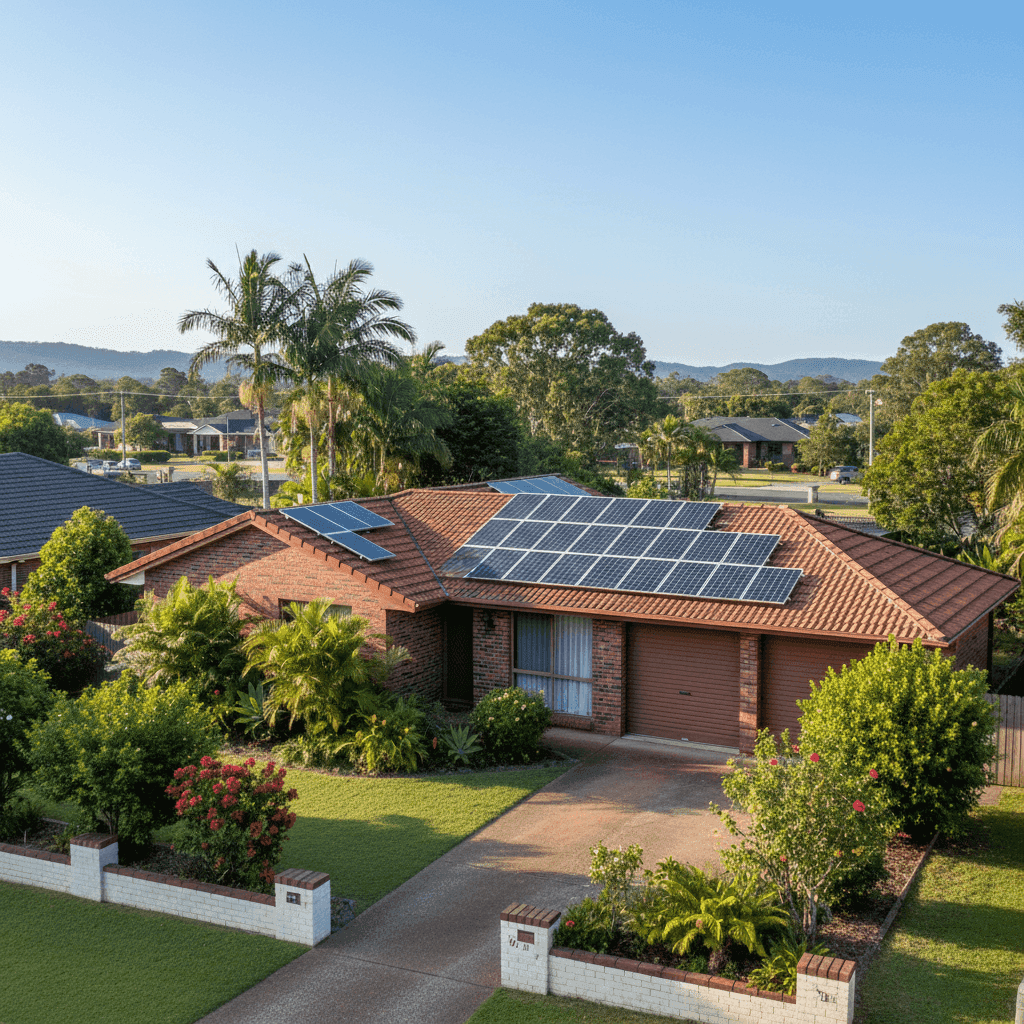
Ocean Shores is a relaxed coastal suburb in the Northern Rivers region of New South Wales, sitting just south of the Queensland border near the mouth of the Brunswick River. It's a popular spot for families and sea-changers drawn to its laid-back lifestyle, lush hinterland backdrop, and easy beach access. But living close to the coast and in a flood-prone river region comes with real implications for home insurance costs — which makes understanding your premium all the more important.
This article breaks down a recent home and contents insurance quote for a 3-bedroom, 1-bathroom free standing home in Ocean Shores (postcode 2483), assessing whether the quoted premium represents fair value and what factors are likely driving the price.
---
Is This Quote Fair?
The annual premium quoted for this property is $3,883 per year (or approximately $372 per month), covering both building (sum insured: $551,000) and contents ($50,000). Based on CoverClub's pricing data, this quote is rated CHEAP — below average for the area.
That's a meaningful finding. Ocean Shores sits within the Tweed LGA, a region that has attracted significant insurer scrutiny in recent years due to flooding events and storm activity. The suburb average premium for Ocean Shores sits at a staggering $98,607 per year, though this figure is heavily skewed by high-risk outliers in the dataset (only 22 quotes were sampled). The suburb median — a more reliable benchmark — is $7,116 per year, with the middle 50% of quotes ranging from $5,742 to $9,860.
At $3,883, this quote comes in well below the suburb's 25th percentile of $5,742, meaning it's cheaper than at least three-quarters of comparable quotes in the area. For a homeowner in Ocean Shores, this is an excellent result worth locking in — provided the policy terms, excesses, and coverage limits are appropriate for your needs.
---
How Ocean Shores Compares
To put this quote in broader context, here's how it stacks up against NSW state averages and national benchmarks:
| Benchmark | Average | Median |
|---|---|---|
| Ocean Shores (suburb) | $98,607/yr | $7,116/yr |
| Tweed LGA | $26,089/yr | — |
| NSW | $9,528/yr | $3,770/yr |
| National | $5,347/yr | $2,764/yr |
| This Quote | $3,883/yr | — |
A few things stand out here. First, the Tweed LGA average of $26,089 per year is nearly five times the NSW state average — a clear signal that insurers price this region as significantly higher risk than most of New South Wales. The flooding history of the Northern Rivers, including the devastating 2022 flood events, has had a lasting impact on premium pricing across the region.
Second, this quote at $3,883 is actually close to the NSW state median ($3,770) and sits above the national median ($2,764). In isolation, it looks like a reasonable premium — but in the context of Ocean Shores specifically, it's a genuinely competitive result.
It's worth noting that the suburb's average is dramatically inflated by a small number of very high-risk quotes in the 22-quote sample. The median is a far better guide for most homeowners, and against that benchmark ($7,116), this quote represents a saving of over $3,200 per year.
---
Property Features That Affect Your Premium
Several characteristics of this property are likely contributing to the competitive premium:
Double Brick Construction Double brick is one of the most favoured wall materials among Australian insurers. It offers excellent structural integrity, fire resistance, and durability against storm damage — all of which reduce the likelihood of a major claim. This alone can meaningfully lower a premium compared to timber or clad construction.
Tiled Roof Terracotta or concrete tile roofs are generally well-regarded by insurers for their longevity and resistance to fire. In storm-prone coastal areas like Ocean Shores, a solid tile roof is a positive risk indicator.
Slab Foundation A concrete slab foundation is considered stable and low-risk by most insurers. It's less susceptible to movement, termite damage, or moisture ingress compared to raised timber stumps or pier foundations.
Solar Panels This property has solar panels installed, which adds some replacement value to the building. Homeowners should confirm that their policy explicitly covers solar panels under the building sum insured — not all policies do by default, and with a $551,000 building sum insured, it's worth verifying the panels are included.
Top-of-the-Range Fittings The property features top-of-the-range fittings, which elevates the rebuild cost. This is appropriately reflected in the $551,000 building sum insured. Underinsuring a well-appointed home is a common and costly mistake — if the sum insured doesn't reflect the true cost to rebuild, you may face a shortfall at claim time.
Building Age (1983) At over 40 years old, this home is mature but not ancient. Homes built in the early 1980s were generally constructed to solid standards, though some insurers apply age loadings. The double brick construction helps offset any age-related concerns.
---
Tips for Homeowners in Ocean Shores
1. Review your flood cover carefully Ocean Shores is located near the Brunswick River and has experienced flood impacts in the past. Check whether your policy includes flood cover as standard or as an optional add-on — and if it's excluded, consider whether that's an acceptable risk given the location.
2. Make sure your solar panels are covered As mentioned above, solar panels aren't always automatically included under a standard building policy. Contact your insurer to confirm coverage and ensure the replacement cost is factored into your sum insured.
3. Don't set-and-forget your sum insured Building costs in Australia have risen sharply in recent years. A sum insured that was accurate in 2020 may be significantly under the current rebuild cost. Use a building cost calculator or speak with a quantity surveyor to validate your $551,000 figure annually.
4. Compare before you renew Even with a competitive premium like this one, it pays to shop around at renewal time. Insurers regularly adjust their pricing, and what was the best deal last year may not be the best deal this year. Get a new quote at CoverClub to see how your current premium stacks up.
---
Compare Home Insurance Quotes in Ocean Shores
Whether you're a first-time buyer or a long-time local, finding the right home insurance in a high-risk region like the Northern Rivers takes more than a quick Google search. CoverClub makes it easy to compare real quotes side by side, so you can see exactly what you're getting — and what you're paying for.
Start comparing home insurance quotes today and find out if your current cover is as competitive as it should be. You can also explore detailed pricing data for Ocean Shores, all of NSW, and Australia-wide benchmarks to make a more informed decision at renewal time.