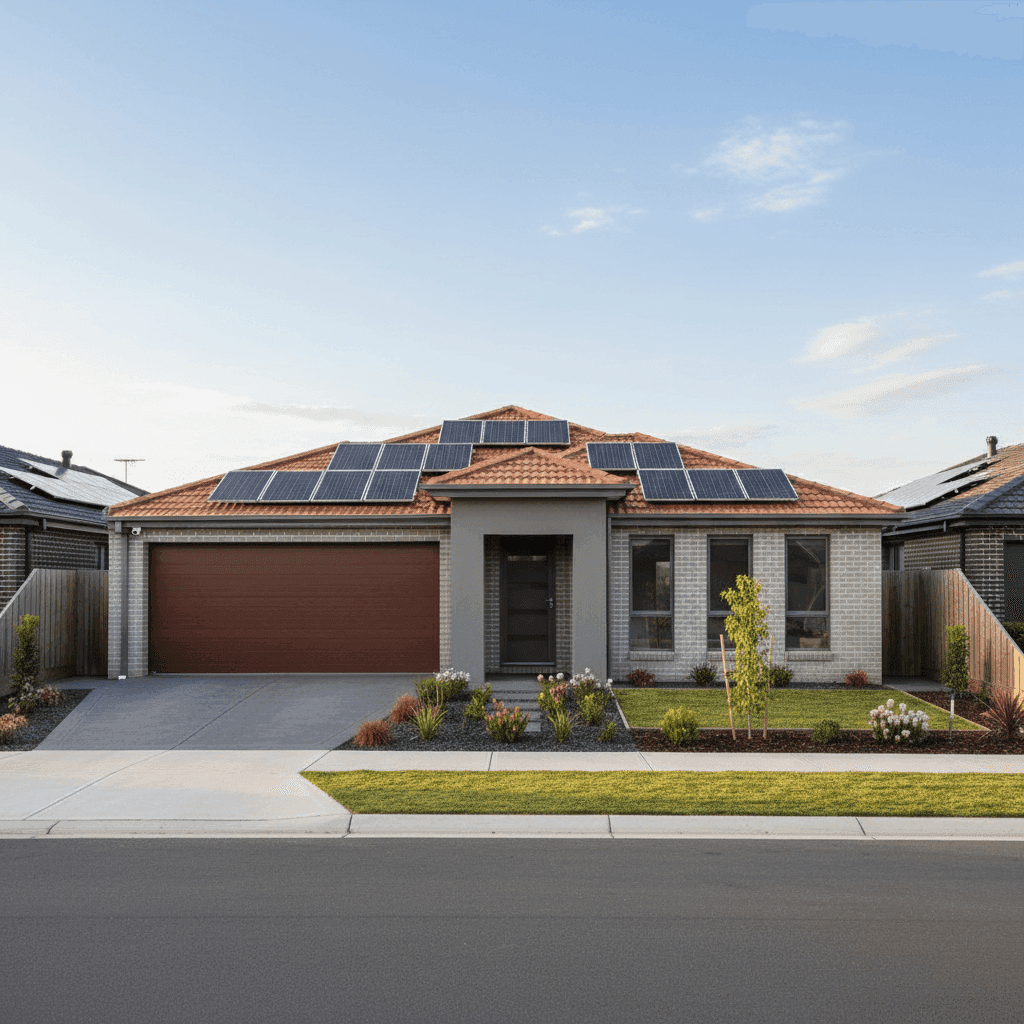
Officer, located in Melbourne's south-east growth corridor within the Cardinia local government area, has become one of Victoria's most popular destinations for new families and upsizers. With a mix of modern estates and well-established streetscapes, it's a suburb where newer builds dominate — and that has real implications for how insurers price your home and contents cover.
This article takes a close look at a recent home and contents insurance quote for a four-bedroom, two-bathroom free-standing home in Officer (postcode 3809), built in 2021 with brick veneer walls, a tiled roof, and a slab foundation. The property spans 235 sqm and includes solar panels and ducted climate control — features that are increasingly common in the area but do influence your premium. The quote came in at $1,567 per year (or roughly $153 per month), covering a building sum insured of $830,000 and contents valued at $100,000, each with a $1,000 excess.
---
Is This Quote Fair?
Our price rating for this quote is FAIR — Around Average, and the data backs that up.
Within Officer itself, the suburb average sits at $1,400 per year and the median at $1,332 per year. At $1,567, this quote lands above both of those figures, placing it closer to the 75th percentile of local quotes (which sits at $1,775/yr). That means roughly 75% of comparable quotes in the area came in cheaper — but it's worth noting the quote isn't excessive by any stretch. The 25th percentile is $1,042/yr, so there's a meaningful spread across the market.
The "fair" rating reflects that while you're paying a little more than the suburb median, you're not being gouged. For a relatively new, well-constructed home with a solid building sum insured of $830,000 and a reasonable contents value, a premium in this range is defensible. That said, it's always worth shopping around — even a modest saving of $200–$300 per year adds up over time.
You can explore the full pricing landscape for Officer on the Officer, VIC 3809 suburb stats page.
---
How Officer Compares
One of the most striking takeaways from this analysis is just how competitive Officer is compared to broader benchmarks.
| Benchmark | Average Premium | Median Premium |
|---|---|---|
| Officer (suburb) | $1,400/yr | $1,332/yr |
| Victoria (state) | $2,921/yr | $2,694/yr |
| Australia (national) | $2,965/yr | $2,716/yr |
| Cardinia LGA | $3,491/yr | — |
Officer sits dramatically below the Victorian state average of $2,921/yr, the national average of $2,965/yr, and — perhaps most surprisingly — well below the broader Cardinia LGA average of $3,491/yr. Homeowners in Officer are, on the whole, paying less than half the state average for their home insurance.
This likely reflects the suburb's relatively low flood and bushfire risk profile compared to other parts of Cardinia, as well as the prevalence of newer construction stock that tends to attract more favourable underwriting terms. Browse the Victoria state insurance stats or national home insurance data to put these figures in broader context.
---
Property Features That Affect Your Premium
Several characteristics of this property work in the homeowner's favour from an insurance pricing perspective — and a few add minor complexity.
Newer construction (2021): A home built just a few years ago is generally viewed favourably by insurers. Modern builds must comply with current Australian building codes, meaning better structural integrity, improved fire resistance, and updated electrical and plumbing standards. This reduces the likelihood of certain types of claims.
Brick veneer walls: Brick veneer is one of the most common wall types in Australian suburbia and is generally well-regarded by insurers. It offers solid fire resistance and durability, which can help keep premiums in check compared to, say, weatherboard or timber cladding.
Tiled roof: Tiled roofs are considered a standard, low-risk roofing type in Victoria. They're durable, widely understood by assessors, and don't carry the premium loading sometimes associated with metal or flat roofing in certain contexts.
Slab foundation: A concrete slab is a standard and stable foundation type for newer homes in Victoria. It's generally considered lower risk than older pier-and-beam or strip footing foundations.
Solar panels: The presence of solar panels does add a small layer of complexity to your insurance. Panels represent an additional asset on your roof and can be damaged by hail, storms, or fire. It's important to confirm with your insurer whether the panels are covered under your building policy, and for what value. Some policies include them automatically; others require a specific endorsement.
Ducted climate control: Like solar panels, ducted systems are a significant fixed asset within the home. They're generally covered under building insurance, but it's worth checking your policy's definition of "building" to ensure the system — including ductwork and the outdoor compressor unit — is fully included.
No pool: The absence of a swimming pool removes one potential liability and maintenance-related risk factor from your profile, which is a minor positive from an underwriting standpoint.
---
Tips for Homeowners in Officer
1. Review your building sum insured regularly. Construction costs have risen sharply in recent years. A sum insured of $830,000 for a 235 sqm home built in 2021 seems reasonable, but it's worth using an independent building cost calculator annually to ensure you're not underinsured. Rebuilding costs in Melbourne's south-east have climbed, and being caught short at claim time can be financially devastating.
2. Confirm solar panel coverage explicitly. Don't assume your solar panels are covered — ask your insurer directly and get the answer in writing. Check whether the coverage extends to the inverter (often located inside the home), the panels themselves, and any battery storage system if you add one in the future.
3. Shop around at renewal time. Because Officer premiums are already well below the state average, it can be tempting to simply renew with your existing insurer each year. However, the spread between the 25th percentile ($1,042/yr) and 75th percentile ($1,775/yr) in the suburb is significant. Getting a fresh set of quotes at renewal takes minutes and could save you hundreds.
4. Consider your excess carefully. Both the building and contents excess on this quote are set at $1,000. A higher excess — say $2,500 — can meaningfully reduce your annual premium. If you have a solid emergency fund and are unlikely to make small claims, increasing your excess is often a smart financial trade-off.
---
Compare Your Home Insurance with CoverClub
Whether you're a first-time buyer in Officer or you've been in your home for a few years, it pays to know where your premium sits relative to the market. CoverClub makes it easy to see how your quote stacks up against real data from your suburb, your state, and across Australia.
Get a home insurance quote today at CoverClub and find out if you're paying a fair price — or if there's a better deal waiting for you.