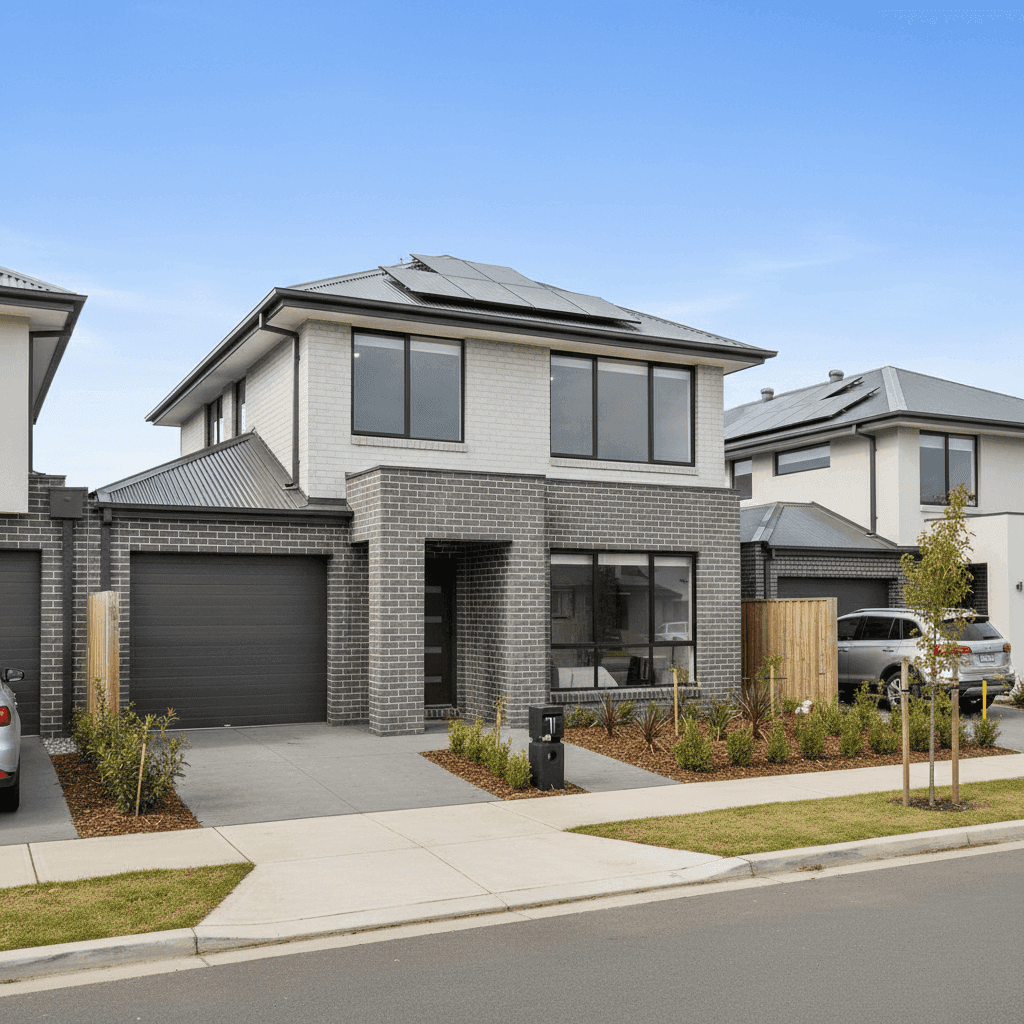
Officer, located in Melbourne's south-eastern growth corridor, has become one of Victoria's most active new-build suburbs. If you own a townhouse here — particularly a modern brick veneer build with a Colorbond roof — understanding what you should be paying for home insurance is just as important as locking in the right cover. This article breaks down a real building insurance quote for a 3-bedroom, 2-bathroom townhouse in Officer VIC 3809, and puts the numbers into context so you can judge whether you're getting a fair deal.
---
Is This Quote Fair?
The quote in question is $935 per year (or $90/month) for Building Only cover, with a $1,000 building excess and a sum insured of $450,000. Our price rating for this quote is CHEAP — below average for the suburb.
To put that plainly: this is a genuinely competitive premium. Based on 128 quotes collected for Officer 3809, the suburb average sits at $1,592/year and the median at $1,530/year. This quote comes in at roughly 41% below the suburb average — well under even the 25th percentile of $1,302/year. In other words, fewer than one in four homeowners in this suburb are paying this little for building cover.
For a newly constructed townhouse (2026 build), this kind of pricing makes sense in part — brand-new properties tend to attract lower premiums because there's less risk of pre-existing structural issues, ageing materials, or deferred maintenance. But even accounting for that, this quote is meaningfully below what most Officer residents are paying.
---
How Officer Compares to the Rest of Victoria and Australia
Zooming out from the suburb level paints an even more interesting picture. You can explore the full breakdown on the Officer VIC 3809 insurance stats page.
| Benchmark | Annual Premium |
|---|---|
| This Quote | $935 |
| Officer Suburb Average | $1,592 |
| Officer Suburb Median | $1,530 |
| Cardinia LGA Average | $3,089 |
| VIC State Average | $3,000 |
| VIC State Median | $2,718 |
| National Average | $5,347 |
| National Median | $2,764 |
A few things stand out here. First, Officer's suburb average of $1,592 is notably lower than both the Victorian state average of $3,000 and the national average of $5,347. This reflects Officer's relatively low natural hazard profile — it's not in a cyclone risk zone, bushfire risk is moderate compared to outer fringe areas, and the suburb doesn't face the flood exposure that pushes premiums sky-high in parts of regional Victoria and Queensland.
Interestingly, the Cardinia LGA average ($3,089) is significantly higher than Officer's suburb average, which suggests that other postcodes within Cardinia — potentially more rural or bushfire-exposed areas — are pulling the LGA figure upward. Officer itself, as a master-planned urban suburb, benefits from modern infrastructure and lower risk ratings.
At the national level, the average of $5,347 is heavily influenced by high-risk regions in North Queensland, Northern Territory, and flood-prone areas of NSW and QLD. For a Victorian homeowner in a low-risk suburb like Officer, that national figure is not a useful comparison — but it does serve as a reminder of just how fortunate this location is from an insurance cost perspective.
---
Property Features That Affect Your Premium
Several characteristics of this particular property work in the homeowner's favour when it comes to pricing:
Brick Veneer Walls Brick veneer is one of the most common and insurer-friendly external wall materials in Australia. It's durable, fire-resistant, and well-understood by underwriters. Compared to timber weatherboard or fibre cement cladding, brick veneer typically attracts lower premiums.
Steel/Colorbond Roof Colorbond roofing is highly regarded by insurers for its resilience against wind, fire, and hail. It's lightweight yet strong, and doesn't deteriorate as quickly as terracotta or concrete tiles. This is a genuine premium-reducing feature.
Slab Foundation A concrete slab is the standard foundation for modern builds in Victoria's growth corridors and is considered low-risk by insurers. There's no subfloor cavity to worry about, and slabs are well-suited to the reactive clay soils common in Melbourne's outer south-east.
New Construction (2026) A brand-new property carries minimal wear-and-tear risk. Insurers price new builds more favourably because everything from the wiring to the plumbing meets current building codes, reducing the likelihood of a claim arising from ageing infrastructure.
Solar Panels While solar panels are generally a positive feature, they do add a small amount of complexity to a building insurance policy. It's worth confirming with your insurer that your solar system is explicitly covered under the building sum insured — some policies treat panels as a separate item or may have specific exclusions around inverter damage or storm-related panel loss.
Ducted Climate Control Ducted systems are a fixed building feature and should be covered under your building policy. Again, it's worth double-checking your policy wording to ensure the full system — including the outdoor compressor unit — is included in your sum insured.
No Pool The absence of a pool removes a meaningful liability and maintenance risk factor, which keeps the premium lower.
---
Tips for Homeowners in Officer
1. Don't set and forget your sum insured Construction costs in Victoria have risen sharply in recent years. A $450,000 sum insured may be appropriate today for a 139 sqm townhouse, but it's worth reviewing annually. Underinsurance is one of the most common and costly mistakes homeowners make — if rebuilding costs exceed your sum insured at claim time, you'll wear the difference.
2. Confirm solar panel coverage in your policy As mentioned above, solar panels aren't always automatically covered to their full replacement value under a standard building policy. Ask your insurer directly: are the panels, inverter, and mounting hardware all included? What's the claims process if panels are damaged in a hailstorm?
3. Consider contents cover as your next step This quote covers the building only. If you have furniture, appliances, clothing, and other personal belongings inside the home, a contents policy is worth adding. Many insurers offer discounts when you bundle building and contents together.
4. Compare quotes at least once a year Even if you're happy with your current premium, the insurance market shifts regularly. New insurers enter the market, risk models are updated, and your own property profile may change. Running a fresh comparison at CoverClub takes minutes and could reveal savings — or confirm you're already on a great deal.
---
Get Your Own Quote
Whether you're a new homeowner in Officer or you've been in your townhouse for a few years and haven't reviewed your cover lately, it pays to compare. CoverClub aggregates real quotes from Australian insurers so you can see exactly where you stand. Compare home insurance quotes for your property today — it's free, fast, and tailored to your address.