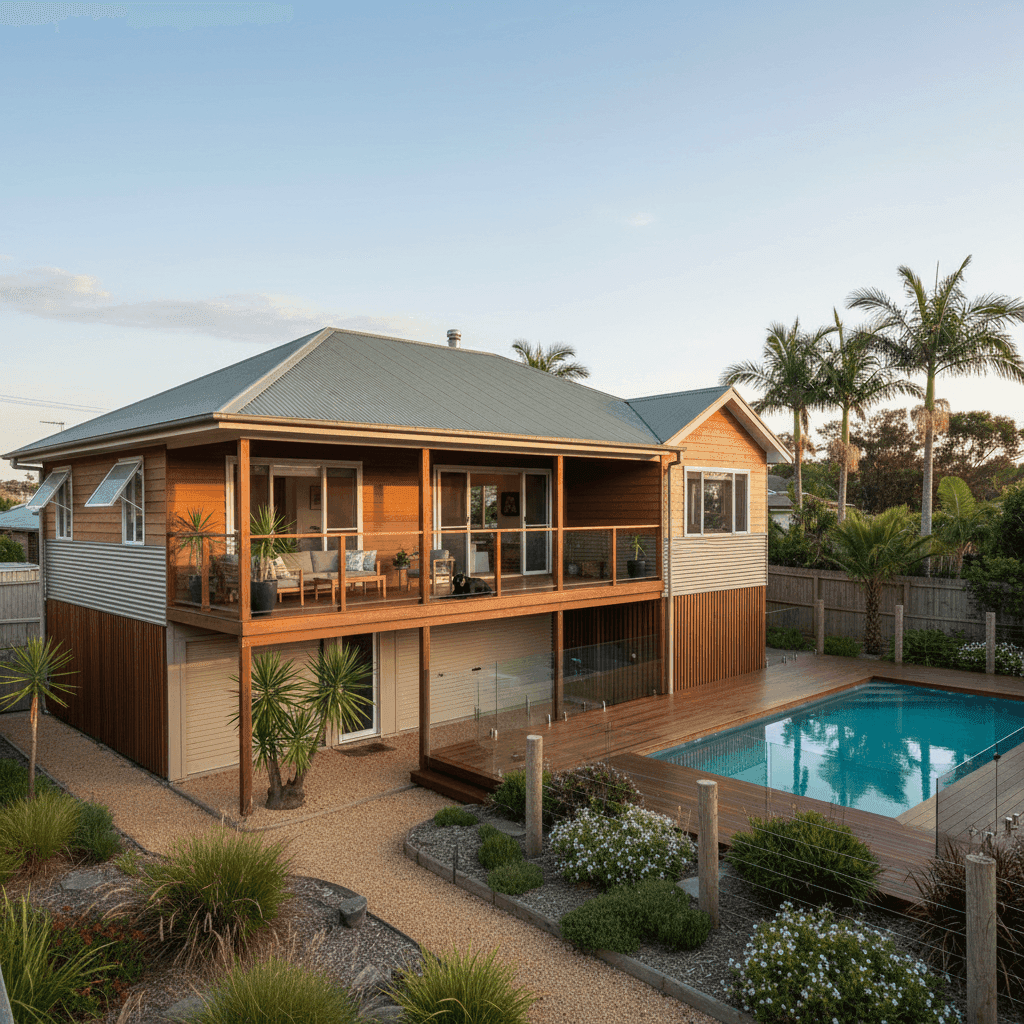
Old Bar is a relaxed coastal town on the Mid-North Coast of New South Wales, popular with families and sea-changers drawn to its beaches, estuary lifestyle, and relative affordability compared to bigger coastal centres. But owning a home here — particularly a substantial four-bedroom free-standing property — comes with insurance considerations that are worth understanding in detail. This article breaks down a real home and contents insurance quote for a property in Old Bar (postcode 2430), compares it against local, state, and national benchmarks, and offers practical guidance for homeowners looking to get the best value on their cover.
---
Is This Quote Fair?
The quote in question sits at $6,289 per year (or $603/month) for combined home and contents insurance, covering a building sum insured of $1,026,000 and $80,000 in contents. Both the building and contents carry a $500 excess.
Our price rating for this quote is Expensive — Above Average.
To put that in context: the average home insurance premium across Old Bar suburbs sits at just $2,325 per year, with a median of $2,209. This quote is roughly 2.7 times the local suburb average — a significant gap that warrants a closer look.
That said, it's important not to read that comparison in isolation. The suburb average is drawn from a sample of 16 quotes, which is a relatively small dataset and may not fully capture the range of property types, sizes, and sum-insured levels in the area. A building insured for over $1 million is almost certainly at the higher end of the local spectrum, and a larger sum insured directly drives a higher premium. The 214 sqm floor area, four bedrooms, two bathrooms, and additional features like a swimming pool and ducted climate control all contribute to a higher replacement cost — and therefore a higher premium.
So while the price tag looks steep compared to the suburb average, it reflects a property that is likely larger and more comprehensively covered than many of the homes in that comparison pool.
---
How Old Bar Compares
Understanding where this quote sits relative to broader benchmarks helps frame whether the premium is truly out of line — or simply reflects the nature of the property.
| Benchmark | Average Premium | Median Premium |
|---|---|---|
| Old Bar (2430) | $2,325/yr | $2,209/yr |
| Mid-Coast LGA | $5,840/yr | — |
| NSW | $9,528/yr | $3,770/yr |
| National | $5,347/yr | $2,764/yr |
A few things stand out here. First, the NSW state average of $9,528 is heavily skewed by high-value properties and high-risk areas — the median of $3,770 is a more representative figure for typical NSW homeowners. Against the NSW median, this quote of $6,289 is above average but not dramatically so for a well-appointed, large coastal property.
Interestingly, the Mid-Coast LGA average of $5,840 is the most relevant geographic comparison, and this quote sits only modestly above it — suggesting that for a property of this size and value in this region, the premium is closer to expected than the suburb-level comparison implies.
Against the national average of $5,347, the quote is higher, but again, the national median of $2,764 reflects a very broad range of properties across Australia, many of which are smaller or in lower-risk areas.
You can explore more data for this area at the Old Bar suburb insurance stats page, compare it against NSW state-wide figures, or see how it stacks up against national benchmarks.
---
Property Features That Affect Your Premium
Several characteristics of this property have a meaningful influence on the premium — both upward and downward.
Building Size and Sum Insured
At 214 sqm and insured for $1,026,000, this is a substantial home. The building sum insured is the single biggest driver of premium cost. Insurers calculate risk based on what it would cost to fully rebuild the property from scratch, including materials, labour, and professional fees. A higher sum insured means a higher premium, full stop.
Stump Foundation
The property sits on stumps — a common foundation type in coastal and regional NSW, particularly in areas with reactive soils or flood-prone land. Stump foundations can be a flag for some insurers, as they may be associated with elevated flood risk or structural movement over time. This can contribute to a higher base rate.
Colorbond Steel Roof
A steel/Colorbond roof is generally viewed favourably by insurers. It's durable, fire-resistant, and performs well in high-wind events — all factors that can help moderate the risk assessment for the dwelling.
Swimming Pool
The presence of a pool adds to both the replacement cost of the property and the liability exposure for insurers. Pools require specific coverage considerations and typically nudge premiums upward.
Ducted Climate Control
Ducted air conditioning systems are a significant asset and increase the overall replacement value of the home. Their inclusion in the building cover contributes to the higher sum insured and, consequently, the premium.
Timber and Laminate Flooring
Timber and laminate floors are more susceptible to water damage than tiles, which can influence how insurers assess internal damage risk — particularly relevant in a coastal environment where humidity and the occasional flooding event are real considerations.
Elevation
The property is elevated by less than one metre. While any elevation can help reduce flood risk compared to ground-level homes, the sub-one-metre threshold means this property may not receive the full flood-risk discount that more substantially elevated properties attract.
---
Tips for Homeowners in Old Bar
1. Review your building sum insured annually Construction costs have risen sharply in recent years. Make sure your sum insured reflects current rebuild costs — not the purchase price or an outdated estimate. Underinsurance is one of the most common and costly mistakes homeowners make. Use a building cost calculator or ask your insurer to reassess.
2. Ask about flood and storm cover specifics Old Bar is a coastal town with estuary frontage, and parts of the area have documented flood risk. Make sure your policy explicitly covers flood (not just storm damage), and understand exactly what triggers a claim. Some policies treat flood and storm surge differently — the fine print matters.
3. Compare quotes before renewing Loyalty rarely pays in insurance. Premiums can vary enormously between providers for the same property and level of cover. Get a fresh quote through CoverClub to see whether a better deal is available — even if your current insurer has served you well.
4. Consider your excess strategically Both the building and contents excess on this policy are set at $500. Opting for a higher excess (say, $1,000 or $2,000) can meaningfully reduce your annual premium. If you have a solid emergency fund and are unlikely to make small claims, a higher excess can be a smart trade-off.
---
Compare Your Home Insurance with CoverClub
Whether you're a long-time Old Bar local or new to the area, it pays to know what the market looks like before you commit to a policy. CoverClub makes it easy to compare home and contents insurance quotes from a range of Australian insurers — so you can see exactly where your premium sits and whether there's a better option available. Start your comparison today and take the guesswork out of home insurance.