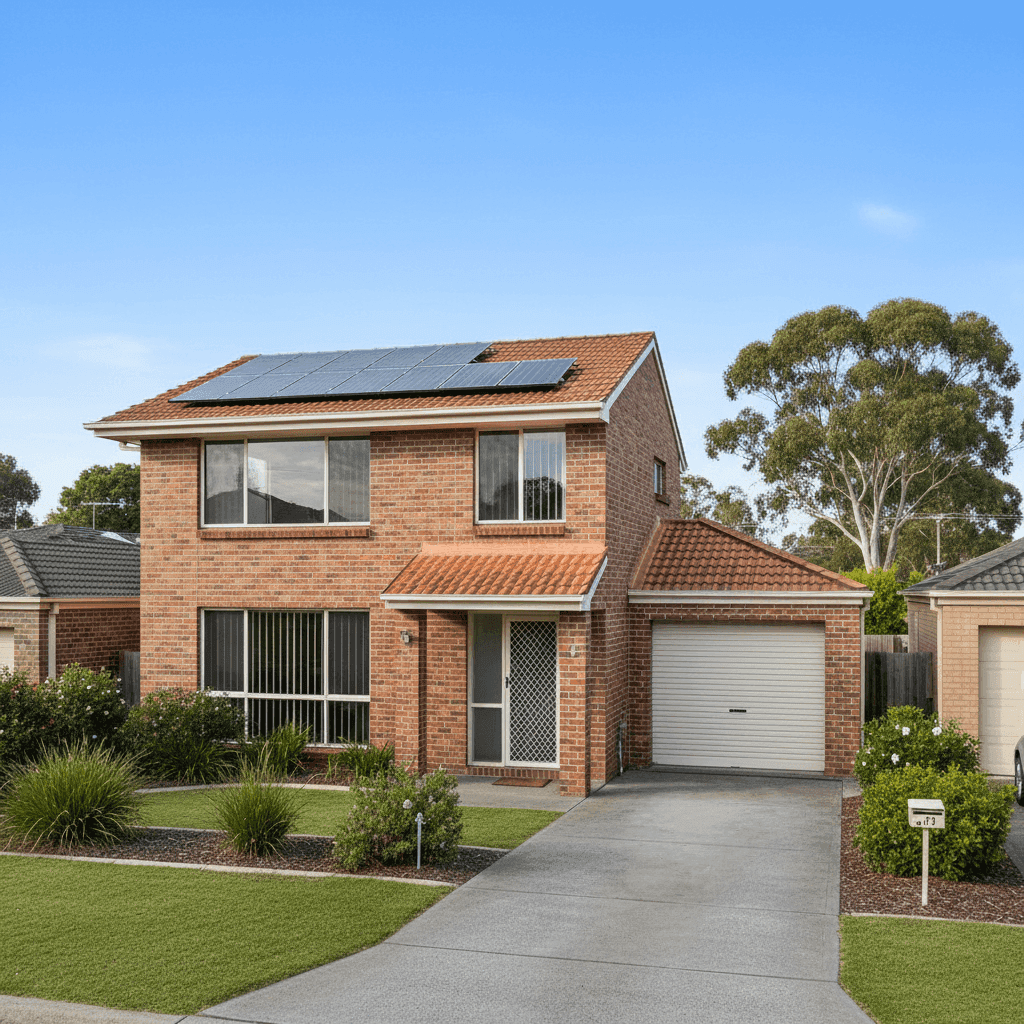
Old Bar is a relaxed coastal town on the Mid-North Coast of New South Wales, popular with families and sea-changers alike. It sits within the Mid-Coast Council local government area and offers an appealing mix of beachside lifestyle and suburban convenience. If you own a townhouse here, understanding what you should be paying for home insurance — and why — can make a real difference to your household budget.
This article breaks down a recent Home and Contents insurance quote for a 3-bedroom, 1-bathroom brick veneer townhouse in Old Bar (postcode 2430), built in 1998, with a building sum insured of $200,000 and contents cover of $172,000. The quoted annual premium came in at $3,242 per year (or $311/month), with a $1,000 excess on both building and contents.
---
Is This Quote Fair?
The short answer: this quote is rated Expensive — above average for the area.
At $3,242 per year, this premium sits noticeably above the suburb average of $2,325/yr and the suburb median of $2,209/yr for Old Bar (NSW 2430). In fact, it clears even the 75th percentile benchmark of $3,021/yr — meaning roughly three-quarters of comparable quotes in the suburb come in cheaper.
That said, "expensive" is relative. The combined sum insured here totals $372,000 ($200,000 building + $172,000 contents), which is a meaningful level of cover. Higher insured values naturally push premiums upward, and the contents figure of $172,000 is on the higher end for a townhouse of this size. If your contents are genuinely worth that amount, the cover is appropriate — but it's worth reviewing whether that figure is accurate, as over-insuring is a common and costly mistake.
The above-average fittings quality noted on this property will also be a contributing factor. Insurers price rebuilding costs based on the quality of internal finishes, and above-average fittings mean higher estimated replacement costs per square metre.
---
How Old Bar Compares
Putting this quote in broader context helps illustrate where Old Bar sits in the national insurance landscape.
| Benchmark | Premium |
|---|---|
| This quote | $3,242/yr |
| Old Bar suburb average | $2,325/yr |
| Old Bar suburb median | $2,209/yr |
| Mid-Coast LGA average | $5,840/yr |
| NSW state average | $9,528/yr |
| NSW state median | $3,770/yr |
| National average | $5,347/yr |
| National median | $2,764/yr |
(Based on 16 quotes sampled in the Old Bar suburb area)
A few things stand out here. While this quote is above average for the suburb, it's actually well below both the NSW state average of $9,528/yr and the national average of $5,347/yr. The NSW state figures are heavily skewed upward by high-risk and high-value properties across the state — particularly in flood-prone regions and premium Sydney suburbs — so the median is a more reliable comparison point. Against the NSW median of $3,770/yr, this quote looks more reasonable, sitting about $528 below it.
Compared to the broader Mid-Coast LGA average of $5,840/yr, this quote is actually quite competitive. The LGA encompasses a wide range of properties and risk profiles, including coastal and flood-exposed areas that attract significantly higher premiums.
So while this quote is above average for Old Bar specifically, it's not out of line with the broader regional and state picture — particularly given the level of cover involved.
---
Property Features That Affect Your Premium
Several characteristics of this property will be influencing the quoted premium, both positively and negatively.
Brick veneer construction is generally viewed favourably by insurers. It offers solid fire resistance and durability compared to timber-framed or clad exteriors, which can translate to modest premium savings. Combined with a tiled roof, this property sits in a construction category that most insurers consider lower risk for weather-related damage — especially important in coastal NSW where storms are a seasonal concern.
The slab foundation is standard for properties of this era and construction type in NSW, and doesn't typically attract any premium loading. Similarly, the 1998 build year places this home in a relatively modern bracket — not new enough to benefit from the very latest construction standards, but well past the era of older wiring and plumbing that can concern insurers.
Solar panels are worth noting. Most home insurance policies cover solar panels as part of the building, but not all do so automatically — and some apply sub-limits. It's worth confirming with your insurer that your panels are explicitly covered under the building sum insured, and that the $200,000 figure accounts for their replacement value.
Carpet flooring is typically less expensive to replace than hardwood or stone, but the above-average fittings quality throughout the home will offset this. Insurers factor fit-out quality into their rebuild cost estimates, and above-average fixtures, appliances, and finishes can add meaningfully to the total.
The absence of a pool and ducted climate control keeps things simpler — both are features that can add complexity (and cost) to claims and premiums respectively.
---
Tips for Homeowners in Old Bar
1. Review your contents sum insured carefully. $172,000 is a substantial contents figure for a 105 sqm townhouse. Take the time to do a proper contents inventory — room by room — to make sure you're not paying to over-insure items you no longer own, while also ensuring valuable items like electronics, jewellery, or tools are adequately covered.
2. Confirm your solar panels are covered. Ask your insurer directly whether solar panels are included in your building cover and whether any sub-limits apply. Given the cost of modern solar systems, a gap in cover here could be an expensive surprise at claim time.
3. Compare quotes before renewal. With 16 quotes sampled in the Old Bar area ranging from around $1,754/yr (25th percentile) to $3,021/yr (75th percentile), there's clearly a spread in what insurers will charge for similar properties. Loyalty doesn't always pay — getting a fresh quote at CoverClub at renewal time takes minutes and could save you hundreds.
4. Consider your excess level. Both building and contents excesses are set at $1,000 here. Opting for a higher voluntary excess — say $2,000 — can reduce your annual premium noticeably. If you have a solid emergency fund and are unlikely to make small claims, this trade-off often makes financial sense.
---
Compare Your Options with CoverClub
Whether you're reviewing an existing policy or shopping for cover for the first time, it pays to benchmark your premium against the market. CoverClub makes it easy to see how your quote stacks up against real data from your suburb, your state, and across Australia. Get a home insurance quote today and find out if you're getting a fair deal — or paying more than you need to.