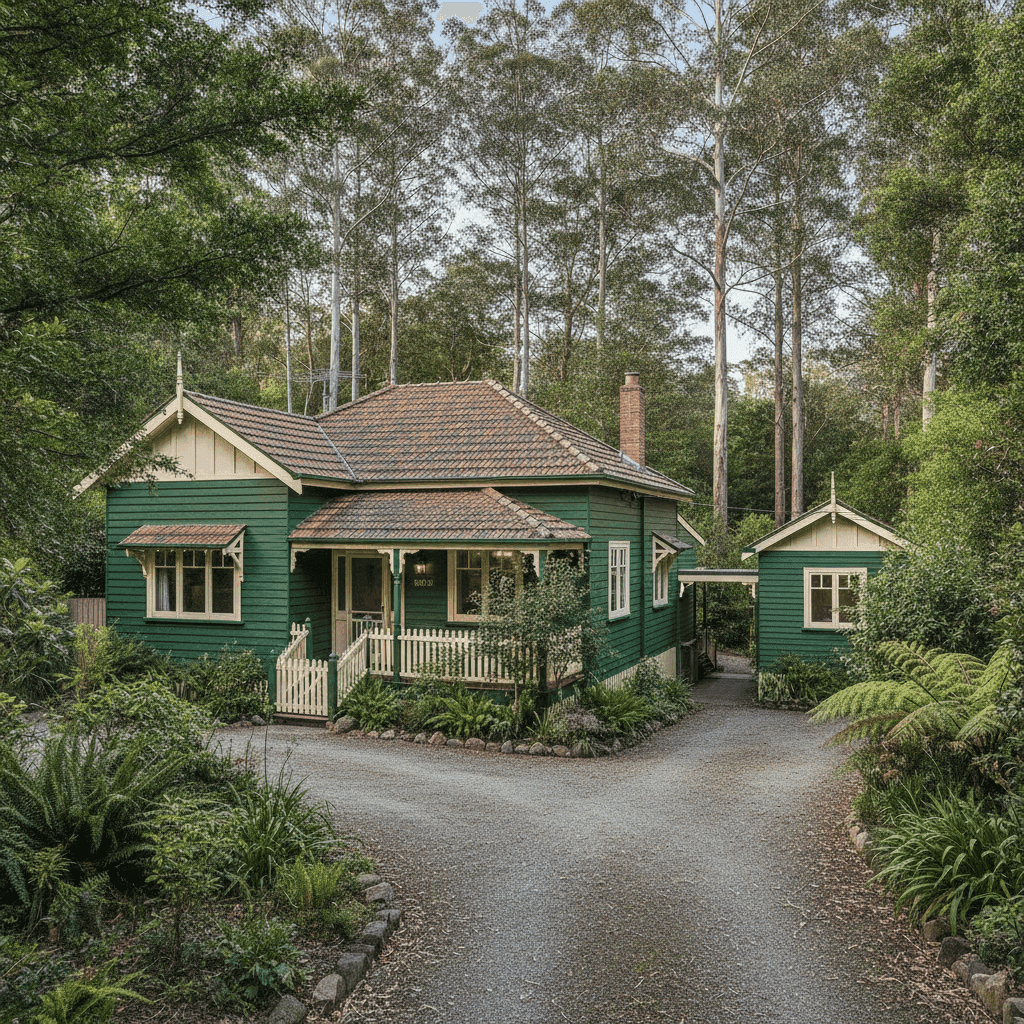
Nestled in the cool, lush foothills of the Dandenong Ranges, Olinda is one of Victoria's most picturesque and sought-after semi-rural suburbs. But owning a characterful home here comes with its own set of insurance considerations — from heritage construction materials to elevated bushfire exposure. This article breaks down a real home and contents insurance quote for a five-bedroom free-standing home in Olinda (postcode 3788), examines whether the premium is competitive, and offers practical tips for homeowners looking to get the best value cover.
---
Is This Quote Fair?
The quote in question comes in at $8,716 per year (or $835/month) for a combined home and contents policy. The building is insured for $1,505,000 and contents for $203,000, with a $1,000 excess on each.
Our price rating for this quote is Expensive — above average for the Olinda area.
To put that in context, the suburb average premium sits at $6,252 per year, and the median is $5,615. This quote lands well above the 75th percentile threshold of $7,319, meaning it is pricier than at least three-quarters of comparable quotes we've seen in the area. That's a meaningful gap — roughly $2,464 more per year than the suburb average.
That said, "expensive" doesn't automatically mean "wrong." A 1920-built weatherboard home on stumps, spanning 235 sqm with five bedrooms, five bathrooms, a granny flat, and ducted climate control, carries a genuinely higher risk profile than a modern brick veneer property. Insurers price these characteristics carefully, and the $1,505,000 building sum insured reflects a substantial replacement cost for a large, older home with period features. Still, it's worth shopping around to ensure you're not overpaying for equivalent coverage.
---
How Olinda Compares
Understanding where your premium sits relative to broader benchmarks is one of the most useful tools a homeowner has. Here's how this quote stacks up:
| Benchmark | Annual Premium |
|---|---|
| This quote | $8,716 |
| Olinda suburb average | $6,252 |
| Olinda suburb median | $5,615 |
| Olinda 75th percentile | $7,319 |
| Yarra Ranges LGA average | $5,600 |
| VIC state average | $3,000 |
| National average | $5,347 |
You can explore the full picture on our Olinda suburb stats page, the Victoria state overview, or the national home insurance stats.
The gap between Olinda's suburb average ($6,252) and the Victorian state average ($3,000) is striking — Olinda premiums run more than double the state norm. This reflects the elevated bushfire risk in the Dandenong Ranges, the prevalence of older timber homes, and the higher property values in the area. Even against the national average of $5,347, Olinda sits noticeably higher.
The Yarra Ranges LGA average of $5,600 is a useful local reference point — it confirms that Olinda's premiums are elevated even within its own council area, driven by the suburb's specific risk characteristics.
---
Property Features That Affect Your Premium
Several aspects of this property have a direct bearing on the insurance premium, and it's worth understanding each one.
Age and Construction (1920, Weatherboard Timber)
A home built in 1920 is over a century old. Weatherboard timber construction, while charming and architecturally significant, is considered higher risk by insurers than brick or rendered concrete. Timber is more susceptible to fire, rot, and pest damage, and older homes often have outdated electrical wiring, plumbing, and structural systems that increase the likelihood and cost of a claim.
Stump Foundation
Homes on stumps — common in older Victorian and Queensland-style builds — can be more vulnerable to movement, subsidence, and moisture-related damage. Restumping is a significant expense, and insurers factor this into their risk assessments.
Roof Type (Tiles)
A tiled roof is generally viewed more favourably than corrugated iron or older materials, offering reasonable durability and fire resistance. However, on an older home, tiles may be brittle and harder to source for repairs, which can push up claim costs.
Size and Inclusions (235 sqm, 5 Bed / 5 Bath, Granny Flat, Ducted Climate Control)
This is a large home by any measure. Five bathrooms and a granny flat substantially increase the replacement cost — more wet areas, more fixtures, more square metreage to rebuild. Ducted climate control systems are expensive to replace and add to the overall sum insured. All of these features contribute to the higher building sum insured of $1,505,000, which is the primary driver of the premium.
Bushfire Exposure
Olinda sits within a designated bushfire-prone zone. Insurers apply significant loadings for properties in the Dandenong Ranges, where the combination of dense vegetation, steep terrain, and dry summer conditions creates genuine fire risk. This is one of the most influential factors in Olinda premiums across the board.
---
Tips for Homeowners in Olinda
1. Compare Multiple Quotes Annually
Given that this quote sits above the 75th percentile for the suburb, there is real scope to find a more competitive premium without sacrificing cover. Insurers assess risk differently, and a quote that's expensive with one provider may be average with another. Use a comparison tool like CoverClub to benchmark your options quickly.
2. Review Your Sum Insured Carefully
At $1,505,000, the building sum insured is substantial — and rightly so for a large, older home with a granny flat. However, it's worth having a qualified quantity surveyor assess your rebuild cost periodically. Being over-insured means you're paying more in premiums than necessary; being under-insured can leave you significantly out of pocket after a major claim.
3. Invest in Bushfire Mitigation
Proactive bushfire preparation can sometimes lead to premium reductions, and it's simply good practice in a high-risk area like Olinda. Clearing gutters, maintaining a defendable space around the home, installing ember guards on vents, and upgrading to bushfire-rated window screens are all measures that reduce risk — and some insurers will recognise these efforts in your premium.
4. Consider Your Excess Level
Both the building and contents excess are set at $1,000. Opting for a higher voluntary excess (say, $2,000 or $2,500) can meaningfully reduce your annual premium. If you have the financial buffer to absorb a larger out-of-pocket cost in a claim, this trade-off often makes sense — particularly for a property where major claims (fire, storm) are the primary concern rather than frequent smaller incidents.
---
Compare Your Options with CoverClub
Whether you're renewing your policy or insuring a new purchase in Olinda, it pays to know where your quote stands. CoverClub makes it easy to compare home and contents insurance premiums using real data from properties like yours. Get a quote today and see how your premium stacks up against the suburb, state, and national benchmarks — in minutes.