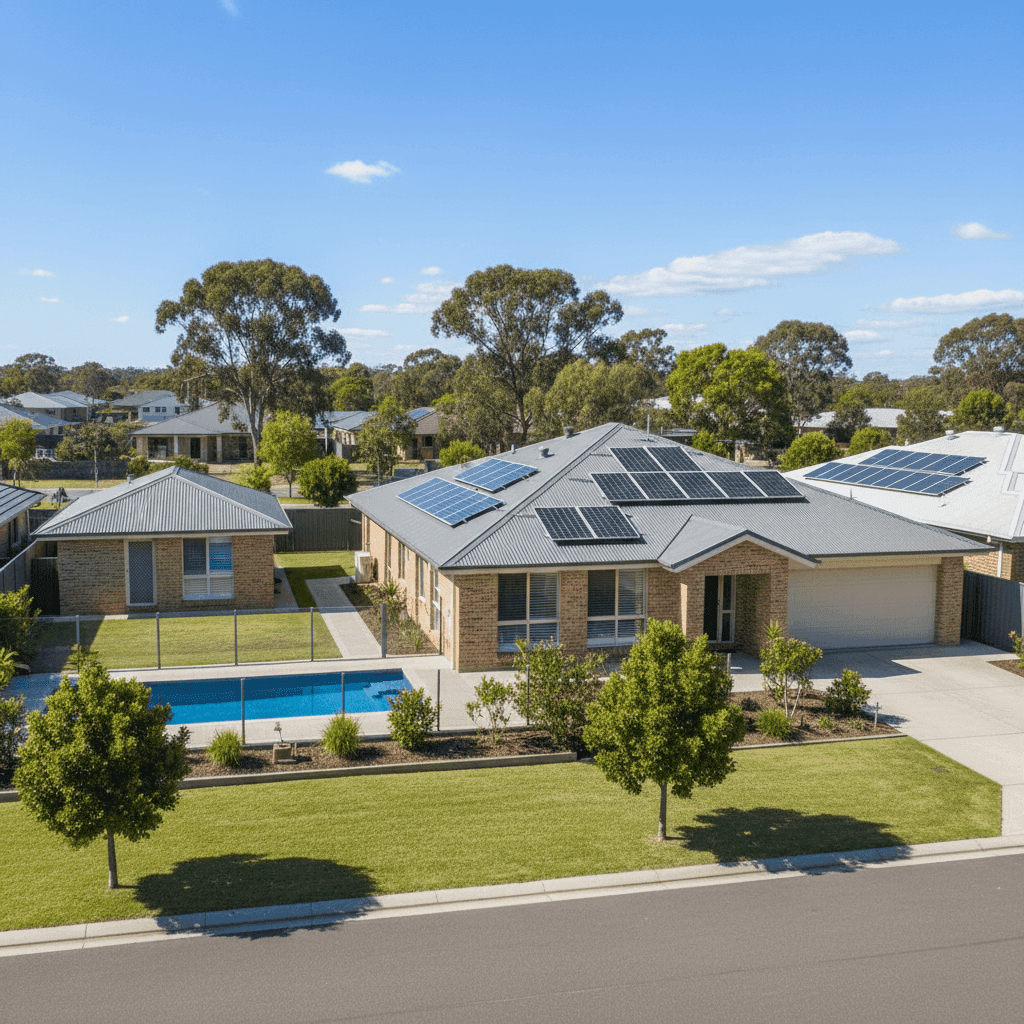
One Mile is a relaxed residential suburb sitting within the Port Stephens local government area on the NSW Mid North Coast — a region known for its coastal lifestyle, strong property demand, and a diverse mix of family homes. This analysis looks at a building-only insurance quote for a six-bedroom, three-bathroom free-standing home in the 2316 postcode, helping local homeowners understand what they're paying and why.
---
Is This Quote Fair?
The quoted annual premium for this property comes in at $6,816 per year (or $646 per month), with a $1,000 building excess and a sum insured of $1,000,000. Our independent price rating places this quote as FAIR — Around Average.
That rating reflects where the quote sits relative to the local market. Based on 34 quotes collected for One Mile and the surrounding 2316 postcode, the suburb average premium is $6,662 per year, and the median sits at $5,752 per year. This quote lands just above the suburb average — not dramatically so, but worth understanding in context.
The 75th percentile for the suburb is $7,042 per year, meaning roughly three-quarters of comparable quotes come in below that figure. At $6,816, this quote is comfortably within the upper-middle band of the local market — not a bargain, but not an outlier either. For a large property with a generous sum insured and several risk-relevant features, the pricing is broadly defensible.
---
How One Mile Compares
Understanding where your premium sits relative to broader benchmarks is one of the most useful exercises a homeowner can do. Here's how One Mile stacks up:
| Benchmark | Average Premium | Median Premium |
|---|---|---|
| One Mile (2316) | $6,662/yr | $5,752/yr |
| NSW State | $9,528/yr | $3,770/yr |
| National | $5,347/yr | $2,764/yr |
| Port Stephens LGA | $3,116/yr | — |
A few things stand out immediately. The NSW state average of $9,528 per year is significantly higher than the One Mile average — driven largely by high-value and high-risk properties concentrated in Sydney and coastal flood-prone areas. The wide gap between the NSW average and median ($3,770) tells you the distribution is heavily skewed by expensive outliers.
Compared to national figures, One Mile premiums are notably higher than both the national average ($5,347) and median ($2,764). This reflects the coastal location, strong property values, and the characteristics typical of larger homes in the region.
Perhaps the most striking figure is the Port Stephens LGA average of just $3,116 per year — considerably lower than the One Mile suburb average. This gap is likely explained by the mix of smaller, lower-value properties across the broader LGA bringing the average down, whereas One Mile tends to attract larger, more established homes with higher sums insured.
For a deeper look at local pricing trends, visit the One Mile suburb stats page.
---
Property Features That Affect Your Premium
This isn't a cookie-cutter property, and the premium reflects that. Several features of this home have a meaningful bearing on what insurers charge:
Size and sum insured: At 420 square metres, this is a large home by any measure. A $1,000,000 sum insured is substantial, and insurers price accordingly — more to rebuild means more exposure for the insurer.
Brick veneer construction and Colorbond roof: This is generally a favourable combination from an insurer's perspective. Brick veneer offers solid fire resistance, and steel/Colorbond roofing is durable, low-maintenance, and performs well in high-wind events. Both materials are well-regarded in the Australian market and can help moderate premiums compared to, say, weatherboard or tile constructions.
Slab foundation: Concrete slab foundations are considered stable and are less susceptible to subsidence or pest-related damage than older pier-and-beam designs. Insurers view this positively.
Swimming pool: A pool adds replacement cost to the insured structure and can introduce liability considerations. It's a factor that nudges premiums upward.
Solar panels: Rooftop solar systems are increasingly common, but they do add to the rebuild cost and introduce some risk during storm or hail events. Most insurers include solar panels under building cover, but their presence contributes to the overall sum insured calculation.
Ducted climate control: Ducted HVAC systems are expensive to replace and are typically captured under building cover. This is another feature that supports the higher sum insured figure.
Granny flat: A self-contained secondary dwelling adds meaningful value to the insured structure and increases the complexity of any potential claim. This is one of the more significant premium drivers for this property.
Construction year (1995): A home built in 1995 is now around 30 years old. While it's not heritage-listed or particularly aged, insurers may factor in the likelihood of older wiring, plumbing, or roofing components requiring attention. Regular maintenance is key to keeping this from becoming a claims issue.
---
Tips for Homeowners in One Mile
1. Review your sum insured annually With a $1,000,000 building sum insured, it's essential to ensure this figure accurately reflects current rebuild costs — not market value. Construction costs have risen significantly in recent years. Underinsurance is one of the most common and costly mistakes homeowners make. Use a building cost calculator or speak with a quantity surveyor to validate your figure.
2. Don't forget to declare the granny flat Secondary dwellings are sometimes inadvertently omitted from insurance declarations, leaving homeowners underinsured. Make sure your policy explicitly covers the granny flat as part of the insured structure, and that the sum insured accounts for it.
3. Document your solar and pool assets Keep records — including purchase receipts, installation dates, and specifications — for your solar panels, pool equipment, and ducted climate system. This documentation can significantly streamline a claim and help ensure you're fully compensated.
4. Compare quotes before renewal The difference between the 25th percentile ($4,393) and 75th percentile ($7,042) in One Mile is nearly $2,650 per year. That's a meaningful spread, and it exists because different insurers weight risk factors differently. Shopping the market at renewal — rather than auto-renewing — is one of the simplest ways to avoid overpaying.
---
Ready to Compare?
Whether you're renewing your policy or insuring a new property, it pays to see what's available in the market. Get a home insurance quote at CoverClub and compare your options in minutes — no jargon, no pressure, just clear pricing from Australian insurers.