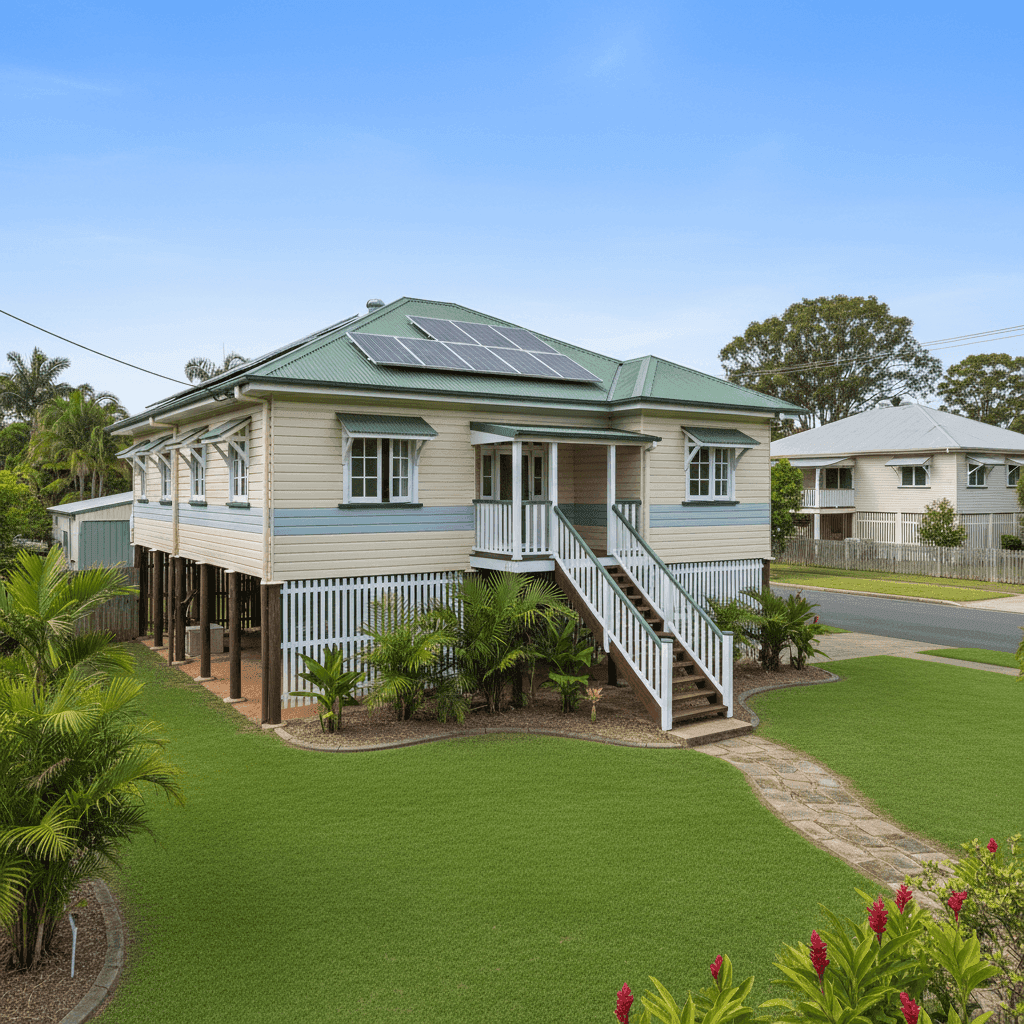
Oonoonba is a quiet residential suburb on the southern fringe of Townsville, home to a mix of older Queenslander-style homes and more recent builds. If you own a free standing home in this part of North Queensland, you already know that insurance can be a significant household expense — and understanding whether you're paying a fair price is half the battle. This article breaks down a real home and contents insurance quote for a 3-bedroom, 1-bathroom property in Oonoonba (postcode 4811) and puts the numbers in context.
---
Is This Quote Fair?
The quote in question comes in at $6,226 per year (or $590 per month) for combined home and contents cover, with a building sum insured of $413,000 and contents valued at $101,000. Both the building and contents excess are set at $1,000.
Our price rating for this quote is FAIR — Around Average, which is a meaningful result in a suburb where premiums can vary enormously. Given the property's location in a designated cyclone risk area, the age of the build (1975), and the construction materials involved, a premium in this range is broadly in line with what insurers typically charge for comparable properties in Oonoonba.
"Fair" doesn't mean you can't do better — it simply means this quote is neither a standout bargain nor an obvious overpayment. It's a reasonable starting point, but comparing multiple insurers is still worthwhile.
---
How Oonoonba Compares
To put the $6,226 annual premium in perspective, here's how it stacks up against local, state, and national benchmarks:
| Benchmark | Average | Median |
|---|---|---|
| Oonoonba (4811) | $8,515/yr | $3,527/yr |
| Queensland | $9,129/yr | $3,903/yr |
| Australia (National) | $5,347/yr | $2,764/yr |
| Townsville LGA | $7,340/yr | — |
(Based on quotes collected by CoverClub. See [Oonoonba suburb stats](https://coverclub.com.au/stats/QLD/4811/oonoonba), [QLD state stats](https://coverclub.com.au/stats/QLD), and [national stats](https://coverclub.com.au/stats/national) for full data.)
A few things stand out here. The suburb average of $8,515 is notably higher than this quote, suggesting the property is coming in below the local mean — a positive sign. However, the suburb median of $3,527 tells a different story: half of the quotes collected in Oonoonba sit below that figure, which means a large portion of local homeowners are paying considerably less.
This divergence between the average and median is a classic sign of a wide spread in premiums — confirmed by the 25th percentile ($2,640) sitting well below the 75th percentile ($14,105). In plain terms, insurance costs in Oonoonba are highly variable, and where your property falls on that spectrum depends heavily on its individual risk profile.
It's also worth noting that the Townsville LGA average of $7,340 sits above this quote, and the QLD state average of $9,129 is considerably higher. From a broader perspective, this quote compares favourably to the Queensland norm, even if it exceeds the national median.
> Note: The suburb sample size is 6 quotes, so these figures should be treated as indicative rather than definitive.
---
Property Features That Affect Your Premium
Several characteristics of this property have a direct bearing on the premium quoted. Understanding them can help you make sense of the price — and identify potential levers to pull.
Cyclone Risk Area
This is arguably the single biggest factor. Oonoonba falls within a designated cyclone risk zone, which significantly increases the cost of building cover across the board. North Queensland insurers price in the likelihood of wind and storm damage, and this is reflected in premiums across the Townsville region.
Weatherboard Timber Construction
The external walls are weatherboard wood — a material common in pre-1980s Queensland homes. While timber homes have charm and character, insurers generally consider them higher risk than brick or rendered masonry, particularly for fire and storm damage. This construction type typically attracts a higher premium than a comparable brick veneer home.
Stumped Foundation
The property sits on stumps, which is standard for older Queenslander homes and generally well-understood by insurers. However, stumped homes can be more vulnerable to certain types of damage (such as flooding beneath the floor) and may attract specific policy exclusions worth reviewing carefully.
Age of Construction (1975)
At approximately 50 years old, this home predates many modern building codes. Older homes can carry higher rebuild costs relative to their size due to non-standard materials, and they may have ageing electrical or plumbing systems that increase the likelihood of a claim.
Solar Panels
The presence of solar panels adds to the insured value and can affect premiums slightly — but it's a relatively minor factor compared to the structural and location variables above. Make sure your policy explicitly covers solar panels as part of the building sum insured.
Ducted Climate Control
Ducted air conditioning is a meaningful contents or building inclusion. Confirm with your insurer whether the system is covered under building or contents, as this can affect your excess and claim process.
---
Tips for Homeowners in Oonoonba
1. Compare Quotes Annually
The wide spread of premiums in Oonoonba (from $2,640 at the 25th percentile to $14,105 at the 75th) means there's real money to be saved by shopping around. Loyalty doesn't always pay — insurers frequently offer better rates to new customers.
2. Review Your Sum Insured Carefully
At $413,000, the building sum insured needs to reflect the true cost of rebuilding — not the market value of the land. For a 130 sqm weatherboard home built in 1975, it's worth getting an independent building valuation to ensure you're neither underinsured nor paying to cover more than necessary.
3. Ask About Cyclone Excess Clauses
Many policies in North Queensland include a separate, higher excess specifically for cyclone-related claims. This can be thousands of dollars on top of your standard excess. Read the Product Disclosure Statement (PDS) carefully and ask your insurer to clarify exactly what applies in a cyclone event.
4. Consider Bundling Building and Contents
This quote already combines home and contents cover, which often delivers a discount compared to holding two separate policies. If you haven't already bundled, it's a simple way to reduce total outgoings.
---
Ready to Compare?
Whether this quote is the right fit for your home depends on your individual circumstances, risk tolerance, and what's included in the fine print. The best way to know if you're getting value is to see what else is out there.
Get a home insurance quote at CoverClub and compare options for your Oonoonba property in minutes — no obligation, no jargon.