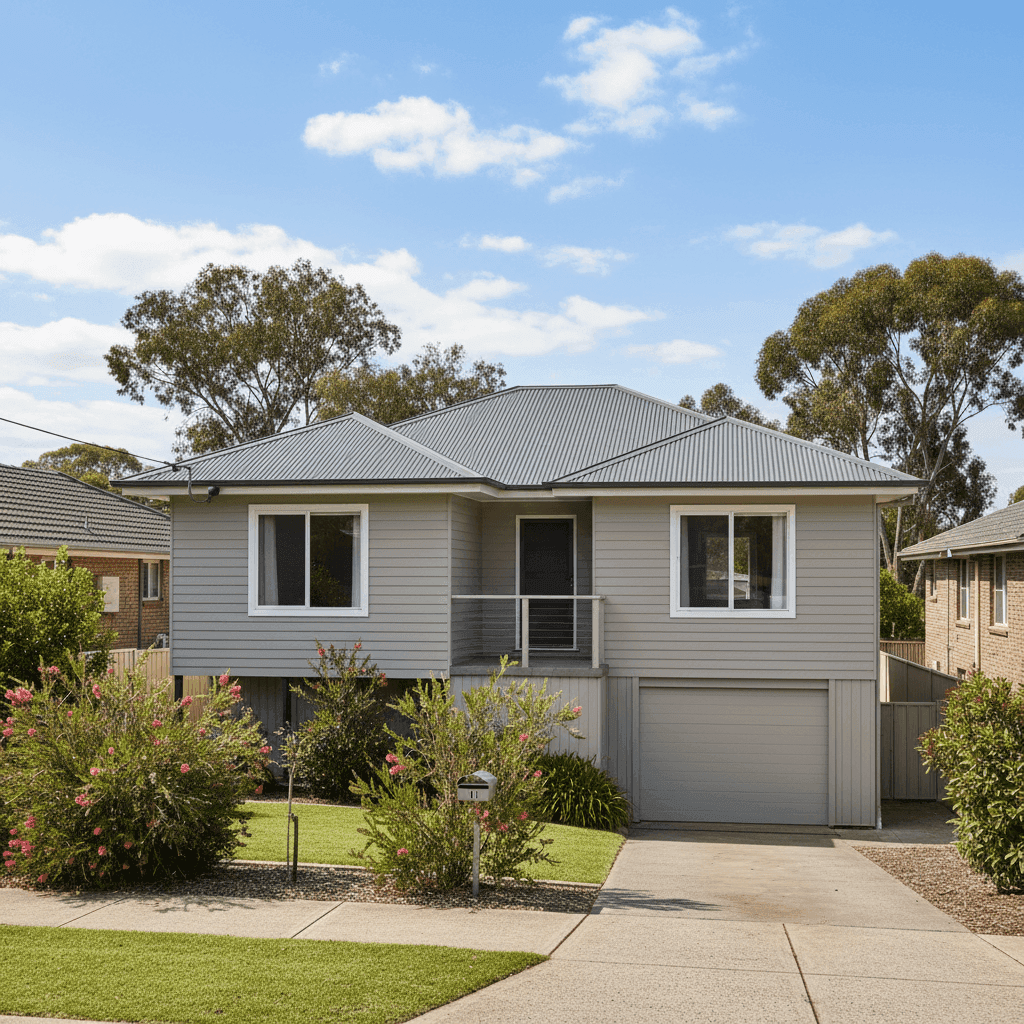
Orange is a thriving regional city in the Central Tablelands of New South Wales, and it's increasingly popular with families and tree-changers looking for space, lifestyle, and relative affordability compared to Sydney. If you own a free standing home in Orange NSW 2800, understanding what a fair home insurance premium looks like — and what drives the cost — can save you hundreds of dollars a year.
In this article, we analyse a real home and contents insurance quote for a 3-bedroom, 1-bathroom free standing home in Orange, breaking down how it compares to local, state, and national benchmarks.
---
Is This Quote Fair?
The quote in question comes in at $1,104 per year (or about $102 per month) for combined home and contents cover, with a building sum insured of $704,000 and contents cover of $50,000.
Our price rating for this quote? Cheap — below average. That's genuinely good news for the homeowner.
To put it in context, the suburb average for home insurance in Orange sits at $1,873 per year, and the median is $1,568 per year. This quote lands well below the 25th percentile of $1,213/yr — meaning it's cheaper than at least 75% of comparable quotes we've seen for this area. That's a strong result by any measure.
It's worth noting that a higher building excess of $5,000 (compared to a more typical $1,000–$2,000) will have contributed to the lower premium. The contents excess is a more standard $1,000. Higher excesses reduce the insurer's exposure to smaller claims, which is reflected in a reduced upfront cost. Homeowners should weigh up whether they're comfortable covering the first $5,000 of a building claim out of pocket — for many, the premium saving makes this a worthwhile trade-off.
---
How Orange Compares
One of the standout findings here is just how affordable Orange is relative to the broader NSW market and national averages. Here's how the numbers stack up:
| Benchmark | Average Premium | Median Premium |
|---|---|---|
| Orange (suburb) | $1,873/yr | $1,568/yr |
| NSW (state) | $3,801/yr | $3,410/yr |
| National | $2,965/yr | $2,716/yr |
| LGA (Dubbo region) | $3,426/yr | — |
Orange homeowners are paying, on average, less than half the NSW state average for home insurance. Even compared to the national median of $2,716/yr, the Orange suburb median of $1,568/yr is a significant saving.
This gap is largely attributable to lower risk profiles in the region — Orange doesn't face the same bushfire exposure as many parts of regional NSW, isn't in a cyclone zone, and has relatively low flood risk compared to other inland towns. It's a genuinely low-risk postcode from an insurer's perspective.
You can explore the full pricing data for this area on our Orange NSW 2800 insurance stats page, or compare it against all NSW postcodes and national benchmarks.
---
Property Features That Affect Your Premium
Every home is different, and insurers price policies based on a range of property-specific factors. Here's how the characteristics of this particular home influence its premium:
Hardiplank/Hardiflex Cladding
The external walls are clad in Hardiplank (also known as Hardiflex) — a fibre cement product that's durable, low-maintenance, and performs well in fire and weather conditions. Insurers generally view fibre cement cladding favourably compared to older weatherboard or asbestos-era materials, which can contribute to a more competitive premium.
Steel/Colorbond Roof
A Colorbond steel roof is one of the most insurer-friendly roofing materials available in Australia. It's highly resistant to fire, wind, and hail, and doesn't require the same level of ongoing maintenance as terracotta tiles or older corrugated iron. This is a clear positive for premium pricing.
Stump Foundation
The home sits on stumps — a common construction method for homes of this era (built in 1958). While stump foundations can be susceptible to movement over time, they also allow for good subfloor ventilation and easier access for maintenance and repairs. Insurers assess stump homes on a case-by-case basis, but this foundation type is well understood and widely accepted.
Timber/Laminate Flooring
Timber and laminate flooring is a standard inclusion in homes of this age and style. It doesn't significantly elevate risk from an insurance perspective, though it is worth ensuring your contents sum insured accounts for the replacement cost of quality flooring if it's not covered under the building policy.
Above-Average Fittings Quality
The home is noted as having above-average fittings — think quality fixtures, appliances, and finishes. This is a factor that can push the building sum insured higher, and at $704,000 for a 139 sqm home, the per-square-metre rebuild cost of approximately $5,065/sqm reflects those quality finishes. Ensuring your sum insured keeps pace with rising construction costs is essential to avoid being underinsured.
No Pool, Solar, or Ducted Climate Control
The absence of a swimming pool, solar panel system, and ducted air conditioning simplifies the risk profile and reduces the potential cost of a total rebuild. Each of these additions can add meaningful cost to a home's replacement value, so their absence here helps keep the sum insured — and the premium — in check.
---
Tips for Homeowners in Orange
Whether you're reviewing an existing policy or shopping for cover for the first time, here are some practical steps Orange homeowners can take to get the best value from their insurance.
1. Review your sum insured annually Construction costs across regional NSW have risen sharply in recent years. A rebuild cost estimate that was accurate two years ago may now be significantly understated. Use a building cost calculator or speak with a local builder to sense-check your sum insured each year — underinsurance is one of the most common and costly mistakes homeowners make.
2. Consider whether your excess level suits your situation A $5,000 building excess delivers a lower premium, but it means you're self-insuring the first $5,000 of any building claim. If your emergency fund can comfortably cover that, it's a smart strategy. If not, it may be worth comparing quotes at a lower excess level to find the right balance.
3. Don't overlook contents cover A $50,000 contents sum insured is a reasonable starting point, but it's easy to underestimate the replacement value of everything inside your home — furniture, appliances, clothing, electronics, and personal items can add up quickly. Take stock of your possessions and make sure your contents cover reflects their true replacement value.
4. Compare quotes at renewal time The home insurance market is competitive, and premiums can vary significantly between insurers for the same property. Rather than simply accepting your renewal notice, take a few minutes to compare alternatives. Even in a low-cost suburb like Orange, there can be meaningful differences between providers.
---
Ready to Compare Home Insurance Quotes in Orange?
Whether you're a long-time Orange local or new to the area, it pays to know what a competitive premium looks like for your property. CoverClub makes it easy to compare home and contents insurance quotes side by side, so you can be confident you're getting genuine value.