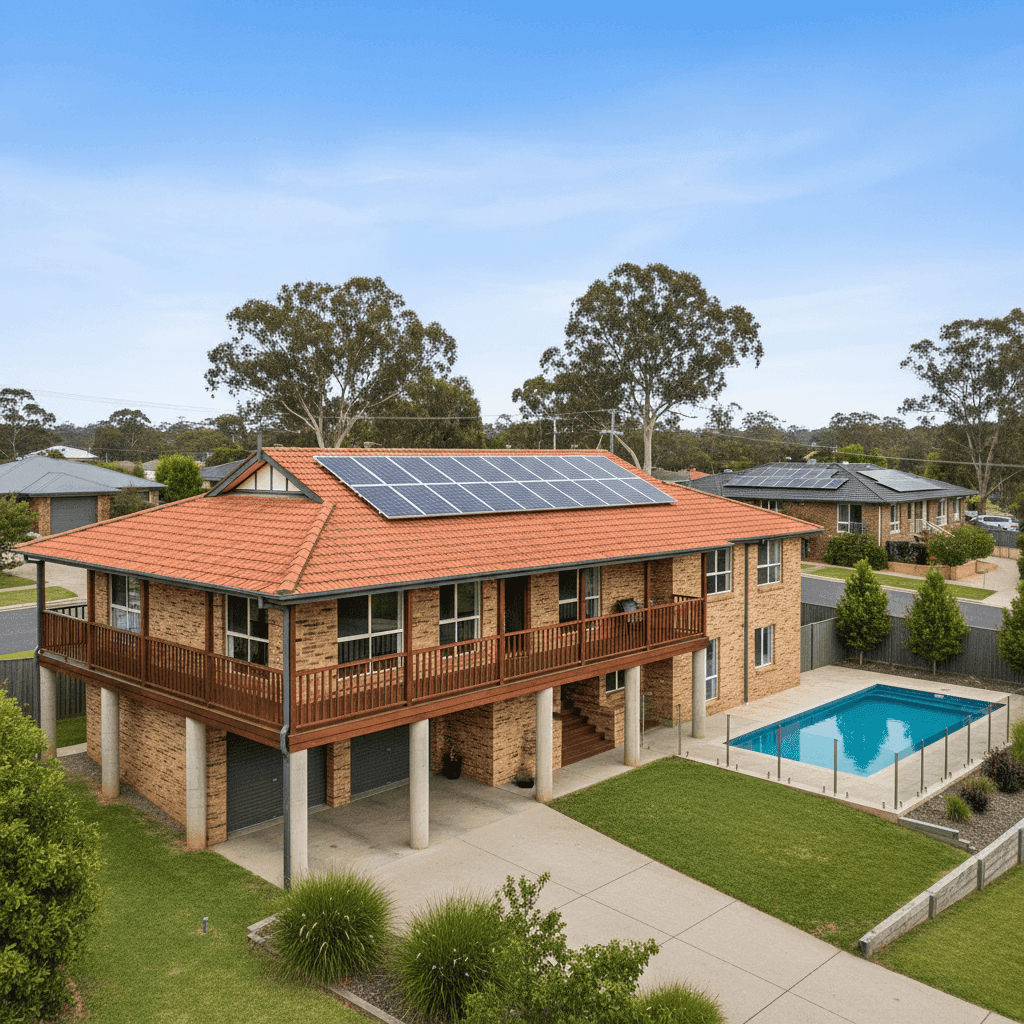
If you own a four-bedroom free standing home in Orangeville, NSW 2570, you might be wondering whether your home and contents insurance premium is competitive — or whether you're quietly paying too much. This analysis breaks down a real insurance quote for a brick veneer property in Orangeville, comparing it against suburb, state, and national benchmarks so you can make a more informed decision.
---
Is This Quote Fair?
The quote in question comes in at $3,503 per year (or $349/month) for combined home and contents cover, with a building sum insured of $1,005,000 and contents valued at $208,000. Both the building and contents excess are set at $1,000 each.
Our price rating for this quote? Cheap — below average. That's genuinely good news for the homeowner.
To put it in context: the average home and contents premium across Orangeville sits at $5,701 per year, with a median of $5,699. That means this quote is roughly $2,200 cheaper than what most Orangeville residents are paying — a saving of around 39% compared to the suburb average. Even against the suburb's 25th percentile (the cheapest quarter of quotes), which sits at $5,182, this premium still comes in well under the mark.
For a property with a pool, solar panels, ducted climate control, and a building sum insured over $1 million, securing cover at this price point is a strong result.
---
How Orangeville Compares
It's worth zooming out to understand where Orangeville sits in the broader insurance landscape. You can explore the full data on the Orangeville suburb stats page.
| Benchmark | Annual Premium |
|---|---|
| This Quote | $3,503 |
| Orangeville Suburb Average | $5,701 |
| Orangeville Suburb Median | $5,699 |
| NSW Average | $9,528 |
| NSW Median | $3,770 |
| National Average | $5,347 |
| National Median | $2,764 |
| Wollondilly LGA Average | $2,297 |
A few things stand out here. First, NSW as a state has a notably high average premium ($9,528), which is heavily skewed by high-risk coastal and flood-prone areas. The NSW median of $3,770 is a far more representative figure for typical homeowners — and this quote sits just below that median, which is a solid position.
Compared to the national picture, the quote also compares well. The national average is $5,347, and while the national median of $2,764 is lower, that figure captures a wide range of properties across Australia — including smaller homes, lower-value contents, and lower-risk postcodes.
The Wollondilly LGA average of $2,297 is notably low, suggesting that many properties in the broader local government area carry relatively modest premiums. However, Orangeville's suburb-level averages are considerably higher, likely reflecting the profile of larger, higher-value homes in the area.
---
Property Features That Affect Your Premium
Several characteristics of this property have a meaningful influence on what insurers charge. Here's how the key features play out:
Brick Veneer Walls & Tiled Roof Brick veneer construction with a tiled roof is generally well-regarded by insurers. Both materials offer solid fire resistance and durability, which can help keep premiums lower compared to timber-framed or Colorbond-roofed homes.
Slab Foundation A concrete slab foundation is a stable and common choice in NSW. It tends to be viewed favourably by insurers as it reduces the risk of subsidence and structural movement — particularly relevant in areas with clay-heavy soils.
Elevated by at Least 1 Metre This is a meaningful risk factor. Properties elevated by at least a metre can face higher rebuild costs due to the engineering complexity involved, but they may also benefit from reduced flood exposure depending on the local terrain. Insurers weigh both sides of this equation.
Timber and Laminate Flooring While attractive, timber and laminate floors can be more expensive to repair or replace following water damage or impact events. This can push contents and building premiums up slightly compared to tiled or carpeted alternatives.
Pool, Solar Panels & Ducted Climate Control Each of these adds to the insured value of the property. Swimming pools introduce liability considerations and can increase the building sum insured. Solar panels — particularly rooftop systems — are exposed to hail, storm, and fire risk. Ducted climate control systems are costly to repair and replace. Despite all three being present, the premium here remains competitive.
Construction Year: 1985 A home built in 1985 is approaching 40 years old. Older properties can attract slightly higher premiums due to the age of electrical, plumbing, and roofing systems, though well-maintained homes in this era often hold up well. It's worth ensuring your sum insured reflects current rebuild costs, not just the original construction value.
---
Tips for Homeowners in Orangeville
1. Review Your Sum Insured Annually With a building sum insured of $1,005,000, it's important to keep this figure up to date. Construction costs in NSW have risen significantly in recent years, and being underinsured at claim time can leave you seriously out of pocket. Use a building calculator or speak to a quantity surveyor if you're unsure.
2. Consider Your Excess Level Both excesses here are set at $1,000. Opting for a higher excess is one of the most straightforward ways to reduce your annual premium — but make sure you'd genuinely be comfortable covering that amount in the event of a claim.
3. Bundle Your Cover Thoughtfully Home and contents cover is already bundled in this quote, which typically delivers better value than purchasing them separately. If you also hold car insurance or other personal lines policies, ask your insurer whether a multi-policy discount applies.
4. Don't Auto-Renew Without Comparing Even if your current premium is below average, the insurance market shifts constantly. New entrants, changed risk models, and updated property data mean your cheapest option today might not be the cheapest option at renewal. A quick comparison at renewal time takes minutes and could save hundreds.
---
Compare Your Own Quote
Whether you're a first-time buyer or a long-term Orangeville homeowner, it pays to know where your premium sits relative to the market. CoverClub makes it easy to benchmark your cover and explore your options — get a quote today and see how your home stacks up.