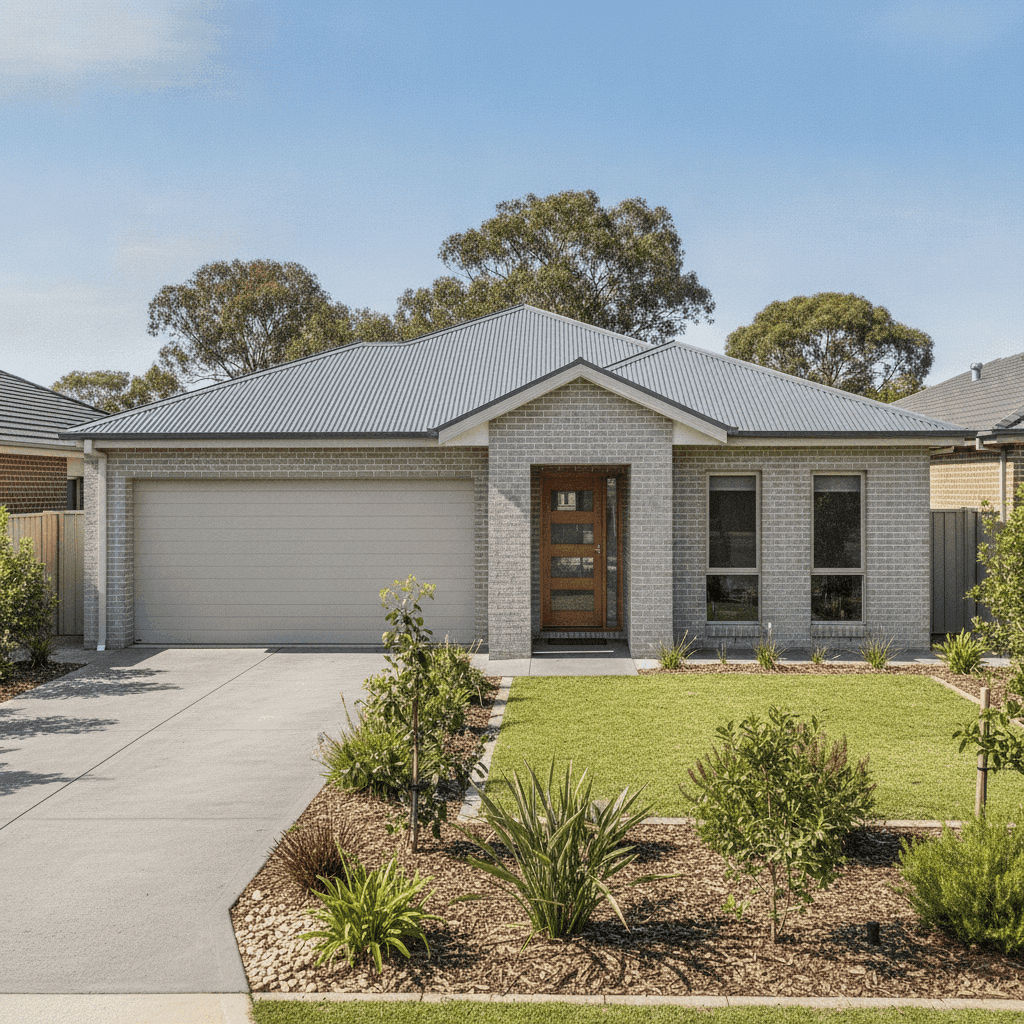
If you own a free standing home in Orangeville, NSW 2570, you're sitting in one of the more affordable pockets of the greater Wollondilly region — and that tends to reflect well when it comes to home insurance pricing. This article breaks down a real home and contents insurance quote for a four-bedroom, two-bathroom brick veneer home in Orangeville, comparing it against suburb, state, and national benchmarks so you can judge whether you're getting a fair deal.
---
Is This Quote Fair?
The quote in question comes in at $2,869 per year (or roughly $283 per month) for combined home and contents cover. The building is insured for $1,064,000 and contents for $90,000, with a $1,000 excess applying to both building and contents claims.
Our price rating for this quote is CHEAP — below average — and the data backs that up convincingly.
Compared to the suburb average of $5,701 per year, this quote is nearly 50% cheaper. Even against the suburb's 25th percentile (the cheapest quarter of quotes in the area) of $5,182 per year, this quote still comes in dramatically lower. In other words, this isn't just a good deal relative to the typical Orangeville homeowner — it's an exceptionally competitive result by any local measure.
For a 286 sqm home with above-average fittings, ducted climate control, and a solid brick veneer construction, landing a premium under $3,000 annually represents genuinely strong value.
---
How Orangeville Compares
To put this quote in proper context, it helps to look at how Orangeville sits within the broader insurance landscape. You can explore the full data on the Orangeville suburb stats page, the NSW state overview, and national insurance statistics.
| Benchmark | Annual Premium |
|---|---|
| This quote | $2,869 |
| Orangeville suburb average | $5,701 |
| Orangeville suburb median | $5,699 |
| Wollondilly LGA average | $2,297 |
| NSW average | $9,528 |
| NSW median | $3,770 |
| National average | $5,347 |
| National median | $2,764 |
A few things stand out here. First, the NSW average of $9,528 is strikingly high — this is heavily influenced by properties in flood-prone, bushfire-affected, or high-value coastal areas that push the mean upward. The NSW median of $3,770 is a much more useful reference point, and this quote sits only slightly above it.
Second, the Wollondilly LGA average of $2,297 is notably low, suggesting the region as a whole enjoys relatively modest insurance costs compared to the rest of the state. Orangeville's suburb-level averages ($5,701) appear higher than the LGA figure, which may reflect variation in property values, building sizes, or the mix of cover types included in the suburb sample (note: the suburb sample here is 15 quotes, so the figures should be interpreted with some caution).
On a national basis, this quote sits just above the national median of $2,764 — meaning it's broadly in line with what a typical Australian homeowner pays, which is a solid outcome for a well-appointed, larger-than-average home.
---
Property Features That Affect Your Premium
Several characteristics of this property work in favour of a competitive premium:
Brick veneer construction is generally viewed favourably by insurers. It offers good structural integrity and fire resistance compared to timber-framed or weatherboard homes, which can translate into lower rebuilding risk assessments.
Colorbond steel roofing is another positive. It's durable, low-maintenance, and performs well in both high-wind and fire-prone conditions. Insurers tend to price steel roofing more competitively than older materials like terracotta tiles, which can crack or dislodge more easily.
Slab foundation provides stability and is less susceptible to subsidence or pest-related damage than raised timber stumps, which is another factor that can keep premiums in check.
Construction year of 2014 means the home is relatively modern — built to contemporary Australian Standards for construction and energy efficiency. Newer builds typically carry fewer unknown structural risks, which insurers appreciate.
Above-average fittings do add to the replacement cost of the home and contents, which partly explains the $1,064,000 sum insured. However, the premium still comes in well below average, suggesting the insurer is pricing the risk of the location and construction favourably.
No pool and no solar panels simplifies the risk profile. Pools introduce liability concerns and additional maintenance risks, while solar panel systems can complicate roof claims. Their absence here keeps things straightforward.
Ducted climate control is a notable inclusion — these systems can be expensive to repair or replace, and they're correctly factored into the building sum insured rather than treated as an afterthought.
The property is also not located in a cyclone risk zone, which eliminates one of the more significant premium loading factors that affect homeowners in northern Queensland and parts of Western Australia.
---
Tips for Homeowners in Orangeville
1. Review your sum insured regularly With a building sum insured of $1,064,000 for a 286 sqm home with above-average fittings, this figure appears well-considered. However, construction costs in NSW have risen significantly in recent years. Make it a habit to reassess your sum insured annually — underinsurance remains one of the most common and costly mistakes homeowners make at claim time.
2. Don't assume your suburb average is your baseline As the data shows, Orangeville's suburb average ($5,701) is more than double this quote. If you're currently paying close to that average, it's worth shopping around. The market clearly offers much lower premiums for comparable properties in the area, and getting a fresh quote at CoverClub takes only a few minutes.
3. Consider your excess strategically Both the building and contents excesses here are set at $1,000. A higher voluntary excess can reduce your annual premium, but make sure it's an amount you could genuinely afford to pay out of pocket if a claim arose. For most households, $1,000 is a reasonable balance — but if cash flow is comfortable, testing a $2,000 excess could yield meaningful savings.
4. Keep records of your contents With $90,000 in contents cover, it's worth maintaining a home inventory — photos, receipts, and serial numbers for high-value items. This makes the claims process significantly smoother and helps ensure you're neither over- nor under-insured on the contents side.
---
Compare Your Own Quote
Whether you're a new homeowner in Orangeville or you've had the same policy for years, it pays to compare. The difference between the cheapest and most expensive quotes in this suburb spans thousands of dollars annually — and the best price isn't always with the insurer you'd expect.
Head to CoverClub to compare home and contents quotes for your property in Orangeville and across NSW. It's free, fast, and could save you a significant amount on your next renewal.