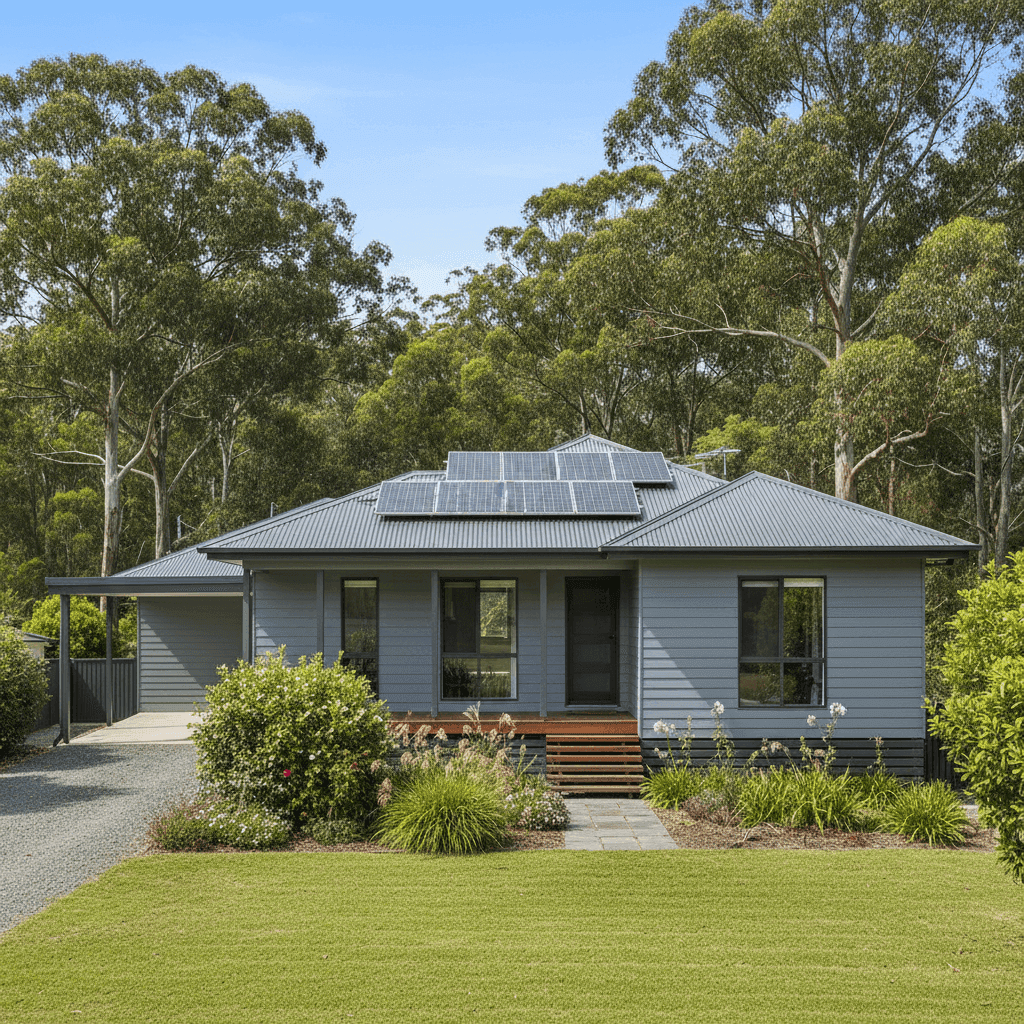
Orbost is a quiet regional town nestled in the heart of East Gippsland, surrounded by lush forests and the Snowy River — a beautiful place to call home, but one that comes with its own unique insurance considerations. This article breaks down a real home and contents insurance quote for a four-bedroom free standing home in Orbost, VIC 3888, examining how the premium stacks up against local, state, and national benchmarks — and what homeowners in the area can do to get the best value cover.
---
Is This Quote Fair?
The annual premium on this quote comes in at $2,215 per year (or $225/month), covering a building sum insured of $753,000 and contents valued at $200,000. CoverClub's pricing analysis rates this as Fair — Around Average.
That rating reflects where this premium sits within the distribution of quotes we've collected for the Orbost area. Based on a sample of 69 quotes in the suburb, the local average sits at $1,899/yr and the median at $1,978/yr. At $2,215, this quote lands between the median and the 75th percentile ($2,455/yr), meaning it's slightly above the middle of the pack — but still well within a reasonable range.
In other words, while you're not getting the sharpest deal on the market, you're also not being overcharged. There's room to shop around and potentially bring this figure closer to the median, but the quote isn't out of step with what insurers are pricing for this type of property in this area.
---
How Orbost Compares
One of the more encouraging findings here is that Orbost actually comes in well below state and national averages — a notable result given that East Gippsland is a region associated with significant natural hazard exposure.
Here's how the numbers line up:
| Benchmark | Premium |
|---|---|
| This quote | $2,215/yr |
| Orbost suburb average | $1,899/yr |
| Orbost suburb median | $1,978/yr |
| Orbost 25th percentile | $1,471/yr |
| Orbost 75th percentile | $2,455/yr |
| East Gippsland LGA average | $3,076/yr |
| VIC state average | $2,921/yr |
| National average | $2,965/yr |
The contrast with the East Gippsland LGA average is particularly striking. At $3,076/yr, the broader LGA average is nearly $860 more than this quote — suggesting that Orbost's specific postcode may carry a more favourable risk profile than some surrounding areas within the same local government area. Compared to the VIC state average of $2,921/yr and the national average of $2,965/yr, this quote is meaningfully cheaper.
For homeowners in Orbost, this context is reassuring. The region's natural beauty doesn't necessarily translate into prohibitive insurance costs — at least not at the postcode level.
---
Property Features That Affect Your Premium
A number of characteristics specific to this property will have influenced how insurers priced this risk. Understanding these factors can help you have more informed conversations with your insurer.
Hardiplank / Hardiflex External Walls
Fibre cement cladding like Hardiplank and Hardiflex is generally viewed favourably by insurers. It's durable, non-combustible, and resistant to rot and termites — all qualities that reduce the likelihood of significant structural damage claims. In a region with bushfire risk like East Gippsland, non-combustible wall materials can play a meaningful role in how insurers assess your property.
Steel / Colorbond Roof
A Colorbond steel roof is one of the most insurer-friendly roofing choices you can make in Australia. It's fire-resistant, long-lasting, and performs well in high-wind conditions. Combined with the Hardiflex walls, this property has a solid external shell from an underwriting perspective.
Stump Foundation
The home sits on stumps, which is common for regional Victorian properties, particularly in areas with variable soil conditions or flood-prone terrain. Stumped foundations can be a double-edged sword for insurance — they allow for better airflow and can reduce moisture damage, but they may also be flagged in areas with elevated flood or storm risk. Insurers will factor this into their assessment.
Solar Panels
This property has solar panels installed, which adds to the replacement cost of the building. It's important to ensure your building sum insured ($753,000 in this case) adequately accounts for the cost of replacing the solar system, including inverters and mounting hardware, in the event of a total loss.
Ducted Climate Control
Ducted systems are expensive to replace and can be a source of claims if damaged by storm, fire, or electrical surge. Insurers typically account for the presence of ducted climate control when calculating building replacement costs.
2008 Construction
At around 17 years old, this home is relatively modern and was likely built to post-2003 bushfire construction standards in Victoria. Newer builds tend to attract more competitive premiums than older homes that may have outdated wiring, plumbing, or structural elements.
---
Tips for Homeowners in Orbost
1. Review Your Building Sum Insured Carefully
At $753,000, the building sum insured needs to reflect the full cost of rebuilding your home from scratch — including demolition, materials, labour, and any fixed features like the solar panels and ducted system. Use an independent building cost calculator or speak with a quantity surveyor to verify this figure, as underinsurance is a common and costly mistake.
2. Shop Around at Renewal Time
Insurance premiums can shift significantly from year to year, and loyalty doesn't always pay. With a suburb 25th percentile of just $1,471/yr, there are clearly more competitive options available in Orbost. Use a comparison tool like CoverClub to benchmark your renewal quote before accepting it.
3. Consider Your Excess Settings
This quote carries a $3,000 building excess and a $1,000 contents excess. Opting for a higher excess is one of the most direct ways to reduce your annual premium — but make sure the excess amount is something you could genuinely afford to pay in the event of a claim. Review both excesses to ensure they're set at a level that balances affordability with meaningful premium savings.
4. Maintain Your Property's Bushfire Defences
East Gippsland is one of Australia's most fire-prone regions. Keeping gutters clear, maintaining a defendable space around your home, and ensuring your property complies with local fire safety requirements can not only protect your home but may also support your standing with your insurer. Some insurers offer discounts or more favourable terms for properties with active fire mitigation measures in place.
---
Compare Your Options with CoverClub
Whether you're renewing an existing policy or shopping for cover on a new property, it pays to compare. CoverClub makes it easy to see how your quote stacks up against real data from homeowners in your suburb and across Victoria and the nation. Head to CoverClub to get a quote and find out if you're paying a fair price — or if there's a better deal waiting for you.