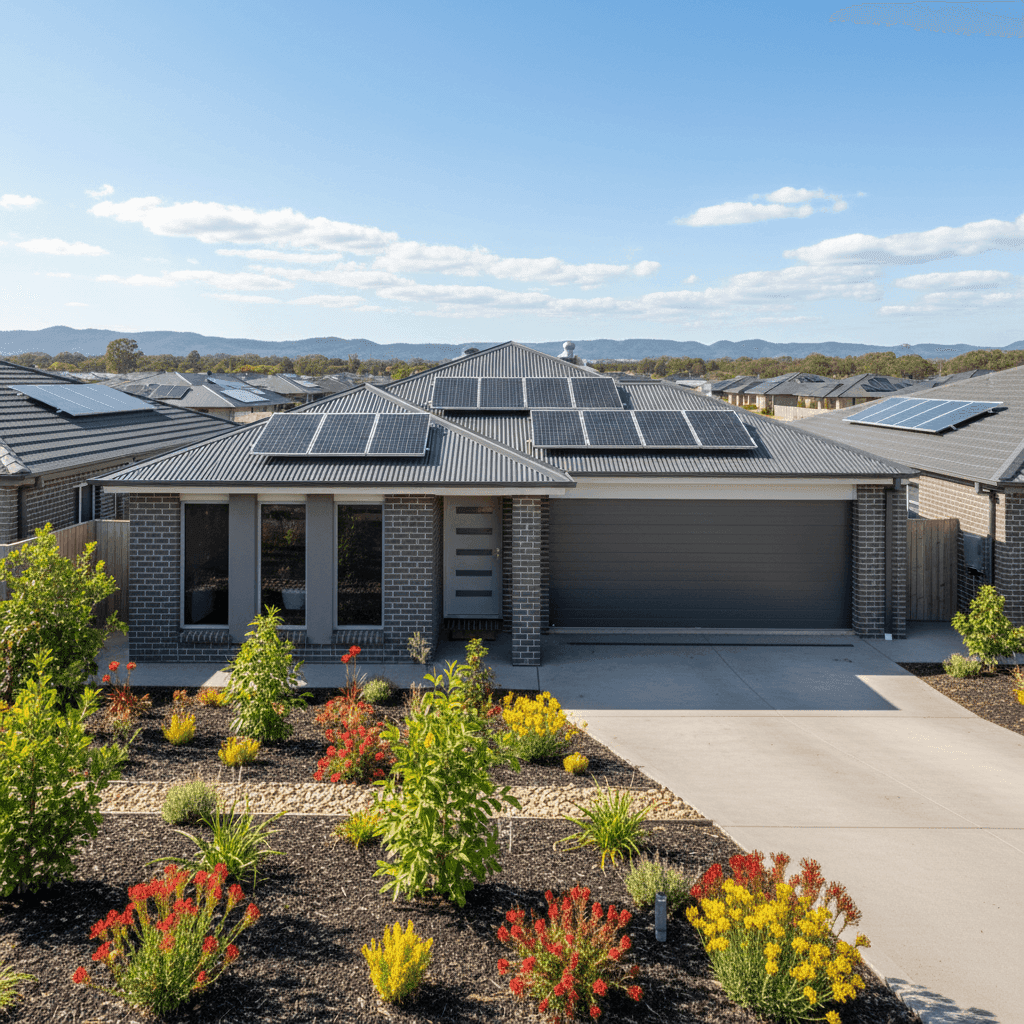
Ormeau is a fast-growing suburb in Queensland's Gold Coast corridor, sitting roughly halfway between Brisbane and the Gold Coast CBD. It's popular with families drawn to its newer housing estates, good schools, and relative affordability compared to coastal suburbs. If you own a free standing home here — or you're thinking about buying — understanding what home and contents insurance should cost you is an important part of protecting your investment.
This article breaks down a real insurance quote for a four-bedroom, two-bathroom free standing home in Ormeau (QLD 4208), analyses how it stacks up against local, state, and national benchmarks, and offers practical tips to help you get the best value on your cover.
---
Is This Quote Fair?
The quote in question comes in at $4,038 per year (or $395/month) for combined home and contents cover, with a building sum insured of $595,000 and contents valued at $50,000. Both the building and contents excess are set at $1,000.
Our price rating for this quote is FAIR — Around Average.
That rating reflects the full picture: the premium sits above the Ormeau suburb average of $3,620/yr and well above the suburb median of $3,073/yr, but it falls comfortably below the 75th percentile for the area ($5,346/yr). In other words, roughly a quarter of homeowners in this suburb are paying even more. You're not getting a bargain, but you're also not being gouged.
It's also worth noting that this quote is noticeably cheaper than the Queensland state average of $4,547/yr, which adds further context to the "fair" rating. On a statewide basis, this premium is actually below average — a meaningful distinction in a state where insurance costs have been climbing steadily.
---
How Ormeau Compares
To put this quote in proper context, here's how premiums in Ormeau compare across different benchmarks:
| Benchmark | Annual Premium |
|---|---|
| This Quote | $4,038 |
| Ormeau Suburb Average | $3,620 |
| Ormeau Suburb Median | $3,073 |
| Ormeau 25th Percentile | $2,101 |
| Ormeau 75th Percentile | $5,346 |
| QLD State Average | $4,547 |
| QLD State Median | $3,931 |
| National Average | $2,965 |
| National Median | $2,716 |
| Gold Coast LGA Average | $5,494 |
(Based on 69 quotes sampled in the Ormeau area.)
A few things stand out here. First, the Gold Coast LGA average of $5,494/yr is substantially higher than this quote, which makes sense — coastal and canal-front properties in suburbs like Broadbeach or Surfers Paradise attract significantly higher premiums due to flood, storm surge, and storm damage exposure. Ormeau, being further inland, benefits from a more moderate risk profile.
Second, the gap between the national average ($2,965/yr) and what Ormeau homeowners typically pay is significant. Queensland as a whole carries elevated insurance costs due to its exposure to severe weather events — cyclones in the north, flooding in river catchments, and intense storm activity across the southeast. Even though Ormeau is not classified as a cyclone risk area, the broader Queensland risk environment pushes premiums higher than the national norm.
If you want to explore how your suburb's figures compare in more detail, you can view the full Ormeau insurance stats here.
---
Property Features That Affect Your Premium
Every property is different, and insurers assess a range of physical characteristics when calculating your premium. Here's how the features of this particular home are likely influencing the quote:
Brick Veneer Construction Brick veneer walls are generally viewed favourably by insurers. They offer solid resistance to fire and wind damage compared to lightweight cladding or weatherboard, which can translate to lower rebuild risk. It's a common construction type in southeast Queensland's newer estates.
Steel/Colorbond Roof Colorbond roofing is well regarded in the Australian insurance market. It's durable, resistant to corrosion, and performs well during hail and storm events. Compared to older tile roofs — which can crack, dislodge, or leak — a Colorbond roof typically represents a lower claims risk.
Slab Foundation A concrete slab foundation is standard for modern Queensland homes and is generally considered low-risk by insurers. It eliminates the underfloor moisture and pest issues sometimes associated with older timber-framed stumped homes.
Built in 2020 Newer homes benefit from modern building codes, which have become progressively more stringent in Queensland following major weather events. A home built in 2020 is likely compliant with current wind and flood resilience standards, which can reduce your risk profile.
Solar Panels Solar panels add value to a property but also add complexity to an insurance assessment. They represent an additional asset that needs to be covered (typically under the building sum insured) and can be costly to repair or replace following storm or hail damage. It's worth confirming with your insurer that your solar system is explicitly covered under your policy.
Ducted Climate Control Ducted air conditioning systems are a significant fixed asset and, like solar panels, are generally covered under the building sum insured. Ensuring your building sum insured adequately accounts for these systems — along with the cost of reinstallation — is important to avoid being underinsured.
$595,000 Building Sum Insured For a 214 sqm home built to modern standards with quality fixtures, a $595,000 sum insured is substantial. It's critical this figure reflects the full cost of rebuilding — not the market value of the property. Rebuild costs in southeast Queensland have risen sharply in recent years due to labour and materials inflation, so reviewing this figure annually is good practice.
---
Tips for Homeowners in Ormeau
1. Review your sum insured every year Construction costs across Queensland have increased significantly since COVID. If your building sum insured hasn't been updated recently, there's a real risk you could be underinsured in the event of a total loss. Use a building cost calculator or speak with a quantity surveyor to get an accurate estimate.
2. Check your solar panels are covered Many standard policies cover solar panels as part of the building, but some have sub-limits or exclusions — particularly for storm and hail damage. Given Queensland's severe storm season, it's worth reading the Product Disclosure Statement (PDS) carefully or asking your insurer directly.
3. Consider raising your excess to reduce your premium With both building and contents excesses currently set at $1,000, there may be room to increase these in exchange for a lower annual premium. If you have the financial buffer to absorb a higher out-of-pocket cost in a claim, this can be a smart way to reduce what you pay each year.
4. Compare quotes before renewing Loyalty doesn't always pay in the insurance market. Insurers frequently offer more competitive pricing to new customers than to existing ones. Using a comparison tool like CoverClub before your renewal date gives you real data on what the market is offering — and the leverage to negotiate or switch.
---
Find a Better Deal with CoverClub
Whether you're reviewing your current policy or shopping for cover on a new property, CoverClub makes it easy to see what home insurance actually costs in your suburb — and compare it against real quotes. Get started with your address here and see how your premium stacks up in minutes.