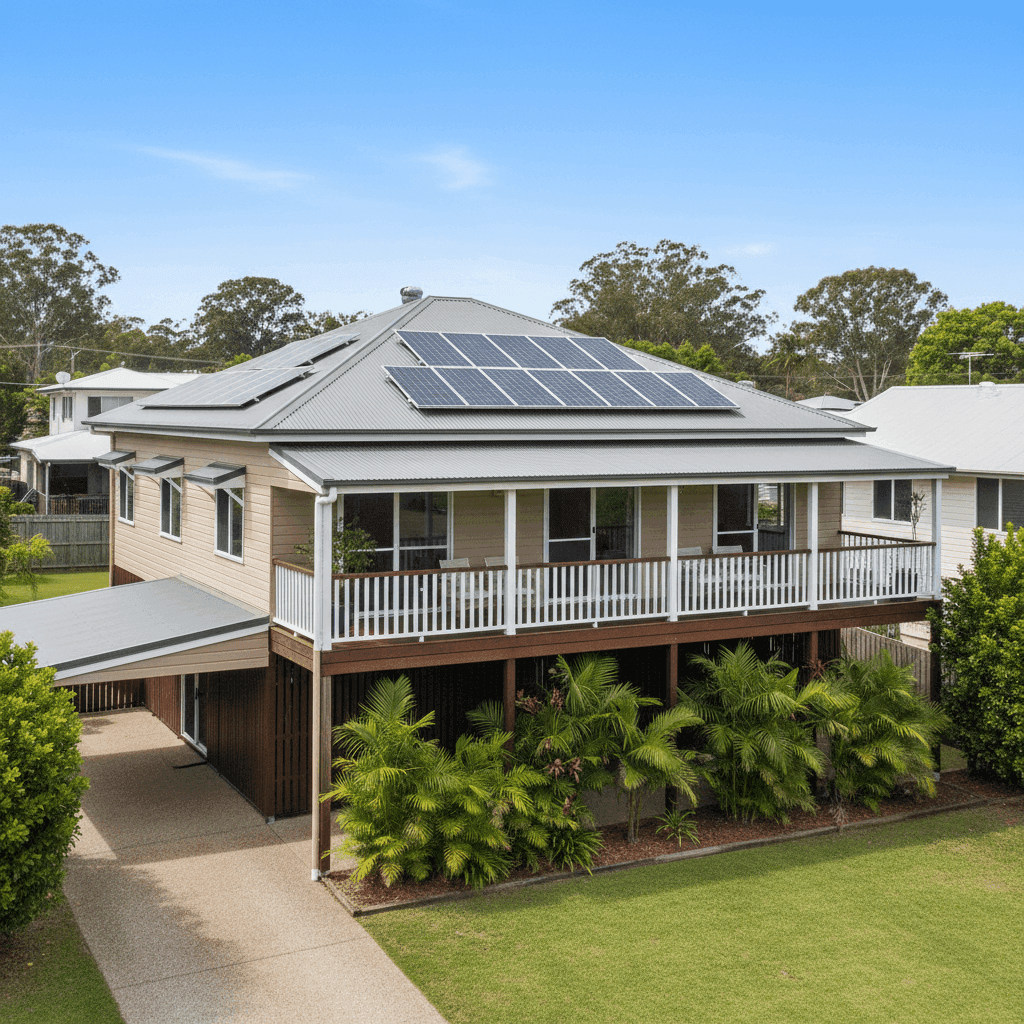
If you own a free standing home in Oxenford, QLD 4210, you're likely well aware that insurance costs on the Gold Coast can vary enormously depending on your property's age, construction, and location. This article breaks down a real home and contents insurance quote for a three-bedroom, one-bathroom property in Oxenford — and puts it in context against suburb, state, and national benchmarks — so you can judge whether your own premium is hitting the mark.
---
Is This Quote Fair?
The quote in question comes in at $2,126 per year (or $217/month) for combined home and contents cover, with a building sum insured of $690,000 and $30,000 worth of contents. The building excess sits at $3,000, while the contents excess is a more modest $500.
Our rating for this quote? Cheap — below average. That's a strong result by any measure.
To put it plainly: based on 121 quotes collected for the Oxenford area, the suburb average premium is $4,299/yr and the median sits at $3,274/yr. This quote comes in well below both figures — and it even undercuts the 25th percentile of $2,357/yr, meaning it's cheaper than at least three-quarters of quotes in the suburb. That's genuinely competitive pricing for this postcode.
For a homeowner in Oxenford, securing cover at this level represents meaningful savings — potentially $1,000–$2,000 per year compared to what many neighbours might be paying.
---
How Oxenford Compares
Zooming out to a broader view, the pricing picture becomes even more interesting. You can explore the full data on the Oxenford suburb stats page, but here's a quick summary:
| Benchmark | Premium |
|---|---|
| This Quote | $2,126/yr |
| Oxenford Suburb Average | $4,299/yr |
| Oxenford Suburb Median | $3,274/yr |
| Oxenford 25th Percentile | $2,357/yr |
| Gold Coast LGA Average | $8,161/yr |
| QLD State Average | $9,129/yr |
| QLD State Median | $3,903/yr |
| National Average | $5,347/yr |
| National Median | $2,764/yr |
The Queensland state average of $9,129/yr reflects the outsized impact of high-risk coastal and flood-prone properties dragging the mean upward — cyclone-exposed areas in Far North Queensland, for instance, can push premiums into the tens of thousands. The national average of $5,347/yr tells a similar story, with extreme weather regions skewing figures significantly.
What this means for Oxenford homeowners is that the median — not the average — is a more reliable yardstick. At $3,274/yr for the suburb median, this quote at $2,126/yr still comes out well ahead.
The Gold Coast LGA average of $8,161/yr is notably elevated, likely driven by beachside and canal-front properties with high rebuild costs and flood or storm surge exposure. Oxenford, sitting further inland near the northern Gold Coast, tends to attract more moderate premiums — which this quote reflects.
---
Property Features That Affect Your Premium
Several characteristics of this particular property work in the homeowner's favour from an underwriting perspective:
Hardiplank/Hardiflex cladding and Colorbond roof Fibre cement cladding (such as Hardiplank or Hardiflex) and steel Colorbond roofing are both well-regarded by insurers. They're durable, fire-resistant, and relatively low-maintenance compared to weatherboard or older roofing materials. This combination typically attracts more favourable premiums.
Elevated foundations (poles) The home is elevated by at least one metre on pole foundations — a classic Queensland construction style. While elevated homes can sometimes attract higher premiums due to increased exposure to wind, the flip side is meaningful protection against inundation. For a suburb like Oxenford, which has seen localised flooding in past weather events, being raised off the ground is a genuine risk mitigant.
Construction year: 1992 A home built in 1992 sits in a reasonable middle ground — old enough to have some wear, but constructed under building codes that improved significantly after Cyclone Tracy in 1974. It's not brand new, but it's not considered high-risk from an age perspective either.
Solar panels The property has solar panels installed. While these add value and are typically covered under building insurance, they can slightly increase the sum insured needed to accurately reflect full rebuild costs. It's worth confirming your policy explicitly covers solar panel replacement.
No pool, no ducted climate control, not in a cyclone risk zone The absence of a pool removes a common liability exposure. No ducted climate control means fewer mechanical systems that could fail or cause damage. And sitting outside a designated cyclone risk area is a significant premium advantage in Queensland, where cyclone-affected postcodes can see premiums multiply.
Timber/laminate flooring and standard fittings Standard fittings and timber or laminate floors are straightforward to price and replace, keeping the contents and building valuation grounded without the premium uplift that high-end finishes or bespoke joinery might attract.
---
Tips for Homeowners in Oxenford
1. Review your sum insured annually At $690,000, the building sum insured needs to reflect the true cost to rebuild — not the market value of the property. Construction costs have risen sharply in recent years across Queensland. Use a building cost calculator or speak to a quantity surveyor to make sure you're not underinsured.
2. Check your solar panel coverage Solar systems are a significant investment. Confirm with your insurer that your panels are covered under the building policy for damage from storms, hail, and power surges — and that the sum insured accounts for their replacement value.
3. Document your contents With $30,000 in contents cover, it's worth maintaining a home inventory — photos, receipts, or a spreadsheet of major items. This makes claims faster and helps ensure you've got adequate cover. Many Australians underestimate the replacement cost of their belongings.
4. Compare at renewal time Even if your current premium is competitive, insurers regularly adjust their pricing models. What's cheap today may not be at your next renewal. Set a reminder to compare quotes before your policy renews — it takes minutes and could save you hundreds.
---
Ready to See What You Could Pay?
Whether you're a first-time buyer or a long-term Oxenford resident, understanding what your neighbours are paying is one of the smartest moves you can make at renewal time. CoverClub aggregates real quote data from across Australia so you can see exactly where your premium sits.
Get a home insurance quote for your Oxenford property and find out if you're getting a fair deal — or paying too much.