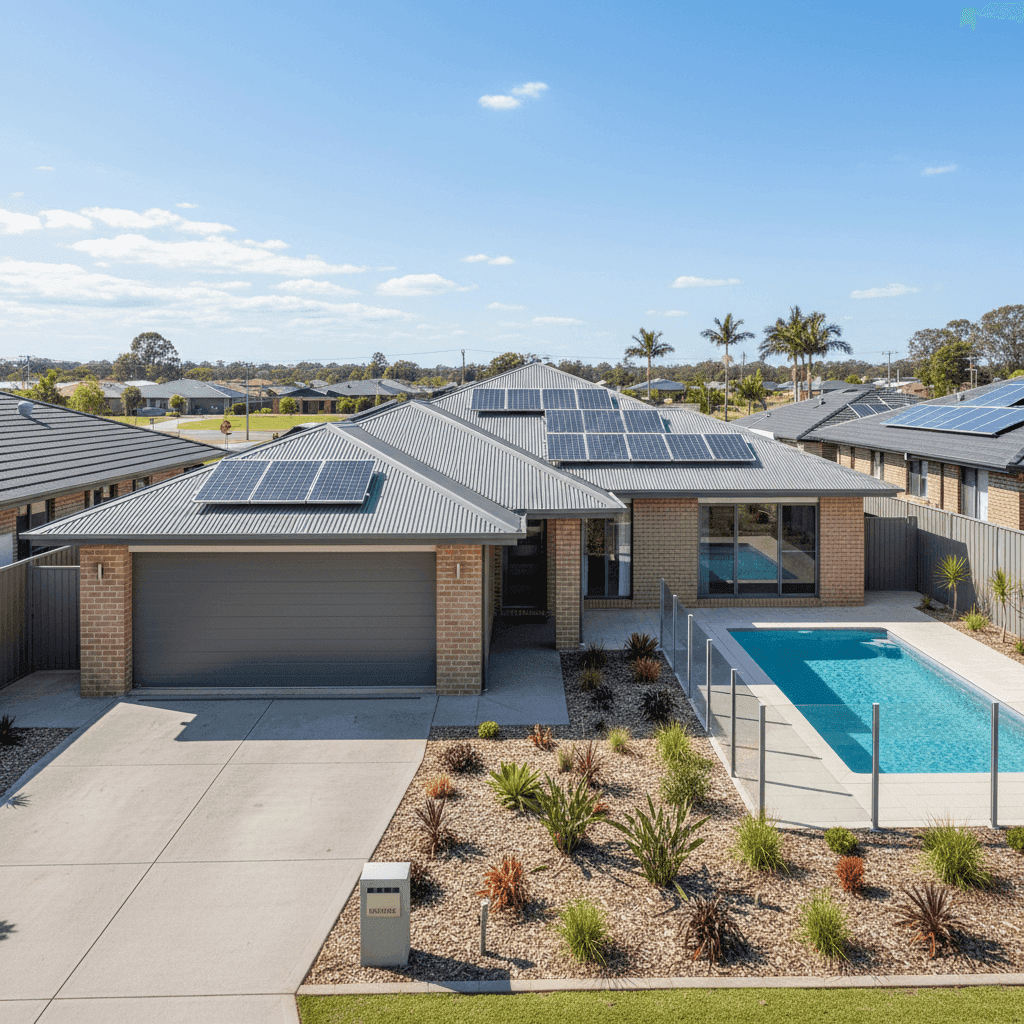
Oxenford, nestled in the northern Gold Coast corridor of Queensland, is a well-established suburban community popular with families drawn to its proximity to theme parks, schools, and the M1 motorway. It's also a suburb where home insurance costs can vary considerably — making it all the more important to understand whether the quote you've received represents genuine value. This article breaks down a real home and contents insurance quote for a four-bedroom, three-bathroom free standing home in Oxenford (postcode 4210), and puts the numbers in context against suburb, state, and national benchmarks.
---
Is This Quote Fair?
The quote in question comes in at $2,952 per year (or $283 per month) for combined home and contents cover, with a building sum insured of $912,000 and contents valued at $50,000. Both the building and contents excess are set at $2,000.
Our price rating for this quote is FAIR — Around Average.
That rating reflects where this premium sits relative to comparable properties in the area. At $2,952 per year, the quote lands just above the suburb's 25th percentile of $2,357/yr but well below the suburb average of $4,299/yr and the suburb median of $3,274/yr. In practical terms, this homeowner is paying less than the majority of Oxenford residents who've received quotes through our platform — which is a solid outcome, particularly for a property of this size and with features like a pool and solar panels that can sometimes push premiums higher.
It's not the cheapest quote on the market (the lower quartile sits at $2,357/yr), but given the building sum insured of $912,000 — which reflects a substantial replacement cost for a 235 sqm home — the premium is proportionate and competitive.
---
How Oxenford Compares
To truly appreciate where this quote stands, it helps to zoom out and look at the broader picture. You can explore the full data on our Oxenford suburb insurance stats page, but here's a quick summary:
| Benchmark | Premium |
|---|---|
| This quote | $2,952/yr |
| Oxenford suburb average | $4,299/yr |
| Oxenford suburb median | $3,274/yr |
| Gold Coast LGA average | $8,161/yr |
| QLD state average | $9,129/yr |
| QLD state median | $3,903/yr |
| National average | $5,347/yr |
| National median | $2,764/yr |
A few things stand out here. First, the Queensland state average of $9,129/yr is dramatically higher than what most Oxenford residents are actually paying — this is largely driven by high-risk coastal and cyclone-prone postcodes in Far North Queensland, which skew the state average significantly upward. The QLD median of $3,903/yr is a more useful comparison for South East Queensland homeowners, and this quote sits comfortably below it.
The Gold Coast LGA average of $8,161/yr may seem alarming at first glance, but again, this figure is influenced by premium-heavy beachside and flood-prone areas across the broader Gold Coast region. Oxenford itself is not a cyclone risk area, which keeps premiums more manageable.
Compared to the national average of $5,347/yr, this quote is 45% cheaper — a meaningful saving for a household budget. The national median of $2,764/yr is slightly below this quote, but that comparison spans all property types, sizes, and risk profiles across Australia, so a 235 sqm, four-bedroom home with a pool and solar panels sitting just above the national median is still a strong result.
---
Property Features That Affect Your Premium
Several characteristics of this particular property influence how insurers price the risk:
Brick Veneer Walls & Colorbond Roof Brick veneer construction is generally well-regarded by insurers for its durability and fire resistance. Combined with a steel Colorbond roof — which performs well in storms and is resistant to corrosion — this property presents a relatively low structural risk profile. These materials are common in Queensland and are typically associated with more competitive premiums compared to, say, weatherboard or fibrous cement homes.
Slab Foundation & Tiled Flooring A concrete slab foundation is standard for Queensland homes of this era and is generally considered stable and low-risk. Tiled flooring throughout is another insurer-friendly feature — tiles are durable, resistant to water damage, and straightforward to replace if needed.
Swimming Pool A pool adds to the replacement cost of the property and introduces some liability considerations, which can nudge premiums upward. Homeowners with pools should ensure their policy includes adequate liability cover and that the pool and its fencing are maintained to Queensland safety standards.
Solar Panels Solar panels are increasingly common on Australian rooftops and are typically covered under building insurance as a fixed fixture. However, it's worth confirming with your insurer that your system is explicitly included in the sum insured, particularly given the cost of modern solar installations.
Built in 1991 At around 34 years old, this home falls into a middle-aged category that insurers are generally comfortable with — old enough to have settled, but not so aged as to raise concerns about ageing infrastructure. Homes of this era with original electrical or plumbing systems may warrant a check to ensure everything is up to current standards.
No Cyclone Risk Oxenford is not classified as a cyclone risk area, which is a meaningful factor in keeping premiums lower than many other Queensland postcodes. This is a significant advantage compared to properties in Far North Queensland or coastal zones.
---
Tips for Homeowners in Oxenford
1. Review your building sum insured regularly Construction costs have risen sharply in recent years across South East Queensland. A sum insured of $912,000 for a 235 sqm home is substantial, but it's worth verifying this figure reflects current rebuild costs — not just the market value of the land and home combined. Underinsurance is one of the most common and costly mistakes homeowners make.
2. Check what's included for your pool and solar panels Not all policies automatically extend to cover pool equipment (pumps, filters, heating systems) or the full replacement cost of solar panel systems. Review your Product Disclosure Statement carefully and ask your insurer directly if you're unsure.
3. Consider your excess strategically This quote carries a $2,000 excess for both building and contents. A higher excess typically lowers your annual premium, but make sure it's an amount you could comfortably cover in the event of a claim. If cash flow is a concern, a lower excess with a slightly higher premium may be the better trade-off.
4. Compare quotes before renewal Even if your current premium feels reasonable, the insurance market shifts regularly. With 121 quotes in our Oxenford dataset alone, there's enough data to show significant variation in what different insurers charge for similar properties. Shopping around at renewal time — or using a comparison tool — can uncover meaningful savings without sacrificing cover quality.
---
Ready to Compare?
Whether you're reviewing your current policy or shopping for the first time, CoverClub makes it easy to see how your quote stacks up. Get a home insurance quote today and compare your options side by side — so you can make a confident, informed decision about protecting one of your most valuable assets.