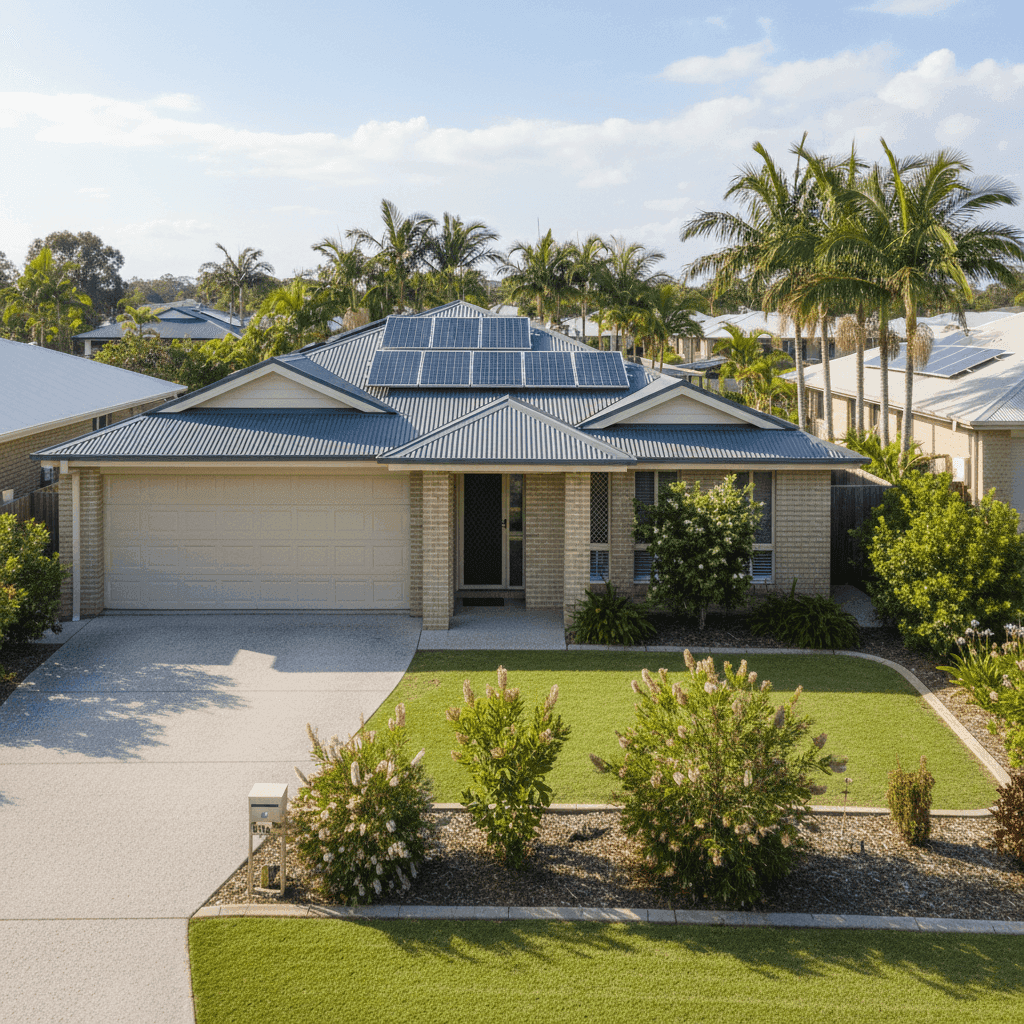
If you own a free standing home in Oxenford, QLD 4210, understanding what you should be paying for home insurance can feel like navigating a maze. Premiums vary enormously across the Gold Coast region, and homeowners are often left wondering whether their quote is genuinely competitive or quietly overpriced. This article breaks down a real home and contents insurance quote for a four-bedroom, two-bathroom brick veneer home in Oxenford — and puts the numbers in context so you can make an informed decision.
---
Is This Quote Fair?
The short answer? Yes — this is an exceptionally competitive quote.
At $1,492 per year (or roughly $146 per month), this home and contents policy covers a building insured at $598,000 and contents valued at $75,000. Our price rating for this quote is CHEAP, meaning it sits well below the average for comparable properties in the area.
To put that in perspective: the suburb average for Oxenford is $4,240 per year, and the median sits at $3,229 per year. This quote comes in at roughly 65% below the suburb average — a remarkable saving of nearly $2,750 annually compared to what many local homeowners are paying.
Even measured against the suburb's 25th percentile (meaning the cheapest quarter of quotes), which sits at $2,129 per year, this policy is still significantly cheaper. That's a strong indicator that the policyholder has either found an insurer offering a particularly sharp rate for this property profile, or that a combination of favourable property features has pushed the premium down considerably.
It's worth noting the building excess is $3,000 and the contents excess is $1,000 — both on the higher side. A higher excess is one of the most common levers insurers use to reduce annual premiums, so this trade-off is worth keeping in mind if you're comparing policies. You'll pay less each year, but more out of pocket if you ever need to make a claim.
---
How Oxenford Compares
Oxenford sits within the City of Gold Coast LGA, which has one of the highest average home insurance premiums in the country at $5,494 per year. That figure reflects the broader risk profile of the Gold Coast — a coastal region with exposure to severe storms, flooding in certain pockets, and a high concentration of high-value properties.
Here's how the numbers stack up across different benchmarks:
| Benchmark | Annual Premium |
|---|---|
| This Quote | $1,492 |
| Oxenford Suburb Average | $4,240 |
| Oxenford Suburb Median | $3,229 |
| Oxenford 25th Percentile | $2,129 |
| QLD State Average | $4,547 |
| QLD State Median | $3,931 |
| National Average | $2,965 |
| National Median | $2,716 |
| Gold Coast LGA Average | $5,494 |
This quote beats every single benchmark — including the national average of $2,965 and the national median of $2,716. Across all QLD home insurance data, premiums have been climbing steadily in recent years, driven by increased weather-related claims and reinsurance costs. Nationally, as shown in our national insurance statistics, the average has also trended upward.
For more detail on how Oxenford specifically compares, visit the Oxenford suburb insurance stats page, which is based on a sample of 103 quotes from the area.
---
Property Features That Affect Your Premium
Several characteristics of this particular property work in the homeowner's favour from a risk and pricing perspective.
Brick Veneer Walls Brick veneer is widely regarded by insurers as a solid, fire-resistant construction type. Compared to timber-framed or clad homes, brick veneer properties typically attract lower premiums because they're more resilient to fire spread and wind damage.
Steel / Colorbond Roof A Colorbond steel roof is another premium-friendly feature. These roofs are durable, lightweight, and perform well in high-wind conditions — a relevant consideration anywhere in South East Queensland. They're also resistant to ember attack, which matters during bushfire season.
Concrete Slab Foundation Slab foundations are generally considered lower risk than raised or suspended timber floors. They offer stability and reduce the likelihood of subsidence-related claims, which can be a factor on certain Gold Coast soil types.
Tile Flooring Tiled floors throughout the home are both durable and water-resistant, reducing the likelihood of costly water damage claims from internal leaks or flooding events.
Built in 2015 A relatively modern construction date means the home was built to contemporary building codes, which include improved cyclone tie-downs, flood-resilient design elements, and better overall structural standards than older homes.
Solar Panels The presence of rooftop solar panels is worth flagging. Some insurers include solar panels under building cover automatically; others treat them as a separate item or may require you to confirm they're included. It's worth double-checking your policy wording to ensure your system is adequately covered.
No Pool, No Ducted Climate Control The absence of a pool removes a common liability risk that can nudge premiums upward. Similarly, no ducted air conditioning means fewer mechanical systems that could fail and cause water or electrical damage.
---
Tips for Homeowners in Oxenford
1. Review your sum insured regularly Building costs in South East Queensland have risen sharply since 2020. A home built in 2015 with a current sum insured of $598,000 should be checked against today's construction costs — underinsurance is a genuine risk if rebuild costs have outpaced your cover.
2. Check solar panel coverage explicitly As mentioned above, solar panels aren't always automatically included in standard building cover. Contact your insurer to confirm your panels, inverter, and associated wiring are all covered under your policy.
3. Don't set and forget your excess A $3,000 building excess is relatively high. While it keeps your annual premium low, consider whether you'd be comfortable covering that amount out of pocket for a mid-range claim. Some homeowners prefer a slightly higher premium in exchange for a lower excess — it depends on your financial buffer.
4. Compare quotes at renewal time Even if you're happy with your current premium, the insurance market shifts every year. Insurers reprice based on claims data, reinsurance costs, and competitive positioning. Running a fresh comparison at renewal takes minutes and could reveal meaningful savings — or confirm you're already on a great deal.
---
Ready to Compare Your Own Quote?
Whether you're a first-time buyer or a long-term Oxenford homeowner, it pays to know where your premium stands relative to the market. CoverClub makes it easy to benchmark your current policy and explore alternatives in minutes.