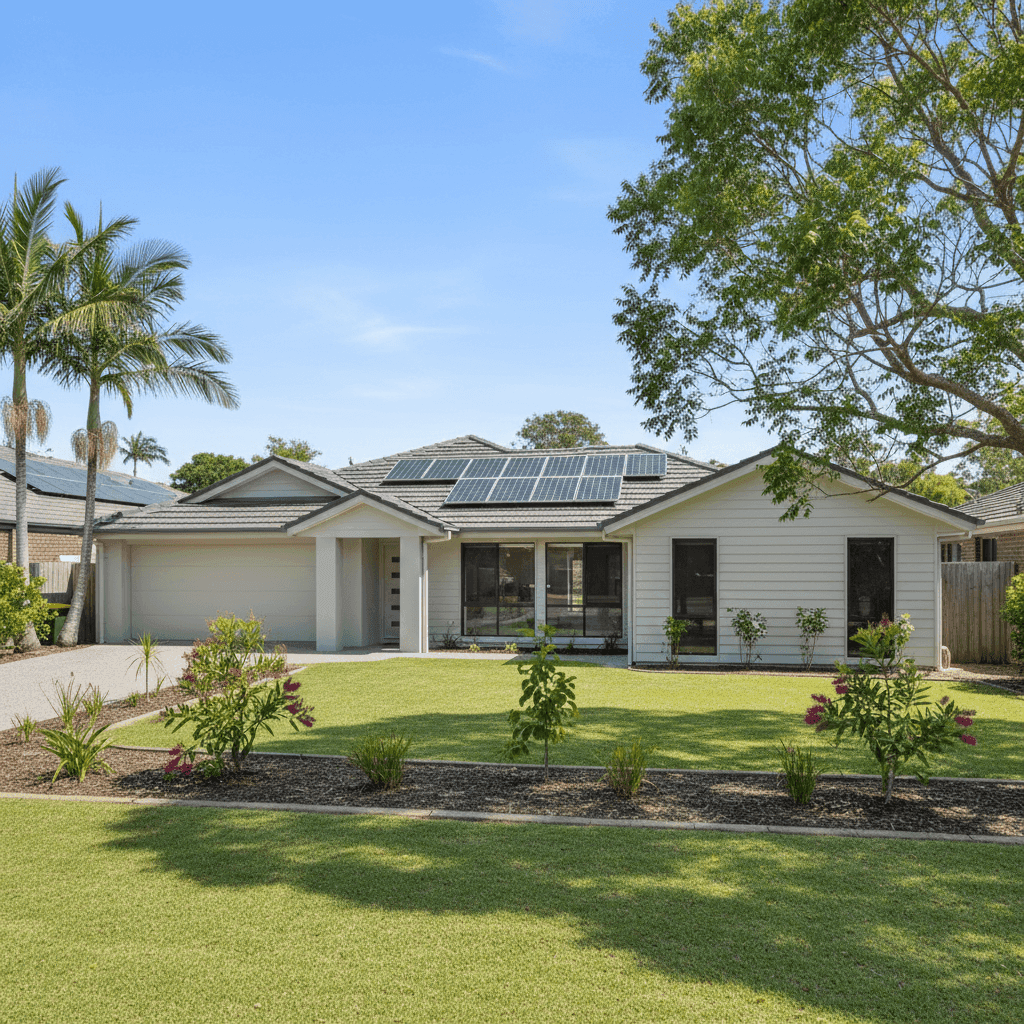
If you own a semi detached home in Oxenford, QLD 4210, you're living in one of the Gold Coast's most family-friendly growth corridors — conveniently close to theme parks, schools, and the M1. But suburban comfort doesn't insulate you from the realities of home insurance costs in South East Queensland. This article breaks down a real home and contents insurance quote for a four-bedroom, two-bathroom semi detached property in Oxenford, examines how it compares to local and national benchmarks, and offers practical tips to help you get the best value cover.
---
Is This Quote Fair?
The annual premium on this quote comes in at $2,229 per year (or $219/month), covering a building sum insured of $703,000 and $50,000 in contents. Our price rating for this quote is FAIR — Around Average.
That rating reflects a nuanced picture. Within Oxenford itself, the suburb's 25th percentile sits at $2,129/yr, meaning this quote is only marginally above the cheapest quarter of comparable properties in the area. It's well below the suburb average of $4,240/yr and also under the suburb median of $3,229/yr. So while it's not the sharpest deal on the market, it's a reasonable outcome — particularly for a property with a granny flat and solar panels, both of which can add complexity to underwriting.
The building excess of $3,000 is on the higher side, which is one reason the annual premium is kept in check. A lower excess would likely push the premium up. The contents excess of $1,000 is more standard. It's worth considering whether the excess trade-off suits your financial situation — if a $3,000 out-of-pocket cost in a claim scenario would be a strain, negotiating a lower excess (at a higher premium) may be worthwhile.
---
How Oxenford Compares
To properly contextualise this quote, it helps to zoom out and look at the broader data. Here's how Oxenford stacks up across multiple levels:
| Benchmark | Average Premium | Median Premium |
|---|---|---|
| Oxenford (suburb) | $4,240/yr | $3,229/yr |
| Queensland (state) | $4,547/yr | $3,931/yr |
| Australia (national) | $2,965/yr | $2,716/yr |
| Gold Coast LGA | $5,494/yr | — |
A few things stand out immediately. The Gold Coast LGA average of $5,494/yr is the highest benchmark in this comparison — a reflection of the region's elevated flood, storm, and weather-related risk profile. Oxenford's own suburb average of $4,240/yr is below that LGA figure, which suggests the suburb sits in a relatively more favourable risk zone within the Gold Coast.
Queensland as a whole is significantly more expensive than the national average, with a state average of $4,547/yr versus the national average of $2,965/yr. This gap is largely driven by Queensland's exposure to severe weather events — cyclones in the north, flooding in river catchments, and hailstorms across the south-east. Even though Oxenford is not classified as a cyclone risk area, the broader Queensland risk environment still influences how insurers price policies in the region.
At $2,229/yr, this quote sits below every benchmark listed above — including the national median of $2,716/yr. That's a strong result for a Gold Coast property. You can explore more local data on the Oxenford suburb stats page, or compare it against all of Queensland and national figures.
---
Property Features That Affect Your Premium
Several characteristics of this property play a meaningful role in how insurers assess risk and calculate the premium.
Hardiplank / Hardiflex external walls are a fibre cement cladding product that is generally well-regarded by insurers. It's resistant to rot, termites, and fire, and tends to attract more favourable ratings than timber weatherboard. This is a positive factor for the premium.
Tiled roof is considered a durable, low-maintenance roofing material that performs well in storms compared to metal sheeting or older terracotta. Combined with a slab foundation, this property has a solid structural profile that insurers tend to rate favourably.
Tile flooring throughout is another positive — it's water-resistant, easy to replace in sections, and less susceptible to damage from minor flooding or leaks than carpet or timber flooring.
Solar panels are increasingly common on Australian homes, but they do add an element of complexity to a home insurance policy. It's important to confirm with your insurer that the solar system is explicitly covered under the building sum insured — both the panels themselves and any inverter or battery storage equipment. Some policies cover them as standard; others require an endorsement.
The granny flat is a significant consideration. A secondary dwelling on the same title adds to the replacement cost of the property and may affect liability exposure, particularly if it's rented out. Homeowners should ensure the building sum insured of $703,000 adequately accounts for the cost of rebuilding both the main dwelling and the granny flat to current standards. Underinsurance is a common and costly mistake.
The property was built in 2008, meaning it's relatively modern and likely compliant with building codes that were updated following major weather events in the early 2000s. This generally works in the homeowner's favour when it comes to structural risk ratings.
---
Tips for Homeowners in Oxenford
1. Review your sum insured regularly — especially with a granny flat Construction costs have risen significantly in recent years. A building sum insured that was adequate three years ago may no longer cover a full rebuild today. Use a building replacement cost calculator and factor in the granny flat when reviewing your coverage annually.
2. Confirm solar panel coverage in your policy documents Don't assume your solar system is automatically covered. Check your Product Disclosure Statement (PDS) to see whether panels, inverters, and associated wiring are included under the building definition — and whether there are any sub-limits that apply.
3. Weigh up your excess carefully This quote carries a $3,000 building excess. Before renewing, consider whether you'd prefer a lower excess in exchange for a slightly higher premium. If your emergency fund is healthy, a higher excess may be fine — but it's a decision worth making consciously rather than by default.
4. Compare quotes at renewal time The insurance market in Queensland is competitive, and premiums can vary significantly between providers for the same property. Even if your current insurer has treated you well, it costs nothing to compare. Based on the suburb data, there's a wide spread between the 25th percentile ($2,129/yr) and the 75th percentile ($4,495/yr) — meaning the right quote could save you over $2,000 a year.
---
Ready to Compare?
Whether you're renewing your existing policy or shopping for the first time, comparing quotes is the single most effective way to ensure you're not overpaying. Get a home insurance quote at CoverClub and see how your property stacks up against hundreds of real quotes from across Oxenford and the Gold Coast.