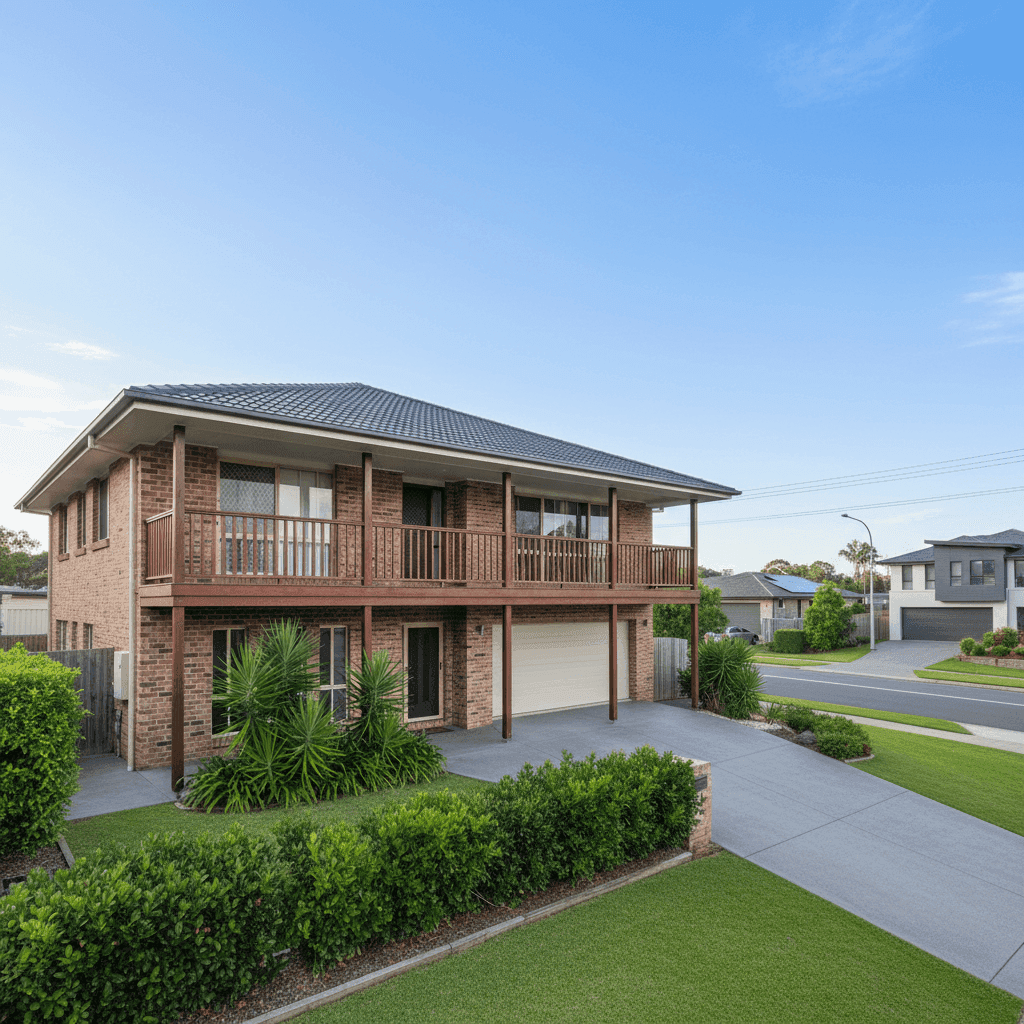
Oxenford is a well-established residential suburb on the northern Gold Coast, known for its family-friendly streets, proximity to theme parks, and a mix of modern homes built over the past few decades. If you own a free standing home here, understanding what you should expect to pay for home and contents insurance — and why — can make a real difference when it comes time to renew or shop around.
This article breaks down a recent home and contents insurance quote for a four-bedroom, two-bathroom free standing home in Oxenford (postcode 4210), comparing it against local, state, and national benchmarks to help you make a more informed decision.
---
Is This Quote Fair?
The annual premium for this property came in at $3,065 per year (or approximately $294 per month), covering both building (sum insured: $1,000,000) and contents ($50,000), each with a $1,000 excess.
CoverClub's pricing analysis rates this quote as Fair — Around Average, and the data backs that up. When compared against 121 quotes collected for Oxenford (QLD 4210):
| Benchmark | Premium |
|---|---|
| This Quote | $3,065/yr |
| Suburb Median | $3,274/yr |
| Suburb Average | $4,299/yr |
| Suburb 25th Percentile | $2,357/yr |
| Suburb 75th Percentile | $4,722/yr |
At $3,065, this quote sits just below the suburb median and well below the suburb average — meaning roughly half of comparable Oxenford properties are paying more. It's not the cheapest quote available in the area (the 25th percentile sits at $2,357), but it's meaningfully better than what many homeowners in the same postcode are paying. In short: not a bargain, but a reasonable result.
---
How Oxenford Compares
One of the more striking takeaways from this data is just how much insurance costs can vary depending on where you zoom in.
- Oxenford suburb average: $4,299/yr
- Gold Coast LGA average: $8,161/yr
- [Queensland state average](https://coverclub.com.au/stats/QLD): $9,129/yr
- [National average](https://coverclub.com.au/stats/national): $5,347/yr
Oxenford comes out looking relatively affordable compared to the broader Gold Coast LGA and Queensland as a whole. The Queensland state average of $9,129 is more than double the Oxenford suburb average — a reflection of the enormous variability across the state, driven by high-risk coastal and flood-prone areas that push averages up significantly.
It's worth noting that averages can be heavily skewed by outlier properties — homes in cyclone zones, flood plains, or with very high replacement values. The median is often a more useful yardstick. Queensland's state median sits at $3,903, and Oxenford's suburb median of $3,274 is actually below that — suggesting homeowners in this suburb generally face a more manageable insurance burden than many Queenslanders.
Nationally, the median is $2,764, which places Oxenford slightly above the middle of the pack — reasonable for a southeast Queensland suburb with some flood and storm exposure.
---
Property Features That Affect Your Premium
Several characteristics of this particular property influence how insurers price the risk:
Brick Veneer Walls & Tiled Roof
Brick veneer construction with a tiled roof is generally viewed favourably by insurers. Brick is fire-resistant and durable, and tiles (while heavier) offer good weather protection. This combination typically attracts lower premiums compared to properties with timber weatherboard exteriors or Colorbond roofing in storm-prone areas.
Elevated Foundation (At Least 1 Metre)
The property sits on a raised slab elevated by at least one metre. In Queensland, elevation is a significant factor — homes built higher off the ground are less susceptible to inundation during heavy rainfall events. This feature likely works in the homeowner's favour when it comes to flood-related risk pricing.
Concrete Slab Foundation
A slab foundation is standard for homes of this era and construction type. It's a neutral-to-positive factor for insurers, offering structural stability without the subsidence concerns sometimes associated with older stumped or timber-framed foundations.
Timber/Laminate Flooring
While aesthetically popular, timber and laminate flooring can be more costly to repair or replace after a water-related event compared to tiles. Insurers may factor this into contents and building assessments, particularly for internal water damage claims.
Ducted Climate Control
The presence of ducted air conditioning adds to the replacement value of the home and may contribute modestly to the premium. It's a standard inclusion for a home of this size and quality in southeast Queensland.
Construction Year: 2009
Homes built in 2009 were subject to updated building codes introduced in Queensland following significant weather events in earlier years. This generally means better structural resilience compared to older properties, which can positively influence risk assessments.
No Pool, No Solar Panels
The absence of a pool removes liability considerations that can add to premiums. No solar panels means one fewer system to insure or factor into the building replacement cost.
---
Tips for Homeowners in Oxenford
1. Review your sum insured regularly A $1,000,000 building sum insured is on the higher end for a 214 sqm home in this area. While it's wise to avoid being underinsured, it's equally important not to over-insure — you pay premiums based on that figure. Use a building cost calculator or speak with a quantity surveyor to confirm your rebuild cost is accurate.
2. Consider increasing your excess to reduce premiums Both the building and contents excess on this policy sit at $1,000. Many insurers offer lower premiums in exchange for a higher excess (e.g., $2,000 or $2,500). If you have a solid emergency fund and are unlikely to make small claims, this trade-off can deliver meaningful annual savings.
3. Shop around at renewal time Insurance loyalty rarely pays off in Australia. Insurers often offer better rates to new customers than to existing ones. Use a comparison tool like CoverClub to benchmark your renewal quote against the market before accepting it.
4. Check your flood and storm surge definitions Oxenford is not classified as a cyclone risk area, but southeast Queensland still experiences significant storm and rainfall events. Make sure your policy clearly covers storm surge, flash flooding, and rainwater run-off — these are sometimes treated as separate events with different conditions across policies.
---
Compare Your Own Quote
Whether you're renewing an existing policy or purchasing cover for the first time, it pays to know where your quote sits relative to the market. CoverClub aggregates real quote data from across Australia so you can see exactly how your premium compares — by suburb, by state, and nationally.
Get a home insurance quote and compare it instantly at CoverClub →