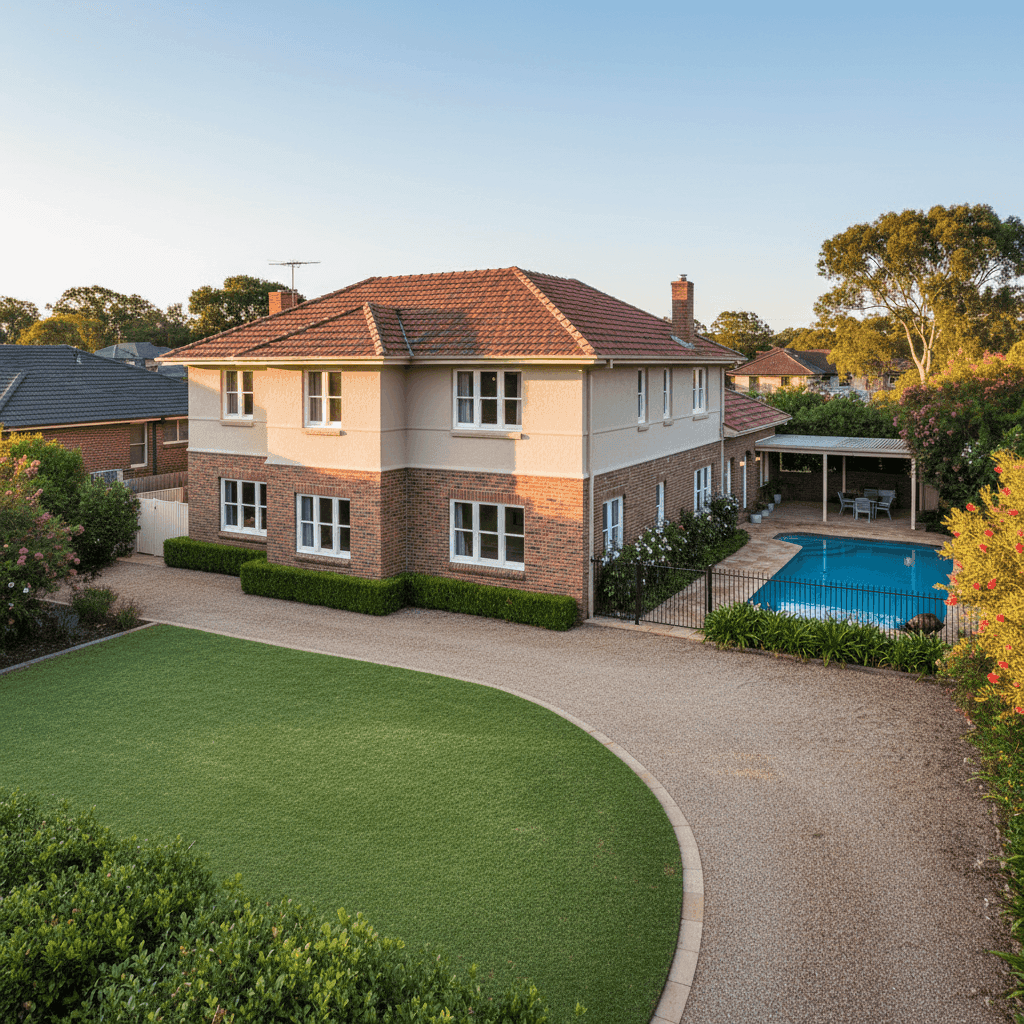
Oyster Bay is a leafy, waterfront suburb nestled within the Sutherland Shire on Sydney's southern outskirts — and it's exactly the kind of location that makes home insurance both essential and, at times, eye-wateringly expensive. This article takes a close look at a real home and contents insurance quote for a large, free standing home in Oyster Bay (postcode 2225), unpacking what's driving the premium, how it stacks up against local and national benchmarks, and what homeowners can do to make sure they're getting fair value.
---
Is This Quote Fair?
The quote in question comes to $20,467 per year (or $1,923/month) for a 7-bedroom, 3-bathroom free standing home, with a building sum insured of $1,899,000 and contents cover of $50,000. The building excess sits at $2,500 and the contents excess at $1,000.
Our price rating for this quote is EXPENSIVE — above average for the area. That said, "above average" needs to be understood in context. The suburb median premium for Oyster Bay sits at just $2,615 per year, but that figure reflects a much broader mix of properties — many of them considerably smaller and less valuable than this one. A 447 sqm, seven-bedroom home built in 1930 with a $1.9 million building sum insured is a significant asset, and the premium reflects that scale.
When comparing against the Sutherland LGA average of $23,423 per year, this quote actually comes in below the local government area benchmark — a meaningful data point suggesting the quote is not unreasonable for a high-value property in this part of Sydney. Still, at more than seven times the suburb median, it's worth understanding exactly what's contributing to the cost.
---
How Oyster Bay Compares
Here's how this quote sits relative to broader benchmarks:
| Benchmark | Premium |
|---|---|
| This quote | $20,467/yr |
| Oyster Bay suburb average | $2,838/yr |
| Oyster Bay suburb median | $2,615/yr |
| Sutherland LGA average | $23,423/yr |
| NSW state average | $9,528/yr |
| NSW state median | $3,770/yr |
| National average | $5,347/yr |
| National median | $2,764/yr |
You can explore the full data for this postcode at the Oyster Bay suburb stats page, compare it against all NSW premiums, or benchmark it against national home insurance averages.
A few things stand out from this comparison. The NSW state average of $9,528 is itself elevated by high-value and high-risk properties — the median of $3,770 is a more representative figure for typical NSW homes. This quote sits well above both, but the property in question is far from typical. With nearly 450 sqm of floor space, a heritage-era construction date, and a replacement value approaching $1.9 million, the insurer is taking on substantial exposure.
The Sutherland LGA average being higher than this individual quote is also worth noting. It suggests that many properties in the broader Shire — potentially those with greater flood, bushfire, or storm exposure — are attracting even steeper premiums.
---
Property Features That Affect Your Premium
Several characteristics of this property have a direct bearing on what it costs to insure. Here's a breakdown of the key factors:
Age and Construction (1930, Double Brick, Tile Roof)
The home was built in 1930, which means it predates modern building codes by several decades. While double brick construction is generally regarded as durable and fire-resistant, older homes can carry higher reinstatement costs due to the need for heritage-compatible materials and skilled tradespeople. Insurers often price older homes more conservatively to account for these unknowns.
On the positive side, a tiled roof is considered a lower-risk roofing material compared to timber shingles or older corrugated iron, and double brick walls provide solid structural integrity and good fire resistance.
Stump Foundation and Timber Flooring
The home sits on stumps — a common foundation type for older Australian homes, particularly in areas with reactive or uneven soils. Stump foundations can be susceptible to movement, subsidence, and pest damage over time, all of which can translate into higher claims risk. Combined with timber and laminate flooring, water ingress events (such as burst pipes or storm-related flooding) could cause more extensive damage than in a slab-on-ground home.
Size and Sum Insured
At 447 sqm and a building sum insured of $1,899,000, this is a large, high-value property. Replacement cost is the primary driver of building premiums — the more it would cost to rebuild, the more expensive the cover. For a home of this size and age in Sydney's south, that figure is not unreasonable.
Swimming Pool
The presence of a pool adds to the insurable risk — both from a liability perspective and in terms of potential property damage (e.g., structural issues, water damage to surrounding areas). Many insurers load premiums slightly for properties with pools.
Ducted Climate Control
Ducted air conditioning systems are a significant fixed asset and can be costly to repair or replace following storm, electrical surge, or fire events. Their inclusion in the sum insured calculation contributes to the overall replacement value.
---
Tips for Homeowners in Oyster Bay
If you're insuring a property like this in Oyster Bay, here are four practical steps to help ensure you're getting the right cover at the best possible price:
- Review your building sum insured regularly. Construction costs have risen sharply across NSW in recent years. If your sum insured hasn't been updated to reflect current rebuild costs, you may be underinsured — or conversely, over-insured and paying more than necessary. Use a quantity surveyor or your insurer's calculator to validate the figure annually.
- Ask about excess options. A $2,500 building excess is relatively standard, but increasing your excess voluntarily can reduce your annual premium. If you have the financial buffer to absorb a higher out-of-pocket cost in the event of a claim, this can be a worthwhile trade-off.
- Maintain your stumps and subfloor. Insurers may scrutinise claims involving foundation movement or subfloor pest damage more closely for older stump-foundation homes. Regular inspections by a licensed pest controller and builder can help you stay ahead of issues — and demonstrate to your insurer that the property is well-maintained.
- Compare quotes at renewal time. Loyalty doesn't always pay in the insurance market. Premiums can vary significantly between providers for the same property, and the gap tends to widen for high-value homes. Shopping around each year is one of the most effective ways to avoid overpaying.
---
Ready to Compare?
Whether you're renewing your existing policy or insuring a new property in Oyster Bay, it pays to see what the market has to offer. CoverClub makes it easy to compare home and contents insurance quotes side by side, with transparent pricing and no hidden fees. Get a quote today and find out if you could be paying less for the same level of cover.