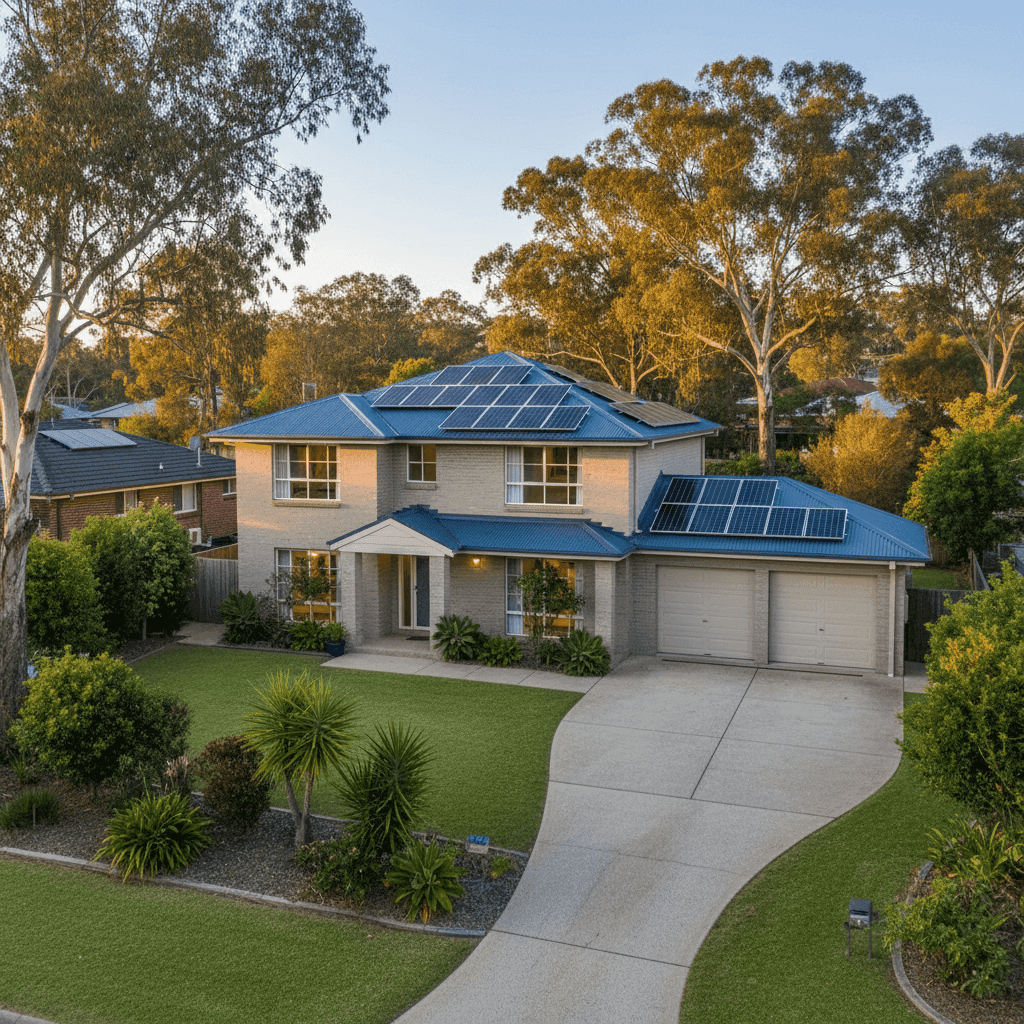
If you own a free standing home in Oyster Bay, NSW 2225, you already know it's one of the more sought-after pockets of the Sutherland Shire — leafy streets, close to the Georges River, and well-regarded schools nearby. But desirable suburbs don't always mean straightforward insurance pricing. This article breaks down a recent building-only insurance quote for a five-bedroom home in the area, benchmarks it against local and national data, and offers practical advice for keeping your premiums in check.
---
Is This Quote Fair?
The quote in question comes in at $6,186 per year (or $593/month) for building-only cover on a five-bedroom, three-bathroom free standing home, with a $1,000 building excess and a sum insured of $3,000,000.
Our price rating for this quote is EXPENSIVE — above average.
To put that in perspective, the suburb average for Oyster Bay sits at $2,838/year, and the median is even lower at $2,615/year. This quote is more than double the local median, which is a significant gap worth understanding before simply accepting the figure.
It's worth noting that the $3,000,000 sum insured is exceptionally high. For most five-bedroom homes — even well-appointed ones — a rebuild cost in that range would be unusual. If the sum insured has been set too high (perhaps auto-populated by the insurer or entered without a proper building cost estimate), it could be inflating the premium considerably. Reviewing your sum insured with a qualified quantity surveyor or using an online building calculator is a worthwhile first step.
That said, even after accounting for a generous sum insured, the premium warrants scrutiny. Comparing quotes across multiple insurers is the most reliable way to know whether you're overpaying.
---
How Oyster Bay Compares
Understanding where your premium sits relative to broader benchmarks gives you real negotiating power. Here's how this quote stacks up:
| Benchmark | Premium |
|---|---|
| This quote | $6,186/yr |
| Oyster Bay suburb average | $2,838/yr |
| Oyster Bay suburb median | $2,615/yr |
| Oyster Bay 25th percentile | $2,438/yr |
| Oyster Bay 75th percentile | $3,087/yr |
| NSW state average | $9,528/yr |
| NSW state median | $3,770/yr |
| National average | $5,347/yr |
| National median | $2,764/yr |
| Sutherland LGA average | $23,423/yr |
(Based on a sample of 15 quotes in the Oyster Bay area. [View full Oyster Bay suburb stats](https://coverclub.com.au/stats/NSW/2225/oyster-bay) | [NSW stats](https://coverclub.com.au/stats/NSW) | [National stats](https://coverclub.com.au/stats/national))
A few things stand out here. First, the Sutherland LGA average of $23,423/year is extraordinarily high — likely skewed by a small number of high-value or high-risk properties in the broader council area. This quote, while expensive relative to Oyster Bay itself, is well below that LGA figure.
Second, compared to the NSW state average of $9,528/year, this quote is actually below average at the state level — though the NSW figure is heavily influenced by high-risk coastal and flood-prone areas. The national average of $5,347/year is closer to this quote, and the national median of $2,764/year is again much lower.
The clearest signal remains the local one: at more than twice the Oyster Bay median, this quote is expensive for the suburb.
---
Property Features That Affect Your Premium
Several characteristics of this property influence how insurers price the risk:
Double brick construction is generally viewed favourably by insurers. It's durable, fire-resistant, and holds up well structurally — which can moderate premiums compared to timber-framed homes.
Steel/Colorbond roof is another positive signal. Colorbond is lightweight, resistant to ember attack, and less prone to damage from hail than terracotta tiles. Insurers typically regard it as a low-maintenance, resilient roofing choice.
Slab foundation is standard for a home built in 2014 and presents minimal risk concerns for insurers in a non-flood-prone suburb like Oyster Bay.
Timber and laminate flooring can be a mild risk factor — timber floors are susceptible to water damage, which may influence how claims are assessed. However, this is generally a minor consideration in overall pricing.
Solar panels add replacement value to the building and can slightly increase the sum insured required. Ensure your policy explicitly covers solar panels as part of the building — not all policies do by default.
Ducted climate control is a significant fixed asset and forms part of the building's insured value. Systems of this type can be expensive to repair or replace, and their inclusion in the sum insured is appropriate.
No pool removes one common source of liability and maintenance-related claims, which is a minor positive for pricing.
The 2014 construction year means the home is relatively modern, built to current building codes, and unlikely to have the aging infrastructure issues that can affect older properties.
---
Tips for Homeowners in Oyster Bay
1. Review your sum insured carefully A $3,000,000 sum insured is very high for a 143 sqm home, even a well-finished one. Use a building replacement cost calculator or engage a quantity surveyor to get an accurate rebuild estimate. Over-insuring doesn't mean better protection — it just means a higher premium.
2. Compare at least three quotes before renewing Loyalty rarely pays in home insurance. Insurers often offer their best rates to new customers, and the difference between quotes for the same property can be substantial. Use CoverClub's quote comparison tool to see what multiple insurers would charge for your specific property.
3. Confirm solar panel coverage is included With solar panels on the roof, make sure your policy explicitly covers them under the building definition. Some policies treat solar systems as optional extras or exclude damage caused by specific events. Read the Product Disclosure Statement (PDS) carefully.
4. Consider your excess strategically A $1,000 building excess is fairly standard. If you're comfortable covering smaller claims out of pocket, increasing your excess to $2,500 or more can meaningfully reduce your annual premium — sometimes by 10–20% depending on the insurer.
---
Ready to Find a Better Rate?
If this quote doesn't feel right for your situation, you don't have to accept it. CoverClub makes it easy to compare building insurance quotes from multiple Australian insurers in one place — so you can see exactly where your premium sits and whether there's a better deal available.