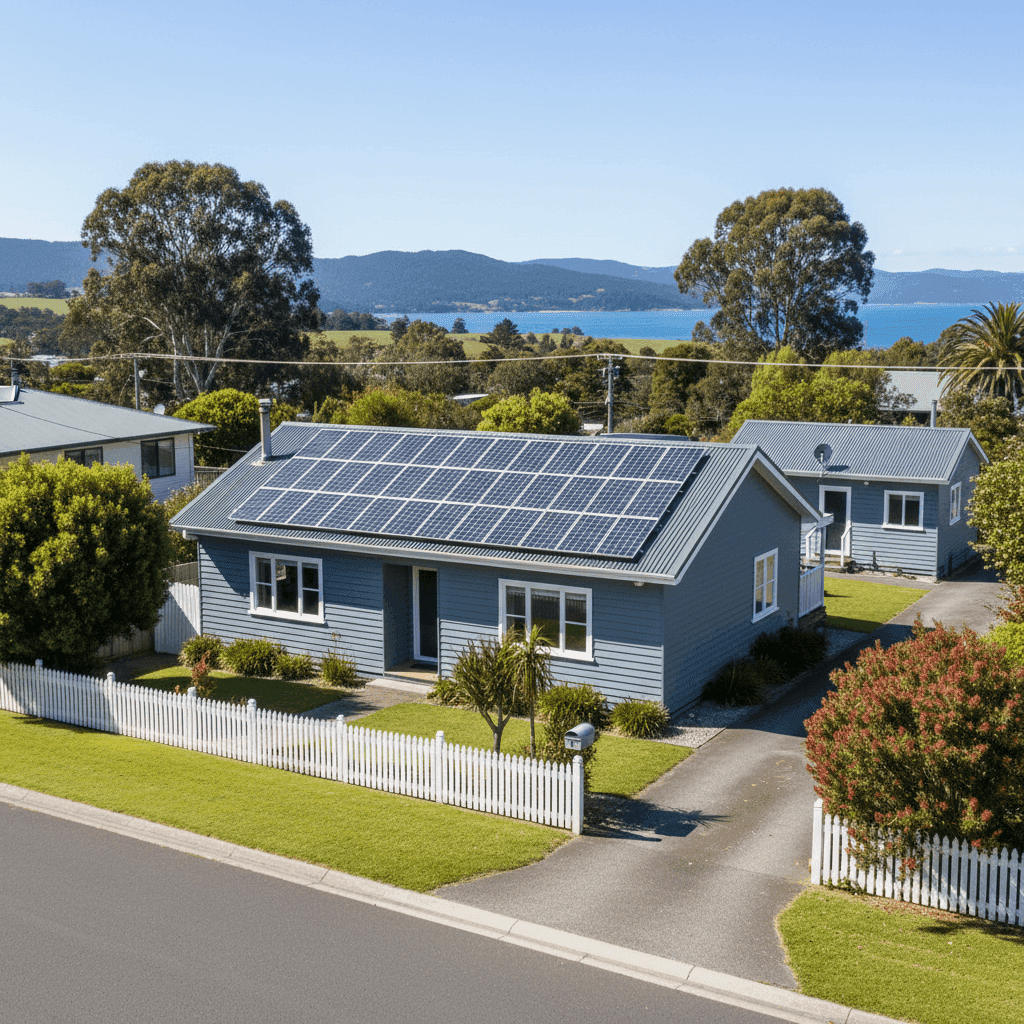
Nestled along the tranquil shores of the D'Entrecasteaux Channel in southern Tasmania, Oyster Cove is a picturesque semi-rural community that attracts homeowners seeking a quieter pace of life without straying too far from Hobart. But peaceful surroundings don't always mean straightforward insurance — and for owners of free standing homes in this postcode, understanding what drives your premium is essential.
This article breaks down a real building insurance quote for a 3-bedroom, 2-bathroom free standing home in Oyster Cove (TAS 7150), comparing it against local, state, and national benchmarks to help you make a more informed decision.
---
Is This Quote Fair?
The annual premium for this property comes in at $3,334 per year (or $336/month), covering the building only with a $1,000 excess and a sum insured of $978,000. Our pricing engine has rated this quote as FAIR — Around Average.
That rating holds up well under scrutiny. The suburb's average premium sits at $4,909/year, meaning this quote comes in roughly 32% below the Oyster Cove average. It also sits just above the suburb's 25th percentile of $3,260/year — indicating that while there are cheaper quotes available in the area, this one is competitive and well within a reasonable range.
When stacked against the broader Huon Valley LGA average of $7,524/year, the figure looks even more attractive. The LGA average is notably elevated — likely reflecting a mix of higher-risk rural properties, bushfire-exposed locations, and older building stock across the wider region. This particular quote benefits from a number of favourable property characteristics (more on those below).
In short: you're not getting a bargain-basement price, but you're also not overpaying. For a property with this profile in this part of Tasmania, $3,334/year is a reasonable outcome.
---
How Oyster Cove Compares
Understanding your premium in isolation only tells part of the story. Here's how the Oyster Cove market sits relative to broader benchmarks:
| Benchmark | Average Premium | Median Premium |
|---|---|---|
| Oyster Cove (7150) | $4,909/yr | $4,043/yr |
| Tasmania | $2,458/yr | $2,272/yr |
| National | $2,965/yr | $2,716/yr |
| Huon Valley LGA | $7,524/yr | — |
A few things stand out here. Oyster Cove premiums are notably higher than the Tasmanian state average — roughly double, in fact. This may seem counterintuitive for a state not typically associated with extreme weather events, but Tasmania's coastal and semi-rural pockets carry their own risk profile: bushfire exposure, older housing stock, and the logistical cost of rebuilding in areas with limited local trades and materials supply chains.
It's also worth noting that the national average of $2,965/year is significantly lower than what Oyster Cove homeowners typically pay. This reflects the premium that comes with insuring properties in more remote or coastal Tasmanian locations compared to, say, suburban Melbourne or Brisbane.
You can explore the full breakdown of Oyster Cove insurance data or compare it against the broader Tasmanian picture to get a clearer sense of where your property sits.
Note: Suburb data is based on a sample of 5 quotes, so averages should be treated as indicative rather than definitive.
---
Property Features That Affect Your Premium
Every insurer weighs up a combination of property characteristics when calculating your premium. For this particular home, several factors are at play:
Weatherboard timber walls are one of the most significant contributors to premium pricing in Australia. Timber is more susceptible to fire, moisture damage, and pest ingress than brick or rendered masonry — and it's generally more expensive to repair or replace. Insurers price this risk accordingly, and it's a key reason why premiums in timber-heavy suburbs like Oyster Cove tend to run higher than the state average.
Steel/Colorbond roofing is actually a positive from an insurance perspective. It's durable, low-maintenance, resistant to ember attack, and has a long lifespan — all of which reduce the likelihood of a claim. This likely helps offset some of the risk associated with the timber wall construction.
Construction year (1981) places this home in an era before many modern building codes were introduced. Older homes can carry higher rebuild costs due to the need to meet current standards during reinstatement, and may have ageing electrical or plumbing systems that increase risk. That said, a well-maintained 1981 home is far from a liability.
Solar panels add replacement value to the building sum insured, and insurers factor this into their calculations. It's important to ensure your sum insured accounts for the cost of replacing your solar system — which for a quality system can easily run into the tens of thousands.
Ducted climate control is another feature that adds to the replacement cost of the building. These systems are expensive to install and reinstate, and are correctly factored into a higher sum insured.
The granny flat is a meaningful consideration. A secondary dwelling on the property increases the total rebuild cost and the complexity of any claim. Ensuring your building sum insured of $978,000 adequately covers both the main dwelling and the granny flat is critical — underinsurance is a common and costly mistake.
Slab foundation is generally viewed favourably by insurers — it's stable, less prone to subsidence than stumped or pier foundations, and simpler to assess during a claim.
---
Tips for Homeowners in Oyster Cove
1. Review your sum insured carefully — especially with a granny flat With both a main home and a secondary dwelling to cover, $978,000 may or may not be sufficient depending on the size and quality of the granny flat. Use a building cost calculator or speak with a quantity surveyor to validate your sum insured. Underinsurance can leave you significantly out of pocket after a major event.
2. Maintain your weatherboard cladding proactively Timber cladding requires regular painting, sealing, and inspection for rot or pest damage. Keeping it in good condition not only protects your home but demonstrates to insurers that the property is well-maintained — which can influence renewal pricing over time.
3. Document your solar panels and ducted system Keep records of installation dates, brand, model, and original costs for your solar panels and climate control system. In the event of a claim, this documentation speeds up the process and ensures you're adequately compensated.
4. Shop around at renewal time Insurance pricing can shift significantly between providers and between years. The spread between the 25th percentile ($3,260/yr) and the 75th percentile ($6,839/yr) in Oyster Cove is enormous — meaning the difference between the cheapest and most expensive quotes in your suburb could be thousands of dollars annually. Comparing quotes before your renewal date is one of the simplest ways to avoid overpaying.
---
Compare Your Home Insurance with CoverClub
Whether you're reviewing an existing policy or shopping for the first time, CoverClub makes it easy to see how your premium stacks up against real data from your suburb, LGA, and state. Get a quote today and find out if you're paying a fair price — or if there's a better deal waiting for you.