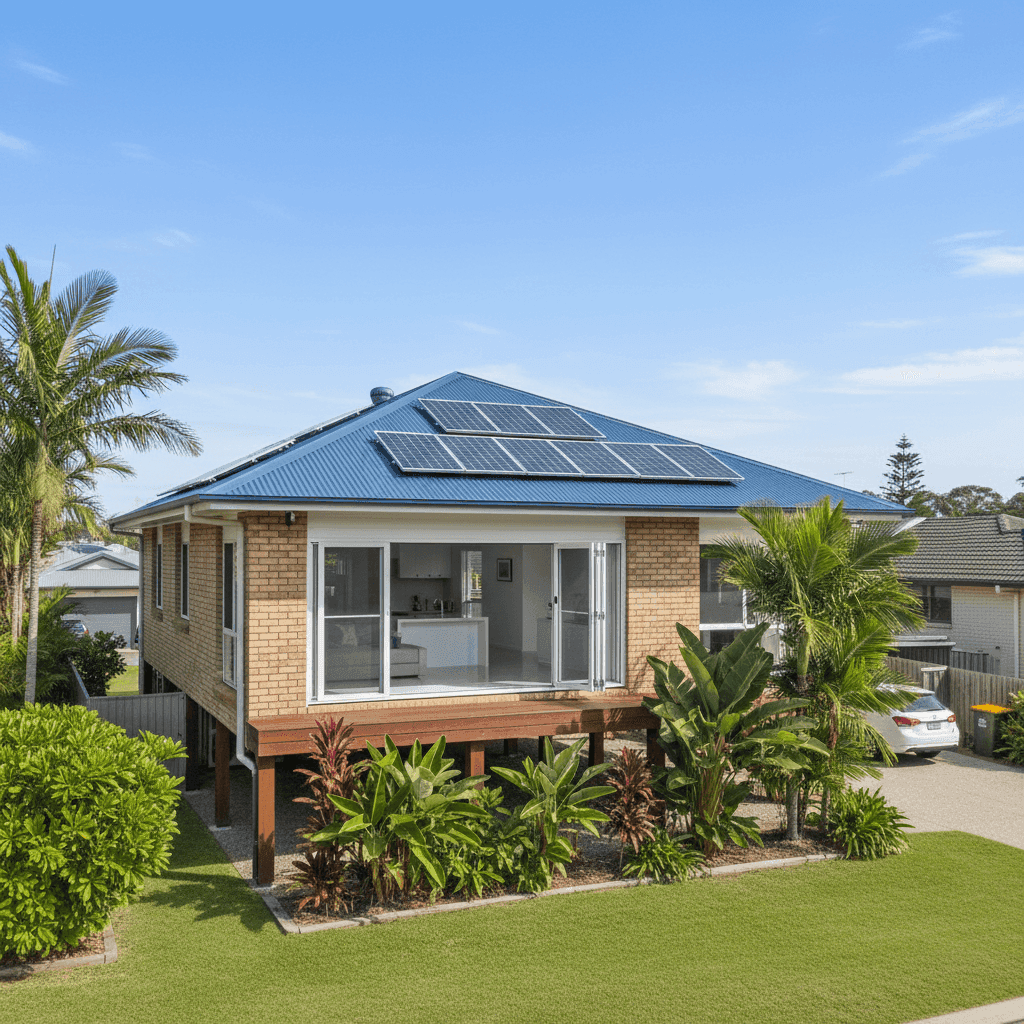
Pacific Paradise is a relaxed coastal suburb on Queensland's Sunshine Coast, sitting just minutes from the Maroochy River and the golden beaches that make this stretch of the coast so appealing. It's also a suburb where home insurance premiums can vary quite dramatically — making it especially important to understand where your quote sits relative to the broader market. This article breaks down a recent building-only insurance quote for a four-bedroom, two-bathroom free standing home in Pacific Paradise (postcode 4564), and gives you the context you need to judge whether you're getting a fair deal.
---
Is This Quote Fair?
The quote in question comes in at $3,387 per year (or $324 per month) for building-only cover on a home insured for $420,000, with a building excess of $3,000.
Our price rating for this quote is FAIR — Around Average. That assessment is based on how the premium stacks up against real quotes collected from the same suburb, the broader state, and nationally. It's not the cheapest option on the market, but it's also well within a reasonable range for this location and property type.
It's worth noting that a $3,000 building excess is on the higher end. A higher excess typically lowers the base premium, so if this quote had a more moderate excess, the annual cost could be somewhat higher. Keep that trade-off in mind when comparing policies.
---
How Pacific Paradise Compares
To put this quote in proper context, here's how it measures up across three levels of comparison:
Suburb Level (Pacific Paradise, 4564)
Based on 43 quotes collected for Pacific Paradise:
| Metric | Premium |
|---|---|
| 25th Percentile | $2,127/yr |
| Median | $2,980/yr |
| Average | $3,861/yr |
| 75th Percentile | $5,502/yr |
At $3,387/yr, this quote sits above the suburb median but below the suburb average — placing it roughly in the upper-middle range of what locals are paying. The wide spread between the 25th percentile ($2,127) and the 75th percentile ($5,502) tells you something important: premiums in Pacific Paradise vary enormously depending on the insurer, the property, and the level of cover chosen. Shopping around can make a significant difference.
State Level (Queensland)
Queensland home insurance premiums are among the highest in the country, largely due to the state's exposure to cyclones, flooding, and severe storms. The state average sits at $4,547/yr, with a median of $3,931/yr. This quote at $3,387 comes in below both the QLD average and median — a positive sign. The Sunshine Coast LGA average is even higher at $4,608/yr, so this quote is tracking noticeably below the regional benchmark.
National Level
Compared to national home insurance data, this quote looks less competitive. The national average is $2,965/yr and the median is $2,716/yr — both well below $3,387. However, this gap largely reflects Queensland's elevated risk profile versus states like Victoria or South Australia, where natural hazard risks are generally lower. Like-for-like comparisons across states can be misleading.
The bottom line: For a property in Pacific Paradise, this quote is reasonable — below state and LGA averages, and in the upper-middle range locally. There may still be room to find a better price, but this isn't an outlier by any stretch.
---
Property Features That Affect Your Premium
Several characteristics of this property will be influencing the premium, some favourably and some less so.
Brick Veneer Walls & Colorbond Roof Brick veneer is generally viewed positively by insurers — it's durable, fire-resistant, and holds up well in storms. A steel Colorbond roof is similarly well-regarded: it's lightweight, corrosion-resistant, and performs reliably in high-wind events. Together, these materials suggest a structurally sound home that presents a manageable risk profile.
Stump Foundation & Elevation This home sits on stumps and is elevated by less than one metre — a very common configuration for older Queensland homes. While elevated homes can benefit from improved airflow and some degree of flood resilience, the sub-floor space does require periodic inspection and maintenance. Insurers may factor in the age of the stumps (particularly for a home built in 1974) when assessing risk.
Construction Year: 1974 At over 50 years old, this home predates many modern building codes. Older homes can attract slightly higher premiums due to the increased likelihood of wear-and-tear claims, outdated electrical or plumbing systems, and the higher cost of sourcing period-appropriate materials for repairs. That said, a well-maintained 1974 home with solid brick veneer construction is far from a red flag.
Solar Panels The presence of solar panels is worth flagging with your insurer. Most standard building policies cover rooftop solar as part of the structure, but it's important to confirm this explicitly. Solar systems can be expensive to repair or replace, and coverage terms vary between providers.
No Pool, No Ducted Climate Control The absence of a pool removes a meaningful liability and maintenance risk from the equation. No ducted air conditioning also simplifies the claim profile slightly. Both factors can contribute to keeping the premium from climbing higher.
Tile Flooring, Standard Fittings Standard fittings and tile flooring suggest a straightforward rebuild cost profile — no high-end finishes or bespoke materials that would push the sum insured or repair costs upward.
---
Tips for Homeowners in Pacific Paradise
1. Review Your Sum Insured Annually With a building sum insured of $420,000 for a 130 sqm home, it's worth verifying this figure against current construction costs in the Sunshine Coast region. Building costs have risen significantly in recent years, and being underinsured at claim time can be a costly mistake. Use an independent building calculator or ask your insurer to confirm the estimate is current.
2. Ask About Your Excess Trade-Off A $3,000 building excess is relatively high. If cash flow allows, consider whether a lower excess (say, $1,000–$1,500) might offer better protection without a prohibitive jump in premium. Get quotes at multiple excess levels to find the right balance.
3. Confirm Solar Panel Coverage Don't assume your solar panels are automatically covered to their full replacement value. Contact your insurer and ask specifically: are the panels covered under the building policy, what's the claim limit, and does the policy cover inverter failure or storm damage? Get it in writing.
4. Shop the Market at Renewal Insurers rarely reward loyalty with their best pricing. With premiums in Pacific Paradise ranging from $2,127 to $5,502 across the market, there's clearly significant variation between providers. Use a comparison tool like CoverClub at renewal time to ensure you're not paying more than necessary for equivalent cover.
---
Compare Your Own Quote
Whether you're renewing your existing policy or insuring a new property on the Sunshine Coast, it pays to see the full picture. CoverClub aggregates real quote data so you can see exactly how your premium stacks up — by suburb, by state, and nationally. Get a quote and compare today to make sure you're getting the right cover at a fair price.