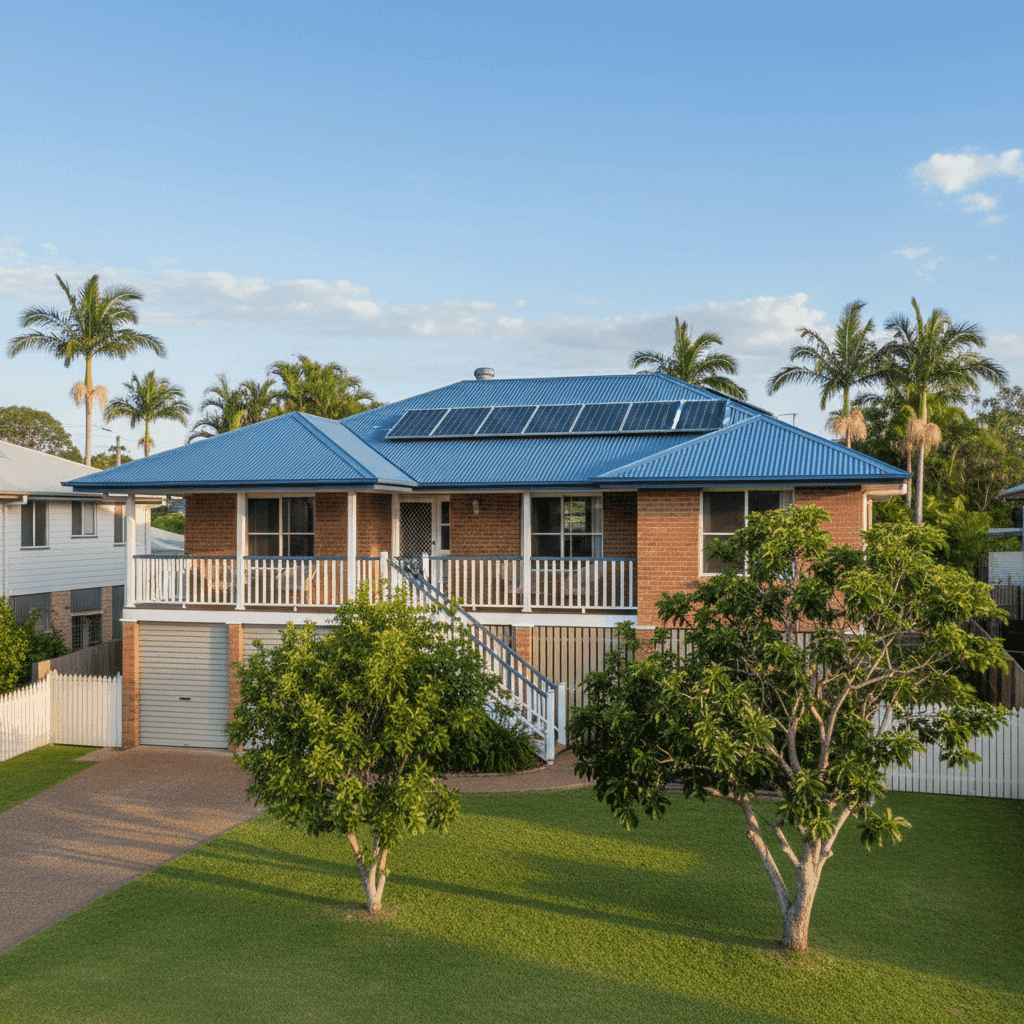
Pacific Paradise is a laid-back coastal suburb on Queensland's Sunshine Coast, sitting just minutes from the Maroochy River and the beaches of the Coolum stretch. It's the kind of neighbourhood where four-bedroom brick homes have housed families for decades — many of them built in an era when construction standards and material choices were quite different from today. If you own a free-standing home here and you're trying to make sense of your building insurance premium, you're in the right place. This article breaks down a real quote for a 4-bedroom, 2-bathroom home in Pacific Paradise, and puts that number into context against local, state, and national benchmarks.
---
Is This Quote Fair?
The quote in question comes in at $3,302 per year (or around $316 per month) for building-only cover on a free-standing home insured for $420,000, with a building excess of $3,000.
Our price rating for this quote is FAIR — Around Average, and when you dig into the data, that assessment holds up well.
Compared to the suburb average of $3,861/yr for Pacific Paradise, this quote sits about $559 below average — a meaningful saving. It's also slightly above the suburb median of $2,980/yr, which tells us that while cheaper options do exist in this postcode, this quote is by no means overpriced. The wide spread between the 25th percentile ($2,127/yr) and the 75th percentile ($5,502/yr) across 43 quotes collected in this suburb reflects just how variable home insurance pricing can be — even for properties that look similar on paper.
Against the Queensland state average of $4,547/yr, this quote looks even more competitive, coming in roughly $1,245 cheaper. Queensland consistently ranks as one of the most expensive states for home insurance in Australia, largely due to elevated weather and flood risks across much of the state. The Sunshine Coast LGA average sits at $4,608/yr, making this quote look particularly reasonable for the region.
The one benchmark where this quote appears higher is the national average of $2,965/yr — but that comparison needs context. National averages are pulled down significantly by lower-risk states like Victoria, Tasmania, and the ACT, where weather events are less frequent and severe. Comparing a Sunshine Coast property to a national average isn't quite apples-to-apples.
Bottom line: For a 1974-built brick veneer home in Pacific Paradise, $3,302/yr is a reasonable premium. It's not the cheapest available, but it's well below both the suburb and state averages.
---
How Pacific Paradise Compares
Here's a snapshot of how insurance costs in this suburb sit relative to broader benchmarks:
| Benchmark | Average Premium | Median Premium |
|---|---|---|
| Pacific Paradise (suburb) | $3,861/yr | $2,980/yr |
| Queensland (state) | $4,547/yr | $3,931/yr |
| Australia (national) | $2,965/yr | $2,716/yr |
| Sunshine Coast LGA | $4,608/yr | — |
Pacific Paradise tracks notably cheaper than the broader Sunshine Coast LGA average, which is a positive sign for homeowners in this postcode. The suburb's proximity to the coast and the Maroochy River does introduce some weather-related risk, but it appears insurers are pricing this area more favourably than some neighbouring parts of the LGA.
It's also worth noting the significant gap between the Queensland state figures and the national ones. Queensland homeowners pay, on average, over $1,500 more per year than the national median — a reflection of the state's exposure to cyclones, flooding, and severe storms. Pacific Paradise falls outside designated cyclone risk zones, which helps moderate premiums compared to properties further north.
---
Property Features That Affect Your Premium
Several characteristics of this property play a direct role in how insurers calculate the premium.
Age of construction (1974): Homes built in the early 1970s predate many modern building codes. Older properties can carry higher rebuild costs due to non-standard materials or layouts, and may require more scrutiny around wiring, plumbing, and structural compliance. That said, a well-maintained 50-year-old home isn't automatically expensive to insure — it depends heavily on the condition and any renovations completed over the years.
Brick veneer external walls: Brick veneer is generally viewed favourably by insurers. It's durable, fire-resistant, and holds up reasonably well in storms compared to lightweight cladding. This wall type tends to attract more moderate premiums than timber or fibro alternatives.
Steel/Colorbond roof: Colorbond roofing is a popular choice across Queensland and is generally well-regarded by insurers. It's lightweight, resistant to corrosion, and performs well in high-wind events. Compared to older tile roofs, Colorbond can be more cost-effective to repair or replace after storm damage.
Stumped foundation: Homes on stumps (also known as raised or elevated homes) are a classic Queensland building style. Being elevated by less than 1 metre provides some flood resilience, though it doesn't eliminate risk entirely. Stump foundations also allow for easier access to underfloor plumbing and services, which can reduce repair costs.
Solar panels: The presence of solar panels adds to the total replacement value of the property. Insurers factor this in when assessing the sum insured. It's important to ensure your building sum insured accounts for the full cost of replacing your solar system — panels, inverter, and installation.
Sum insured of $420,000: For a 130 sqm home in this area, $420,000 represents a reasonable estimate of rebuild cost. It's worth revisiting this figure periodically — construction costs have risen sharply in recent years, and being underinsured can leave you significantly out of pocket in the event of a total loss.
---
Tips for Homeowners in Pacific Paradise
1. Review your sum insured annually. Building costs across Queensland have climbed considerably since the pandemic-era construction boom. If your sum insured hasn't been updated in a few years, there's a real chance it no longer reflects the true cost to rebuild. Use a building cost calculator or speak with a quantity surveyor to get an accurate figure.
2. Consider your excess carefully. This quote carries a $3,000 building excess — on the higher end of the typical range. A higher excess generally reduces your premium, but it means you'll need to cover more out of pocket when you claim. Make sure this amount is genuinely affordable for your household before locking it in.
3. Compare quotes before renewing. The 43 quotes collected in Pacific Paradise show a massive price range — from around $2,127/yr at the 25th percentile to $5,502/yr at the 75th. That spread means there's real money to be saved by shopping around rather than auto-renewing with your existing insurer.
4. Document your solar panels and any upgrades. If you've made improvements to your home — solar panels, a new roof, updated kitchen or bathrooms — make sure these are reflected in your policy details. Under-reporting improvements can create disputes at claim time, and over-reporting can lead to unnecessarily high premiums.
---
Compare Your Options with CoverClub
Whether you're reviewing your current policy or shopping for cover on a new purchase, CoverClub makes it easy to compare building insurance quotes across multiple insurers in one place. See how your premium stacks up against your neighbours — and find out whether you're getting a fair deal. Get a quote today at CoverClub and take the guesswork out of home insurance.