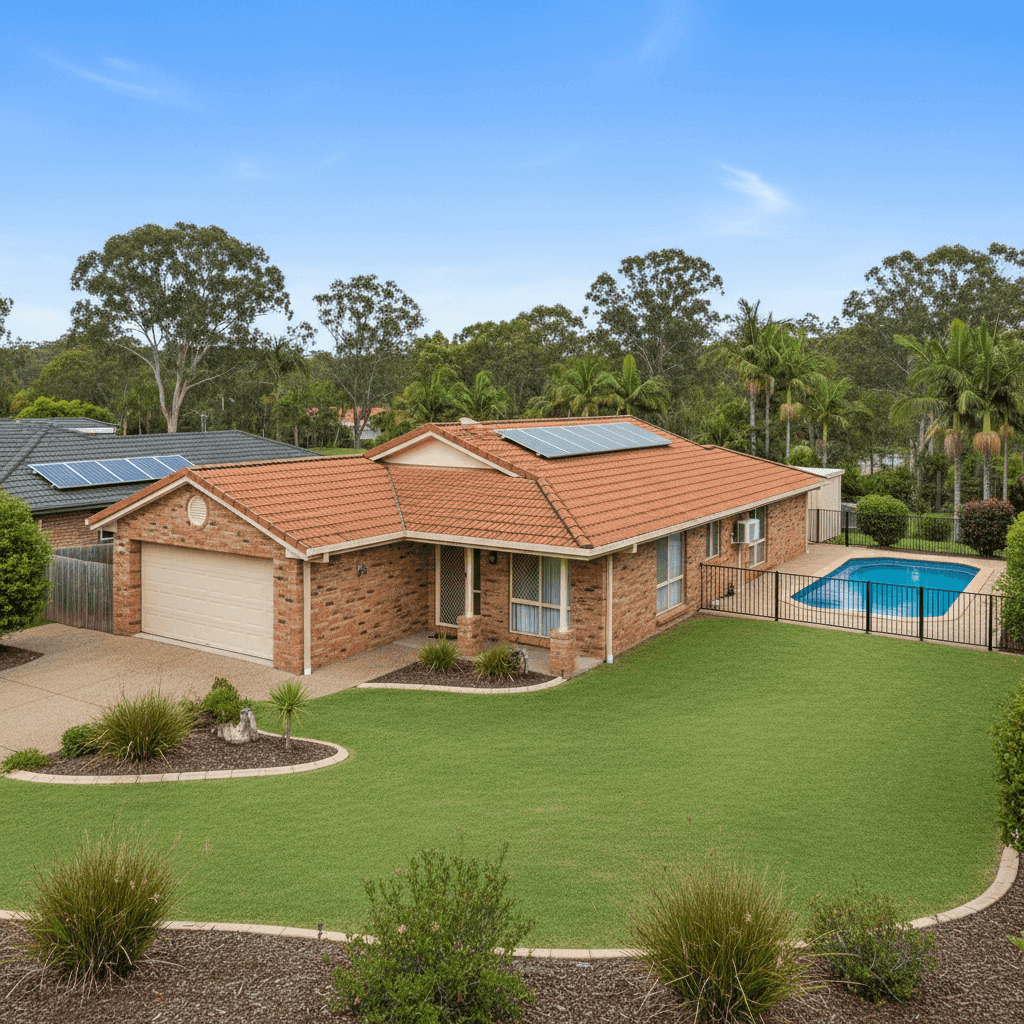
Pacific Pines is a well-established residential suburb in the City of Gold Coast, sitting roughly 20 kilometres inland from the coast. Known for its family-friendly streets, leafy parks, and mix of modern homes, it's a popular choice for owner-occupiers seeking space without the premium price tag of beachside suburbs. This article breaks down a recent home and contents insurance quote for a five-bedroom, three-bathroom free standing home in Pacific Pines (postcode 4211) — and puts the numbers into context so you can judge whether you're getting a fair deal.
---
Is This Quote Fair?
The quote in question comes in at $2,124 per year (or $213/month) for combined home and contents cover, with a $500,000 building sum insured and $100,000 in contents cover. Both the building and contents excess sit at $2,000.
Our pricing model rates this quote as CHEAP — below the suburb average — and the data backs that up convincingly. The average home and contents premium across Pacific Pines sits at $3,347 per year, meaning this quote is roughly $1,223 less than what most locals are paying. Even compared to the suburb's 25th percentile (the cheapest quarter of quotes), which sits at $2,267/yr, this premium still comes in under the mark.
For a five-bedroom home with a pool and solar panels — features that can nudge premiums upward — landing a quote this far below the local average is a genuinely strong result. If you're a homeowner in Pacific Pines currently paying closer to the suburb average, it's well worth shopping around.
---
How Pacific Pines Compares
To fully appreciate this quote, it helps to zoom out and look at the broader pricing landscape. Here's how Pacific Pines stacks up against Queensland and national benchmarks:
| Benchmark | Average Premium | Median Premium |
|---|---|---|
| Pacific Pines (4211) | $3,347/yr | $2,880/yr |
| Queensland | $9,129/yr | $3,903/yr |
| National | $5,347/yr | $2,764/yr |
A few things stand out here. Queensland's average premium of $9,129/yr is extraordinarily high — driven largely by cyclone-prone Far North Queensland and flood-affected inland regions, where premiums can run into the tens of thousands. The median tells a more grounded story: at $3,903/yr, the typical Queensland homeowner is still paying noticeably more than the national median of $2,764/yr.
Pacific Pines, by contrast, sits in a relatively favourable risk zone. It's not a cyclone risk area, it's not prone to the kind of severe flooding that hammers parts of regional Queensland, and it benefits from the Gold Coast's generally stable climate. That's reflected in the suburb's median of $2,880/yr — broadly in line with the national median, and well below the Queensland state figure.
You can explore Pacific Pines suburb insurance statistics, Queensland-wide insurance data, and national home insurance benchmarks on the CoverClub stats pages.
---
Property Features That Affect Your Premium
Several characteristics of this property influence how insurers price the risk. Here's what's worth knowing:
Brick Veneer Walls & Tiled Roof This combination is considered one of the more insurer-friendly construction types in Australia. Brick veneer offers solid fire resistance and structural durability, while a tiled roof is generally seen as more resilient than Colorbond or corrugated iron in hail events — though tiles can crack under impact. Together, they typically attract lower premiums than lightweight construction materials.
Slab Foundation A concrete slab foundation is standard for Queensland homes built in the 1990s and generally presents low risk to insurers. It's not susceptible to the subfloor moisture issues sometimes associated with older timber stumped homes.
Slight Elevation (Less Than 1m) The property is noted as slightly elevated, which can offer a modest degree of protection against surface water ingress. However, at less than one metre, the benefit is marginal compared to fully raised homes. Insurers may factor this in, but it's unlikely to be a major driver of the premium.
Swimming Pool Pools add to the replacement value of a property and are included in the building sum insured. They can also introduce liability considerations — though liability for injury is typically covered under the home policy's legal liability section rather than as a separate line item.
Solar Panels Solar panels are generally covered under building insurance as a fixed fixture, though it's always worth confirming this with your insurer. Panels installed in 1998 would have been replaced since then (given typical panel lifespans), so the current system is likely a more modern installation. Replacement costs for a quality solar system can run into the thousands, making it important that the building sum insured is adequate.
1998 Construction At around 26 years old, this home is neither brand new nor particularly aged. Homes of this era are generally well-understood by insurers — they're past the teething stage of new builds but haven't yet reached the age where significant wear-and-tear or outdated wiring becomes a concern.
Building Size: 334 sqm A five-bedroom home at 334 sqm is a substantial dwelling. The $500,000 building sum insured equates to roughly $1,497 per sqm — broadly reasonable for a brick veneer home with standard fittings in South East Queensland, though homeowners should periodically review this figure against current construction costs, which have risen significantly in recent years.
---
Tips for Homeowners in Pacific Pines
1. Review your sum insured annually Construction costs in Queensland have climbed sharply since 2020. A sum insured that was adequate a few years ago may now fall short of what it would actually cost to rebuild. Use a building cost calculator or speak with a quantity surveyor if you're unsure — being underinsured at claim time can be a costly mistake.
2. Check your pool and solar panel coverage Confirm with your insurer exactly what's covered for your pool equipment (pumps, filters, heating) and solar system (panels, inverter, battery if applicable). Some policies cover these as standard; others treat them as optional extras or have sublimits.
3. Consider your excess carefully This quote carries a $2,000 excess on both building and contents. A higher excess typically reduces your annual premium, but it means you'll pay more out of pocket when you claim. Make sure your chosen excess is genuinely affordable in an emergency — not just a number that looks good on paper.
4. Shop around at renewal time This quote is already priced well below the Pacific Pines suburb average, but insurance markets shift. Loyalty doesn't always pay — insurers often reserve their best pricing for new customers. Setting a reminder to compare quotes each year at renewal is one of the simplest ways to avoid overpaying.
---
Compare Your Own Quote
Whether you're a first-time buyer in Pacific Pines or a long-term resident wondering if you're overpaying, comparing quotes is the fastest way to find out. CoverClub makes it straightforward — enter your address and get a quote in minutes, with pricing benchmarked against real data from your suburb. Don't settle for the renewal price without checking what else is out there.