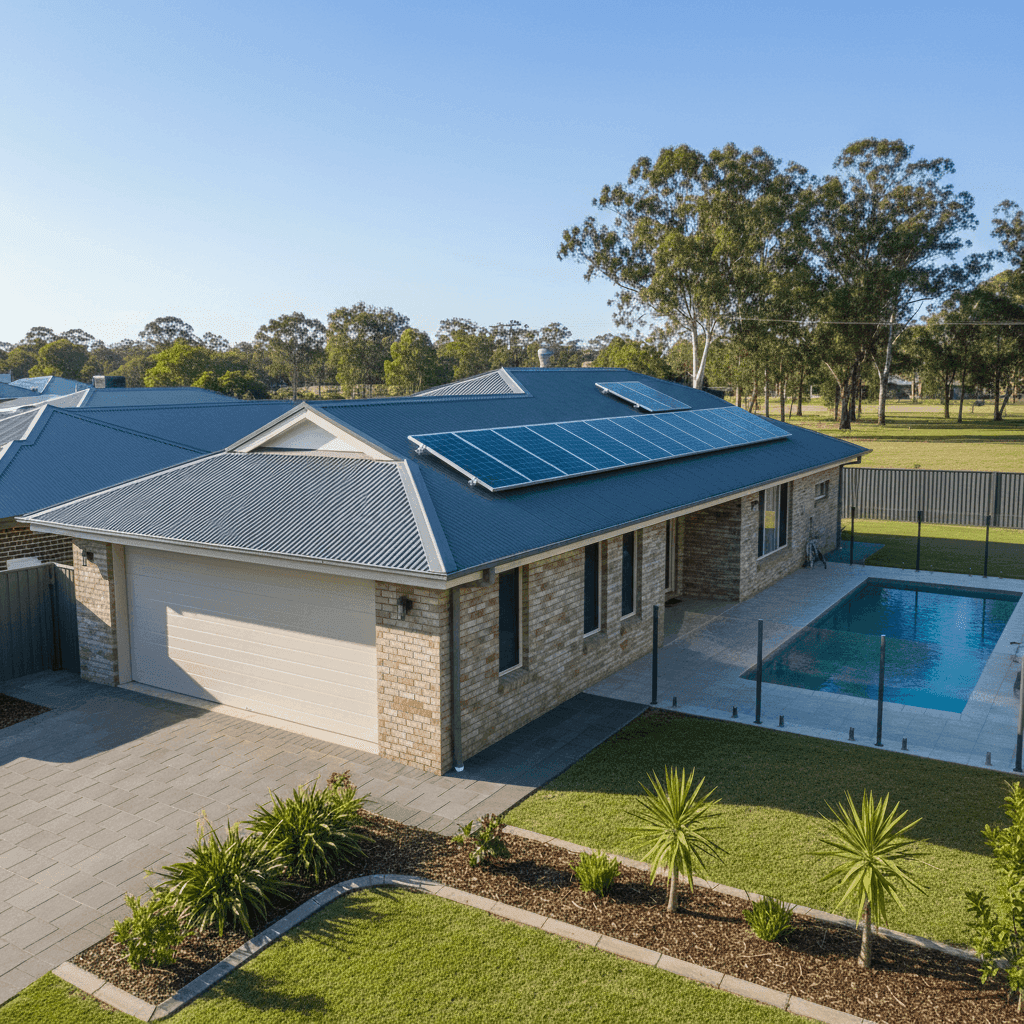
Pacific Pines is a well-established residential suburb on the northern Gold Coast, known for its family-friendly streetscapes, modern housing stock, and convenient access to both coastal amenities and the M1 motorway. For owners of a four-bedroom, two-bathroom free-standing home in this area, understanding what drives your home and contents insurance premium — and whether the figure you've been quoted is competitive — can make a meaningful difference to your household budget.
This article breaks down a recent home and contents insurance quote for a brick veneer home in Pacific Pines (postcode 4211), compares it against local, state, and national benchmarks, and offers practical tips to help you get the best possible cover.
---
Is This Quote Fair?
The quote in question comes in at $3,061 per year (or $293 per month) for a combined home and contents policy, covering a building sum insured of $835,000 and contents valued at $85,000. Both the building and contents excess are set at $2,000.
Our independent price rating for this quote is Fair — Around Average.
That rating is well-supported by the data. Based on 61 quotes collected for Pacific Pines, the suburb average sits at $2,372 per year and the median at $2,152 per year. At first glance, $3,061 looks notably higher than those figures — but context matters here.
The suburb's 75th percentile premium is $3,199 per year, meaning this quote falls just inside the upper quarter of the local market. That's not surprising given the relatively high building sum insured ($835,000) and a contents value of $85,000 — both of which sit above what many comparable properties in the area are insured for. Larger sums insured naturally attract higher premiums, so the "above average" price tag reflects the above-average level of cover being purchased, rather than an inflated rate.
Compared against Queensland's state-wide averages — where the average premium is $4,547 per year and the median is $3,931 — this quote looks quite reasonable. Pacific Pines homeowners are paying significantly less than the Queensland norm, which is heavily influenced by high-risk cyclone and flood zones further north.
---
How Pacific Pines Compares
To put the numbers in perspective:
| Benchmark | Premium |
|---|---|
| This quote | $3,061/yr |
| Pacific Pines suburb average | $2,372/yr |
| Pacific Pines suburb median | $2,152/yr |
| Pacific Pines 25th percentile | $1,709/yr |
| Pacific Pines 75th percentile | $3,199/yr |
| QLD state average | $4,547/yr |
| QLD state median | $3,931/yr |
| National average | $2,965/yr |
| National median | $2,716/yr |
| Scenic Rim LGA average | $5,055/yr |
A few things stand out from this comparison:
- Pacific Pines is affordable by Queensland standards. The suburb average of $2,372 is nearly half the Queensland state average of $4,547, reflecting the area's relatively low natural hazard risk profile compared to cyclone-prone northern Queensland.
- This quote is close to the national average. At $3,061, it sits just $96 above the national average of $2,965 — a modest premium for a well-appointed, four-bedroom home with a pool and solar panels.
- The Scenic Rim LGA average of $5,055 is a useful reminder that even within Greater South East Queensland, premiums can vary dramatically depending on flood and bushfire risk. Pacific Pines compares very favourably within its own local government context.
---
Property Features That Affect Your Premium
Several characteristics of this property have a direct bearing on the insurance premium:
Brick Veneer Walls and Colorbond Roof Brick veneer construction is generally viewed favourably by insurers — it's durable, fire-resistant, and widely used in Australian suburban homes. Combined with a steel Colorbond roof, this property has a construction profile that tends to attract competitive premiums. Colorbond roofing is lightweight, low-maintenance, and performs well in storm conditions, which insurers appreciate.
Slab Foundation A concrete slab foundation is a standard and reliable choice for Queensland homes built in the 2000s and 2010s. It presents minimal underfloor risk and is straightforward to assess for insurers.
Built in 2012 At just over a decade old, this home sits in a sweet spot for insurers — modern enough to meet current building codes (including improved cyclone and storm standards introduced after 2011), but not so new that replacement costs are uncertain.
Swimming Pool Pools add value to a property but also increase liability exposure and replacement cost. Insurers typically factor pool infrastructure into the building sum insured, which contributes to the higher premium relative to the suburb median.
Solar Panels Solar systems are increasingly common on Gold Coast homes, and most insurers now include them under building cover as a fixed fixture. A solar installation adds to the replacement cost of the building, which is reflected in the sum insured and, consequently, the premium.
Above-Average Fittings Quality The property's above-average fittings — think stone benchtops, quality cabinetry, premium tapware — push the cost-to-rebuild figure higher. This is entirely appropriate; underinsuring a well-appointed home is a common and costly mistake.
Tile Flooring Tiles are a practical and popular choice in Queensland's warm climate. From an insurance perspective, they're durable and relatively straightforward to replace, which has a neutral-to-positive effect on risk assessment.
---
Tips for Homeowners in Pacific Pines
1. Review your building sum insured annually Construction costs have risen sharply across Australia in recent years. A sum insured of $835,000 may be appropriate today, but it's worth checking against a current building cost calculator each year at renewal. Underinsurance can leave you significantly out of pocket after a major claim.
2. Check that your pool and solar panels are explicitly covered Ask your insurer to confirm that your pool (including the pump, filtration system, and fencing) and solar panel system are included in your building cover. Some policies have sub-limits or exclusions for these items that aren't immediately obvious in the product disclosure statement.
3. Consider a higher excess to reduce your premium Both the building and contents excess on this quote are set at $2,000. If you have the financial capacity to absorb a higher out-of-pocket cost in the event of a claim, increasing your excess can meaningfully reduce your annual premium. Just ensure the saving is proportionate to the additional risk you're taking on.
4. Compare quotes before each renewal Insurers regularly reprice their books, and loyalty doesn't always pay. Using a comparison tool like CoverClub at renewal time — even if you're satisfied with your current insurer — ensures you're not paying more than you need to for equivalent cover. Check Pacific Pines-specific premium data to benchmark any new quotes you receive.
---
Ready to Compare?
Whether you're renewing an existing policy or shopping for cover on a new purchase, CoverClub makes it easy to see how your quote stacks up against real data from your suburb and across Australia. Get a home insurance quote today and find out if you're paying a fair price — or if there's a better deal waiting for you.