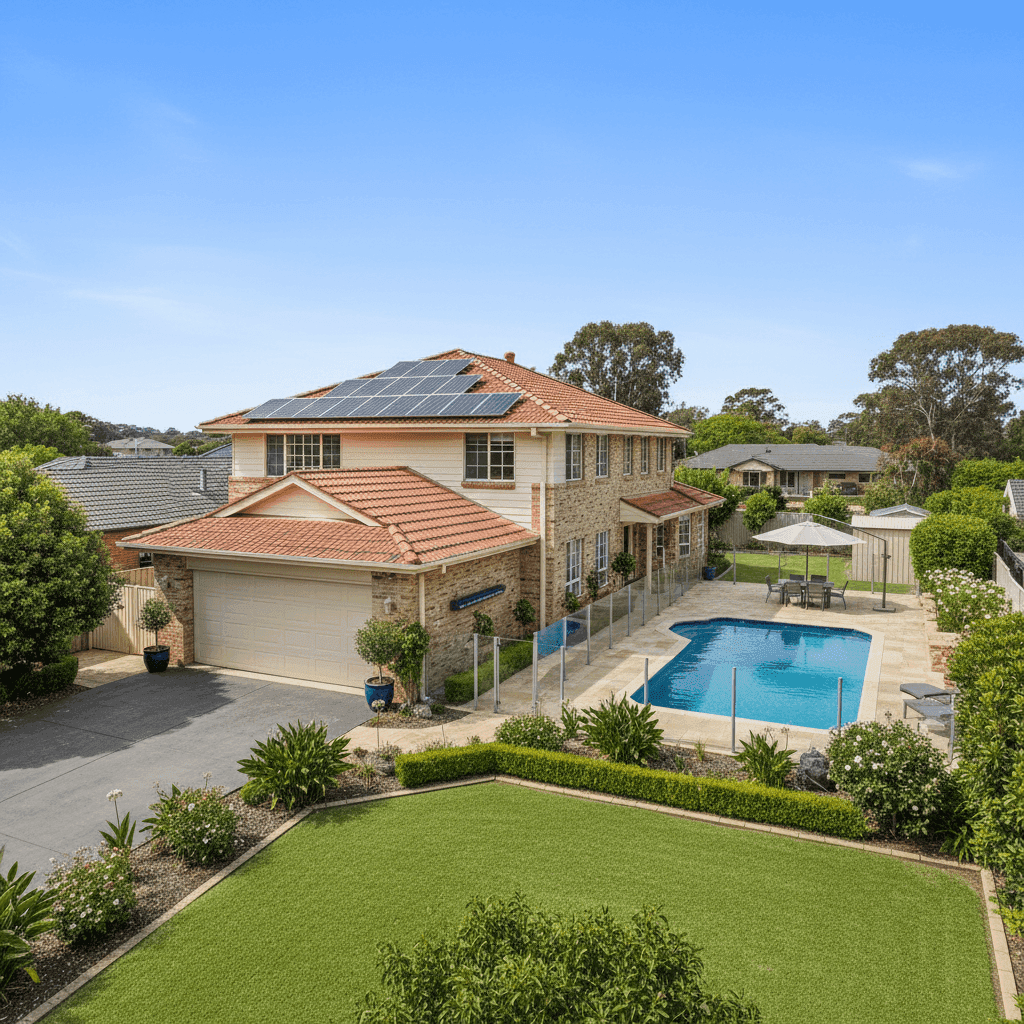
Padstow is a well-established suburb in Sydney's south-west, sitting within the Canterbury-Bankstown Local Government Area. Known for its mix of older brick homes and family-friendly streets, it's the kind of suburb where properties have real character — and real value. This article breaks down a recent home and contents insurance quote for a large, free standing home in Padstow (NSW 2211), examines how the premium stacks up against local and national benchmarks, and offers practical guidance for homeowners looking to get the best value on their cover.
---
Is This Quote Fair?
The annual premium on this quote comes in at $5,259 per year (or $504/month), covering a building sum insured of $2,571,000 and contents valued at $243,000, each with a $2,000 excess.
Our pricing analysis rates this quote as Expensive (Above Average). That assessment is well-supported by the data.
The suburb average for Padstow sits at just $1,773 per year, with a median of $1,899. This quote is nearly three times the local suburb average — a significant gap that warrants a closer look.
That said, context matters enormously here. This is an exceptionally large property: 457 square metres of living space, seven bedrooms, four bathrooms, above-average fittings, a swimming pool, solar panels, and ducted climate control. The building sum insured of $2,571,000 is substantially higher than what a typical Padstow home would be insured for. In other words, the premium is high partly because the property itself is exceptional.
Still, even accounting for the property's scale and features, it's worth shopping around. A premium this large — over $5,000 a year — represents a meaningful household expense, and even a modest saving of 10–15% could put hundreds of dollars back in your pocket.
---
How Padstow Compares
To put this quote in perspective, here's how the premium sits across different comparison points:
| Benchmark | Average Premium |
|---|---|
| Padstow (suburb average) | $1,773/yr |
| Padstow (suburb median) | $1,899/yr |
| NSW (state average) | $9,528/yr |
| NSW (state median) | $3,770/yr |
| National average | $5,347/yr |
| National median | $2,764/yr |
| Canterbury-Bankstown LGA average | $9,344/yr |
A few things stand out from this comparison:
- Against the suburb, this quote looks expensive — but the suburb sample likely includes far more modest homes. With only 10 quotes in the local sample, the comparison has limited statistical weight.
- Against NSW state figures, the quote is actually well below both the state average ($9,528) and the Canterbury-Bankstown LGA average ($9,344), which suggests the insurer has priced this competitively relative to other large homes in the region.
- Against national figures, the quote ($5,259) is marginally below the national average ($5,347) and above the national median ($2,764) — broadly in line with what large, high-value homes attract across Australia.
You can explore more detailed premium data for the area on the Padstow suburb stats page, compare it to the NSW state overview, or see how it measures up on the national stats page.
---
Property Features That Affect Your Premium
Several characteristics of this property directly influence what insurers charge. Understanding them helps you assess whether the premium is justified.
Size and Sum Insured
At 457 sqm with a building sum insured of $2,571,000, this is a large and high-value home by any measure. Insurers calculate rebuilding costs based on floor area, construction type, and finishes — and all three point upward here. Above-average fittings mean higher replacement costs for kitchens, bathrooms, and fixtures throughout.
Double Brick Construction
Double brick walls are generally viewed favourably by insurers. They're durable, fire-resistant, and less susceptible to storm damage than timber-framed alternatives. This construction type can contribute to more competitive premiums compared to lighter-weight materials.
Tiled Roof
Terracotta or concrete tiles are a standard and well-regarded roofing material in NSW. They perform well in storms and are long-lasting, which typically keeps roofing-related risk assessments moderate.
Slab Foundation
A concrete slab foundation is a neutral-to-positive factor for insurers. It's structurally sound and less prone to the subsidence issues that can affect older homes on stumps or piers.
Swimming Pool
Pools add liability exposure to a policy — particularly for home and contents cover that includes legal liability. They also increase the overall replacement value of the property, which is reflected in the premium.
Solar Panels
Solar systems are now a standard inclusion in many home insurance policies, but they do add to the insured value of the property. A rooftop solar installation can cost $8,000–$20,000 to replace, so it's important to ensure your sum insured accounts for this.
Age of Construction (1982)
Homes built in the early 1980s are generally well-constructed, but insurers may factor in the age when assessing the likelihood of claims related to plumbing, electrical systems, or roofing. At 40+ years old, it's worth ensuring the property has been well-maintained and that any renovations are reflected in your sum insured.
Ducted Climate Control
Ducted air conditioning systems are expensive to repair or replace and add to the overall contents or building value depending on how the system is installed. This is another feature that justifiably increases the insured amount.
---
Tips for Homeowners in Padstow
1. Review your sum insured carefully With a building sum insured of $2,571,000, it's critical to ensure this figure accurately reflects current rebuilding costs — not market value. Construction costs have risen sharply in recent years. Use a building cost estimator or speak with a quantity surveyor to validate your figure. Being underinsured on a home of this size could be financially devastating.
2. Shop around — even if your current insurer feels familiar Given the premium is rated as expensive relative to the suburb, it's worth getting at least two or three competing quotes. Compare quotes at CoverClub to see what other insurers are offering for a property with your specific features. Loyalty doesn't always pay in the insurance market.
3. Consider your excess strategically Both the building and contents excess on this policy are set at $2,000. Increasing your excess — say, to $2,500 or $3,000 — can reduce your annual premium meaningfully. If you have the financial buffer to cover a higher out-of-pocket amount in the event of a claim, this can be a smart trade-off on a premium of this size.
4. Check your contents valuation $243,000 in contents cover is substantial. Make sure this figure is based on a genuine room-by-room assessment of your belongings — furniture, electronics, clothing, artwork, jewellery, and appliances. Both over-insuring and under-insuring contents have real costs: one means you're paying too much, the other means you won't be fully covered when it counts.
---
Ready to Compare?
Whether you're reviewing an existing policy or shopping for the first time, comparing quotes is the single most effective way to ensure you're getting fair value. Head to CoverClub to enter your property details and see how your current premium stacks up against the market — it only takes a few minutes and could save you hundreds each year.