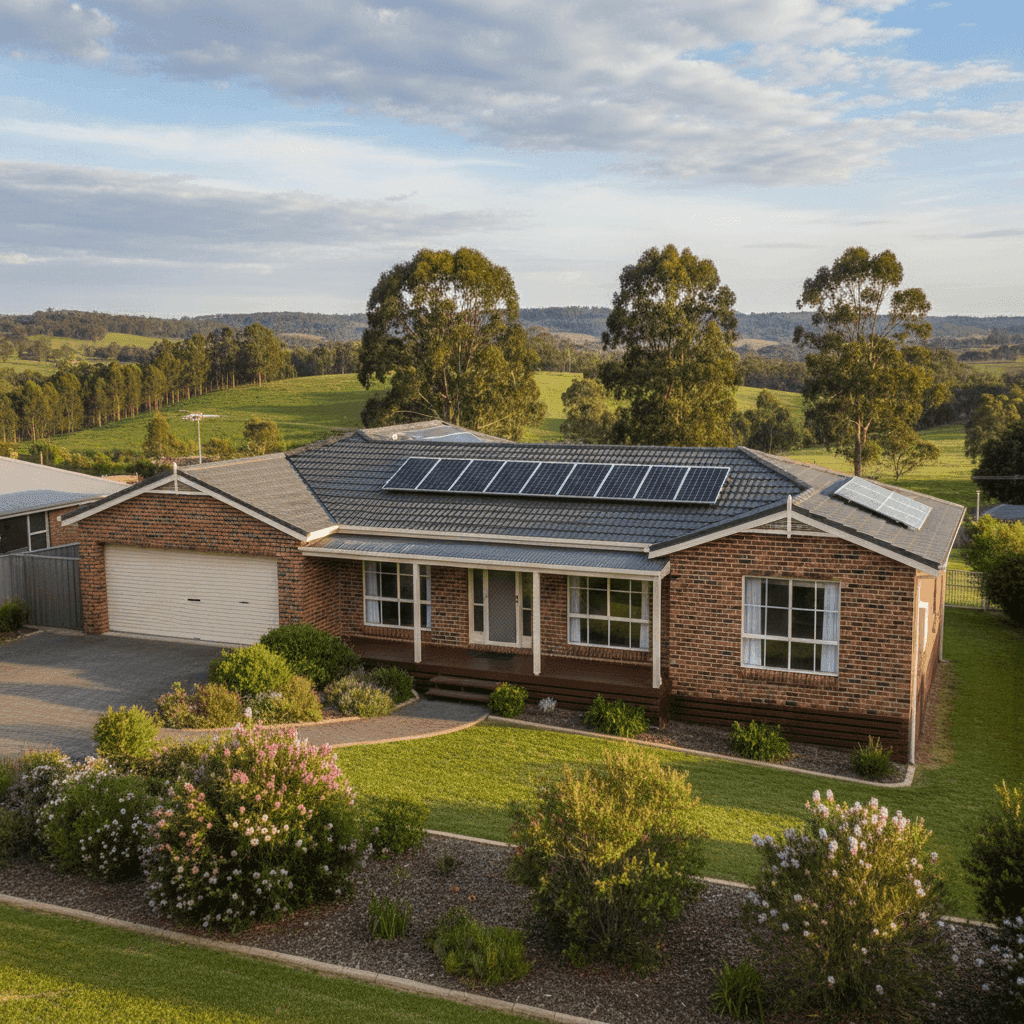
Pakenham Upper is a semi-rural locality on Melbourne's outer south-eastern fringe, and like many properties in the Cardinia Shire, homes here tend to have a distinct character — larger blocks, older construction, and a mix of rural and suburban risk factors. This article takes a close look at a real home and contents insurance quote for a four-bedroom, two-bathroom free-standing home in Pakenham Upper (VIC 3810), and unpacks what the numbers actually mean for local homeowners.
---
Is This Quote Fair?
The short answer: yes — and then some. This quote comes in at $2,970 per year (or $299/month), and has been rated CHEAP, meaning it sits well below the average for the area.
To put that in perspective, the suburb average for Pakenham Upper sits at $5,279/year, with a median of $3,996/year. Even the 25th percentile — the cheapest quarter of quotes in the suburb — sits at $3,610/year. This quote undercuts all of those benchmarks, landing roughly 44% below the suburb average and about 26% below the cheapest quartile.
That's a meaningful saving, especially when you consider the level of cover involved: $661,000 in building cover and $196,000 in contents, which are reasonable sums for a 244 sqm home with standard fittings.
The building excess is set at $3,000, which is on the higher side and likely contributes to the lower premium. The contents excess of $1,000 is more typical. Higher excesses are a legitimate way to reduce premiums — just make sure you're comfortable covering that amount out of pocket if you ever need to make a claim.
---
How Pakenham Upper Compares
One of the more interesting findings here is just how much Pakenham Upper's local premiums diverge from both state and national figures. You can explore the full breakdown on the Pakenham Upper insurance stats page.
| Benchmark | Average Premium | Median Premium |
|---|---|---|
| Pakenham Upper (suburb) | $5,279/yr | $3,996/yr |
| Cardinia LGA | $3,491/yr | — |
| Victoria (state) | $2,921/yr | $2,694/yr |
| National | $2,965/yr | $2,716/yr |
The suburb average of $5,279 is nearly 81% higher than the Victorian state average of $2,921, and almost double the national median of $2,716. That's a significant premium loading for this postcode, likely reflecting a combination of bushfire exposure, older housing stock, and the elevated/stump foundation style common in the area.
Interestingly, this particular quote actually tracks close to the Victorian state average and the national average, suggesting the insurer has priced this specific property more favourably than the suburb norm — possibly due to the brick veneer construction and tiled roof, which are considered lower-risk materials.
It's worth noting the suburb sample size is 11 quotes, so while directionally useful, the suburb data has some natural variability. As more quotes are collected, these figures will become more refined.
---
Property Features That Affect Your Premium
Several characteristics of this property are worth understanding in the context of insurance pricing.
Brick Veneer Walls & Tiled Roof Brick veneer is one of the more insurer-friendly external wall materials. It offers solid fire resistance and structural durability compared to weatherboard or timber cladding, which can be common in older rural-fringe properties. Combined with a tiled roof — another relatively low-risk roofing type — this home presents a favourable risk profile from a construction standpoint.
Stump Foundation & Elevated Structure The home sits on stumps and is elevated by less than one metre. Stump foundations are common in older Victorian homes, particularly those built around 1980 in semi-rural areas. While this style can introduce some risk around subfloor maintenance and potential pest damage, the slight elevation also provides some protection against surface water ingress during heavy rainfall events.
Timber/Laminate Flooring Timber and laminate floors can be more susceptible to water damage than tiles, which may factor into contents and building assessments. If there's ever a burst pipe or flooding event, these materials can be costly to replace — so it's worth confirming your policy covers water damage adequately.
Solar Panels This property has solar panels installed. Most standard home insurance policies cover solar panels as part of the building sum insured, but it's important to confirm this with your insurer. Panels can be expensive to replace, and some policies treat them as a separate item or exclude damage from certain events.
Ducted Climate Control Ducted heating and cooling systems are a significant fixed asset. As part of the building, they're typically covered under building insurance — but again, worth verifying, particularly for older systems that may be harder to replace on a like-for-like basis.
1980 Construction Homes built around 1980 are now over 40 years old. While many are structurally sound, older homes can carry higher risk for electrical faults, plumbing issues, and materials that no longer meet current building codes. Some insurers price this in; others don't. It's a factor worth keeping in mind when comparing quotes.
---
Tips for Homeowners in Pakenham Upper
1. Review your sum insured regularly Building costs have risen sharply in recent years. A $661,000 sum insured may have been accurate at the time of the quote, but construction costs in regional Victoria can shift quickly. Use an independent building cost calculator annually to make sure you're not underinsured.
2. Understand your bushfire risk Pakenham Upper and the surrounding Cardinia Shire have bushfire-prone areas. Check whether your property is listed on Victoria's Bushfire Management Overlay (BMO) and make sure your policy covers bushfire damage. Some policies in high-risk zones carry exclusions or sub-limits — read the Product Disclosure Statement carefully.
3. Check your solar panel coverage With solar panels on the roof, confirm with your insurer exactly how they're covered — whether under the building sum insured, as a listed item, or via an optional add-on. Also check what events are covered (storm, hail, fire) and whether accidental damage is included.
4. Consider whether your excess is working for you The $3,000 building excess on this policy is meaningfully high. While it's reduced the annual premium, think about how often you'd realistically claim and whether you could comfortably cover that excess. If you're unlikely to make small claims anyway, a high excess can be a smart trade-off — but it's a personal decision worth revisiting each year.
---
Compare Your Own Quote
Whether you're a first-time buyer in Pakenham Upper or a long-term homeowner wondering if you're getting a fair deal, comparing quotes is the fastest way to find out. Premiums across this suburb vary enormously — as this analysis shows — and the right policy at the right price is out there.
Get a home insurance quote at CoverClub and see how your property stacks up against suburb, state, and national benchmarks in seconds.