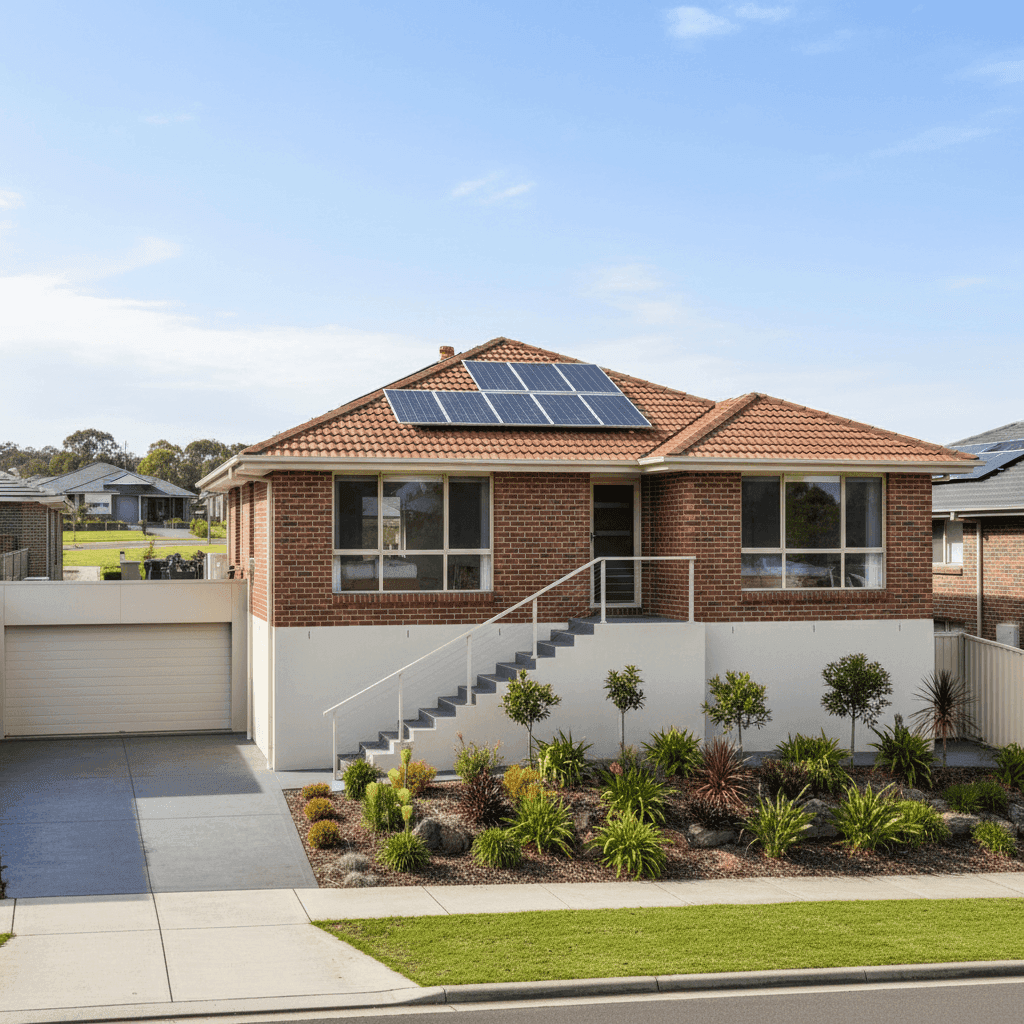
If you own a free standing home in Pakenham, VIC 3810, you've probably wondered whether you're paying a fair price for home and contents insurance. Pakenham is one of Melbourne's fastest-growing outer south-east suburbs, and with that growth comes an increasingly diverse range of property types, risk profiles, and insurance premiums. To help cut through the noise, we've analysed a real quote for a four-bedroom, two-bathroom brick veneer home in the area — and compared it against local, state, and national benchmarks.
---
Is This Quote Fair?
The quote in question comes in at $1,639 per year (or roughly $161/month) for combined home and contents cover, with a building sum insured of $579,000 and contents valued at $50,000. The building excess sits at $3,000, while the contents excess is $1,000.
Our price rating for this quote is FAIR — Around Average.
That assessment holds up well under scrutiny. The annual premium of $1,639 sits just slightly above the Pakenham suburb median of $1,601/yr, meaning roughly half of comparable quotes in the area come in cheaper — and half come in more expensive. It's not a bargain, but it's far from excessive. For a property of this size and specification, paying close to the median is a reasonable outcome.
It's also worth noting that the higher building excess of $3,000 is one of the levers that keeps this premium competitive. Opting for a lower excess — say $1,000 — would likely push the annual cost noticeably higher.
---
How Pakenham Compares
Context is everything when evaluating an insurance premium, so let's look at how Pakenham stacks up against broader benchmarks.
| Benchmark | Average Premium | Median Premium |
|---|---|---|
| Pakenham (3810) | $2,330/yr | $1,601/yr |
| Cardinia LGA | $3,491/yr | — |
| Victoria | $2,921/yr | $2,694/yr |
| National | $2,965/yr | $2,716/yr |
(Based on 143 quotes sampled in the Pakenham suburb.)
A few things stand out here. First, Pakenham's suburb average of $2,330/yr is meaningfully lower than both the Victorian state average of $2,921/yr and the national average of $2,965/yr. This suggests that, as a suburb, Pakenham carries a relatively moderate risk profile compared to many other parts of Australia — good news for local homeowners.
However, the Cardinia LGA average of $3,491/yr is notably higher than the suburb figure. This discrepancy is likely driven by higher-risk properties elsewhere in the Cardinia council area — particularly those in bushfire-prone or flood-affected zones — pulling the LGA average upward. Pakenham itself, being a more urbanised part of the LGA, tends to attract more competitive premiums.
The wide spread between Pakenham's 25th percentile ($1,124/yr) and 75th percentile ($2,817/yr) also tells an important story: premiums in this suburb vary significantly depending on the specific property, insurer, and cover selections. Shopping around genuinely makes a difference here.
---
Property Features That Affect Your Premium
Several characteristics of this particular property influence how insurers price the risk — some favourably, others less so.
Brick veneer construction with a tiled roof is generally well-regarded by insurers. Brick veneer walls offer solid fire resistance and structural durability, while tiled roofs are considered lower risk than corrugated iron or older materials. This combination typically attracts more competitive premiums than, say, a weatherboard home with a metal roof.
Slab foundation is standard for properties built in this era and region. It's a neutral factor from an insurance perspective — neither a risk flag nor a premium discount driver.
Elevated by at least 1 metre is a notable feature. Elevation can reduce flood risk exposure, which may be a contributing factor to this quote sitting close to the suburb median rather than trending higher. In areas near waterways or low-lying land, elevation is a meaningful risk mitigant.
Solar panels are present on this property. While solar systems add value and are worth insuring, they can also introduce a small uplift in premiums due to the cost of replacement and the complexity of installation. It's important to confirm your policy explicitly covers solar panels — not all standard home insurance policies do so by default.
Built in 2006, this home is relatively modern by Australian standards. Newer builds tend to comply with more recent building codes, which generally means better structural integrity and lower risk of certain types of damage. This works in the homeowner's favour at renewal time.
The 153 sqm building size is modest for a four-bedroom home, which helps keep the sum insured — and therefore the premium — from ballooning. The $579,000 building sum insured reflects current rebuild costs rather than market value, which is the correct way to approach building insurance.
---
Tips for Homeowners in Pakenham
1. Review your sum insured annually. Construction costs have risen sharply in recent years across Victoria. If your building sum insured hasn't been updated to reflect current rebuild costs per square metre, you could be significantly underinsured. Use a building cost calculator or speak to a quantity surveyor to sense-check your figure each year.
2. Confirm solar panels are explicitly covered. Solar panel systems can cost $8,000–$20,000 or more to replace. Check your product disclosure statement (PDS) to confirm whether your panels are covered under the building section, and whether accidental damage and inverter failure are included. If not, ask your insurer about adding this cover.
3. Consider your excess carefully. This quote carries a $3,000 building excess, which is on the higher end. While it reduces your premium, it means you'll need to cover the first $3,000 of any building claim yourself. If a lower excess better suits your financial situation, it's worth requesting a revised quote — just be prepared for a higher annual premium.
4. Shop around — the spread in Pakenham is significant. With premiums ranging from $1,124/yr at the 25th percentile to $2,817/yr at the 75th percentile in Pakenham, there's clearly a wide range of pricing in this suburb. The same property can attract very different quotes from different insurers. Comparing at least three to four quotes at renewal is one of the simplest ways to avoid overpaying.
---
Compare Home Insurance Quotes in Pakenham
Whether you're renewing an existing policy or insuring a new purchase, it pays to compare. CoverClub makes it easy to see how your quote stacks up against real data from your suburb, LGA, state, and across Australia. Get a home insurance quote today and find out if you're getting a fair deal — or if there's a better option waiting for you. You can also explore detailed Pakenham insurance statistics to benchmark your own premium with confidence.