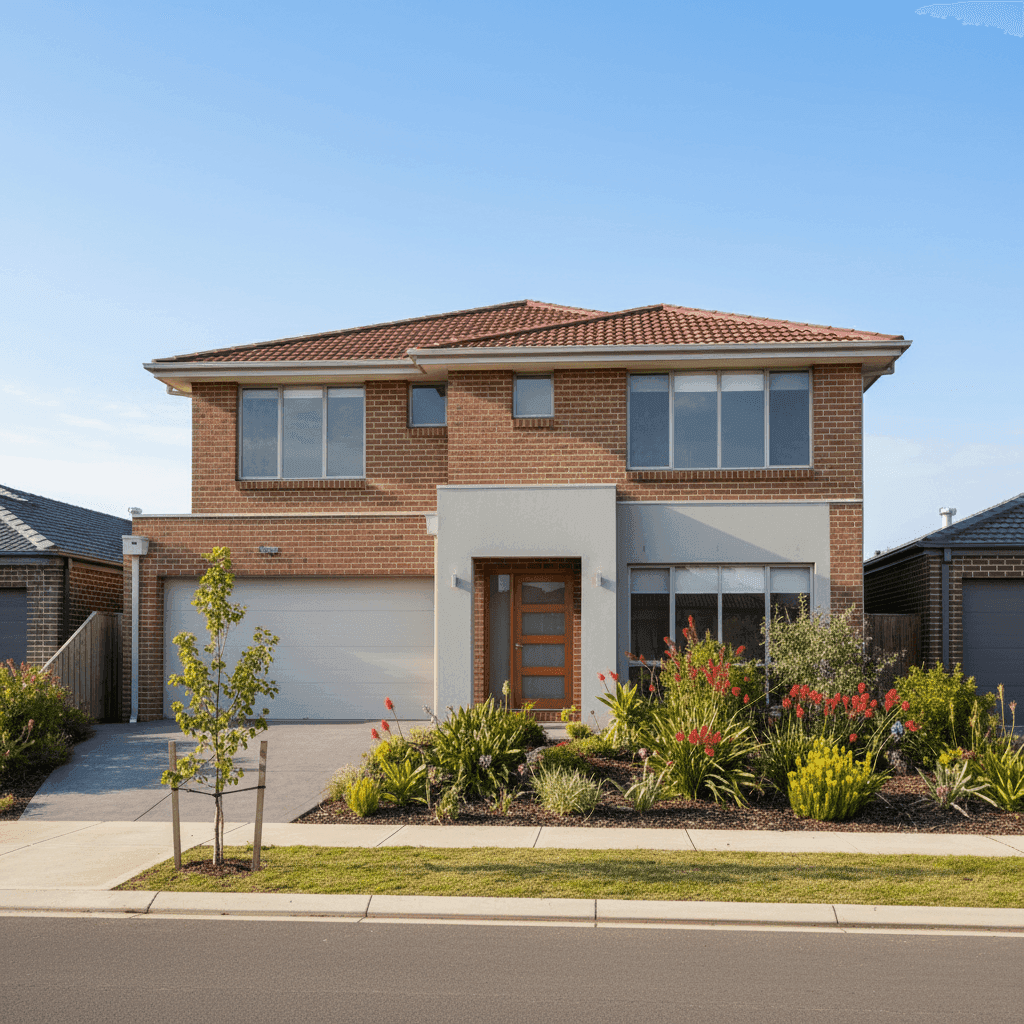
Pakenham, located in Melbourne's outer south-east growth corridor, has become one of Victoria's fastest-growing suburbs. With new estates, family homes, and easy freeway access to the CBD, it's no surprise that four-bedroom free standing homes are a common sight here. But what does home insurance actually cost in this postcode — and is the quote you're looking at good value? Let's break it down.
---
Is This Quote Fair?
The quote in question is $1,569 per year (or roughly $154 per month) for a combined home and contents policy on a 4-bedroom, 2-bathroom free standing home in Pakenham. The building is insured for $700,000 and contents for $50,000, with a building excess of $3,000 and a contents excess of $600.
Our price rating for this quote is FAIR — Around Average.
That assessment holds up when you look at the numbers closely. The quote sits just below the suburb median of $1,601 per year, meaning more than half of comparable quotes in Pakenham come in higher than this one. It's comfortably below the suburb average of $2,330, which is often skewed upward by higher-value properties and more comprehensive cover levels.
At the same time, it's worth noting this quote is above the 25th percentile of $1,124 — so there are cheaper options available in the market. Whether those cheaper policies offer equivalent cover is the critical question, and that's where comparison shopping becomes essential.
Overall, for a well-built modern home with standard fittings in this postcode, $1,569 represents a reasonable mid-market price. It's not the cheapest you could find, but it's far from excessive.
---
How Pakenham Compares
Understanding where Pakenham sits in the broader insurance landscape helps put any individual quote in perspective.
| Benchmark | Annual Premium |
|---|---|
| This Quote | $1,569 |
| Pakenham Suburb Median | $1,601 |
| Pakenham Suburb Average | $2,330 |
| Cardinia LGA Average | $3,491 |
| VIC State Average | $2,921 |
| VIC State Median | $2,694 |
| National Average | $2,965 |
| National Median | $2,716 |
The data — drawn from 143 quotes in the Pakenham area — paints an interesting picture. Pakenham's median premium of $1,601 is notably lower than both the Victorian state median of $2,694 and the national median of $2,716. That's a meaningful difference, and it reflects the suburb's relatively modern housing stock, lower flood and bushfire risk compared to other parts of regional Victoria, and the prevalence of standard brick veneer construction.
Interestingly, the Cardinia LGA average of $3,491 is substantially higher than the Pakenham suburb average. This is likely because the LGA encompasses more rural and semi-rural properties — including areas with greater bushfire exposure — which pull the LGA figure upward. Pakenham itself, as an established suburban centre, benefits from better infrastructure, proximity to emergency services, and lower environmental risk.
You can explore the full Pakenham suburb insurance statistics here.
---
Property Features That Affect Your Premium
Several characteristics of this particular property work in the homeowner's favour when it comes to insurance pricing.
Construction year (2014): A relatively modern build means the home was constructed to contemporary Australian Standards, including improved bushfire and energy efficiency requirements. Insurers generally view newer homes as lower risk due to updated electrical systems, plumbing, and structural integrity.
Brick veneer external walls: Brick veneer is one of the most common and well-regarded construction materials in Australia. It offers solid fire resistance and durability, which insurers typically reward with more competitive premiums compared to weatherboard or lightweight cladding.
Tiled roof: Concrete or terracotta tiles are considered a robust roofing material. They hold up well against hail and wind, and insurers tend to price tiled roofs more favourably than corrugated iron or Colorbond in some scenarios — though this can vary by insurer.
Slab foundation: A concrete slab foundation is standard for modern builds and is generally viewed positively by insurers, particularly in areas without significant subsidence or reactive soil concerns.
No pool, no solar panels: Both of these features can add complexity (and cost) to a home insurance policy. The absence of a pool removes liability and equipment cover considerations, while no solar panels means no additional risk around inverters, panel damage, or roof penetration points.
Ducted climate control: This is one feature that can nudge premiums slightly upward, as ducted systems represent a significant asset and a potential source of claims (mechanical breakdown, water damage from leaks, etc.). It's worth confirming whether your policy covers the ducted system under building or contents — or both.
Standard fittings: High-end or bespoke finishes can substantially increase the cost to rebuild, which flows through to higher premiums. Standard fittings keep the replacement cost estimate more predictable and in line with typical construction costs.
---
Tips for Homeowners in Pakenham
1. Review your sum insured annually Construction costs in Victoria have risen significantly over recent years. A building sum insured of $700,000 for a 214 sqm home works out to roughly $3,270 per sqm — which is within a reasonable range for standard construction, but worth validating against current builder rates in your area. Being underinsured at claim time can have serious financial consequences.
2. Consider raising your excess to lower your premium The building excess on this policy is $3,000, which is on the higher side. If you're comfortable self-funding smaller claims, a higher excess is a sensible way to reduce your annual premium. Conversely, if $3,000 feels uncomfortable, shopping around may reveal policies with lower excesses at a similar price point.
3. Don't overlook contents cover A $50,000 contents sum may be adequate for some households, but it's worth doing a proper stocktake — furniture, electronics, appliances, clothing, jewellery, and sporting equipment add up quickly. Many Australians are significantly underinsured on contents without realising it.
4. Compare at renewal, not just at purchase Insurers often offer better pricing to new customers than to existing ones. Set a reminder to compare quotes before your renewal date each year. Even if you're happy with your current insurer, having a competing quote gives you leverage to negotiate or switch.
---
Ready to Compare?
Whether you're reviewing an existing policy or shopping for the first time, it pays to see what the broader market looks like. CoverClub makes it easy to compare home and contents insurance quotes tailored to your property and location. Get a quote today at CoverClub and find out if you could be paying less — or getting more cover for what you already pay.