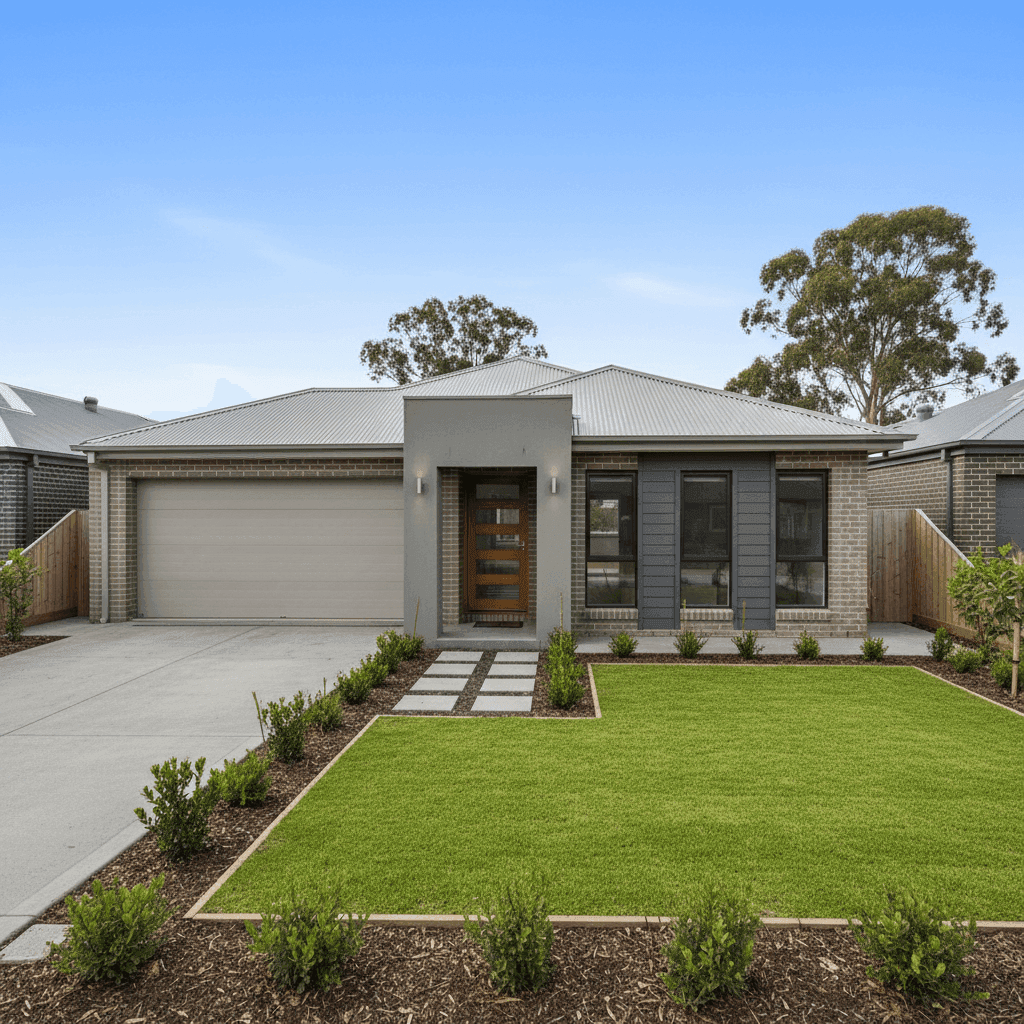
Pakenham, located in Melbourne's south-east growth corridor, has become one of Victoria's most popular destinations for families seeking space, affordability, and community. If you own a free standing home in this suburb and you're reviewing your home and contents insurance, you're in the right place. This article breaks down a real quote for a four-bedroom, two-bathroom brick veneer home in Pakenham — and helps you understand whether it represents fair value.
---
Is This Quote Fair?
The quote in question sits at $2,318 per year (or $222 per month) for combined home and contents cover, with a building sum insured of $655,000 and contents valued at $110,000. Both the building and contents excess are set at $500.
Based on data from CoverClub's Pakenham suburb statistics, this premium is rated Expensive — above average for the area. Here's why that matters:
- The suburb average premium is $1,490/yr
- The suburb median is $1,418/yr
- The 75th percentile sits at $1,786/yr
At $2,318/yr, this quote exceeds even the 75th percentile for Pakenham, meaning it's priced higher than roughly 75% of comparable quotes in the suburb. That's a meaningful gap — around $532 above the top quartile, and more than $800 above the suburb average.
That said, it's worth noting that the sum insured here is substantial. A $655,000 building cover figure for a 214 sqm home built in 2007 is on the higher end, and contents cover of $110,000 is reasonably comprehensive. Higher insured values naturally push premiums up, so the comparison isn't entirely apples-to-apples if neighbouring properties are insured for less.
Still, if you're paying this premium, it's worth shopping around.
---
How Pakenham Compares
To put this quote in broader context, here's how Pakenham stacks up against Victorian and national benchmarks, based on CoverClub's VIC state data and national insurance statistics:
| Benchmark | Average Premium | Median Premium |
|---|---|---|
| Pakenham (3810) | $1,490/yr | $1,418/yr |
| Cardinia LGA | $3,089/yr | — |
| Victoria (VIC) | $3,000/yr | $2,718/yr |
| National | $5,347/yr | $2,764/yr |
A few things stand out here. Pakenham is actually quite affordable relative to the broader Victorian average — homeowners in this suburb typically pay roughly half what the state average suggests. This is likely because Pakenham sits outside high-risk flood or bushfire zones that push premiums up dramatically elsewhere in Victoria.
Interestingly, the Cardinia LGA average of $3,089/yr is notably higher than the Pakenham suburb average of $1,490/yr. This suggests that other parts of the Cardinia council area — which includes more rural and semi-rural properties — carry higher risk profiles that inflate the LGA figure.
The national median of $2,764/yr also reflects the outsized influence of high-risk regions like northern Queensland and coastal NSW, where cyclone, flood, and storm surge risks drive premiums skyward. By comparison, Pakenham homeowners are generally in a favourable position.
---
Property Features That Affect Your Premium
Several characteristics of this property influence how insurers price the risk:
Brick Veneer Construction Brick veneer is one of the most common wall types in Australian suburban homes and is generally viewed favourably by insurers. It offers solid fire resistance and structural durability, which can help moderate premiums compared to timber-framed or clad alternatives.
Steel / Colorbond Roof Colorbond roofing is widely regarded as a low-maintenance, weather-resistant option. Insurers tend to view it positively — it's less susceptible to storm damage than tiles and has a long lifespan, both of which can contribute to more competitive premiums.
Concrete Slab Foundation A slab foundation is standard for homes of this era and construction type. It's generally considered stable and low-risk, particularly in areas without significant soil movement or flood history.
Built in 2007 At roughly 18 years old, this home is in the sweet spot for insurers — past the initial construction period where defects might emerge, but not yet old enough to attract loading for ageing infrastructure or outdated wiring.
Ducted Climate Control The presence of ducted climate control is worth noting. While it adds to the home's rebuild value (and therefore the appropriate sum insured), some insurers may factor in the cost of replacing a ducted system when calculating premiums.
214 sqm Floor Area At 214 square metres, this is a generously sized family home. Larger floor areas mean higher rebuild costs, which directly influences the building sum insured — and therefore the premium.
No Pool, No Solar Panels The absence of a pool removes a common liability risk, and no solar panels means there's no additional complexity around electrical systems or roof penetrations. Both factors can contribute to a cleaner risk profile.
---
Tips for Homeowners in Pakenham
1. Review your sum insured carefully The building sum insured of $655,000 is significant. Make sure this figure reflects the actual cost to rebuild your home — not its market value. Overinsuring can unnecessarily inflate your premium, while underinsuring leaves you exposed. Use a building cost calculator or consult a quantity surveyor to get an accurate figure.
2. Compare at least three quotes Given that this premium sits above the 75th percentile for the suburb, there's a real chance a comparable policy is available for less. Get a quote through CoverClub to see how multiple insurers price your specific property.
3. Consider a higher excess Both the building and contents excess are currently set at $500. Opting for a higher excess — say $1,000 or $2,000 — can meaningfully reduce your annual premium. If you have a solid emergency fund and rarely make small claims, this trade-off often makes financial sense.
4. Bundle and ask about discounts Many insurers offer discounts for bundling home and contents policies (which this quote already does), but it's also worth asking about loyalty discounts, security system discounts, or discounts for paying annually rather than monthly. Paying monthly typically adds a financing cost on top of the base premium.
---
Compare Your Options with CoverClub
Whether you're renewing your policy or shopping for the first time, understanding where your premium sits relative to the market is the first step to making a smarter decision. CoverClub makes it easy to compare home insurance quotes tailored to your property in Pakenham. You can also explore suburb-level data for Pakenham (3810) or dig into Victoria-wide insurance trends to see the full picture. A few minutes of comparison could save you hundreds of dollars a year.