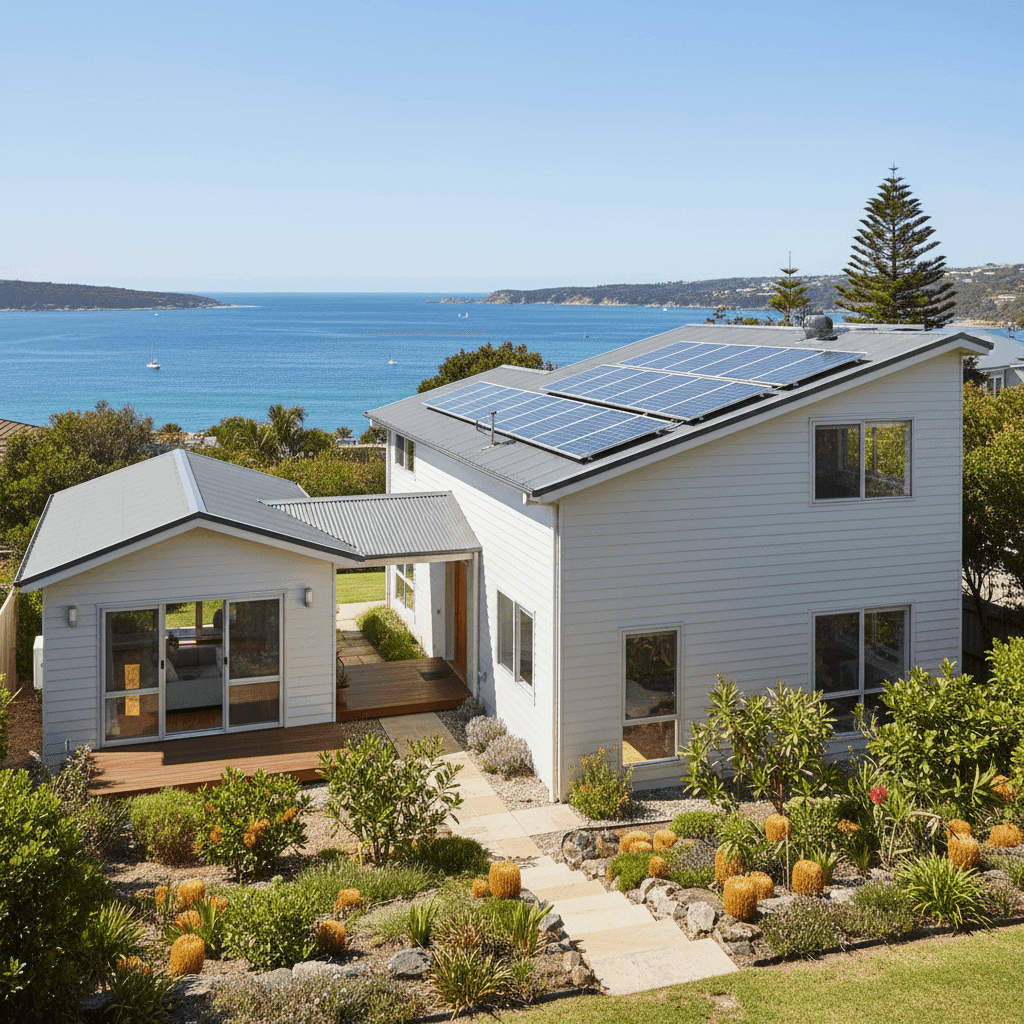
Palm Beach is one of Sydney's most coveted coastal addresses — a narrow peninsula at the northern tip of the Northern Beaches, flanked by the Pacific Ocean on one side and Pittwater on the other. It's the kind of suburb that commands premium property prices, and as this analysis shows, it can also command a premium insurance bill. This article breaks down a real home and contents insurance quote for a four-bedroom free-standing home in Palm Beach (NSW 2108), compares it against local, state, and national benchmarks, and offers practical guidance for homeowners looking to get the best value on their cover.
---
Is This Quote Fair?
The short answer: this quote is expensive — well above average by most measures.
At $13,574 per year (or $1,301/month), this home and contents policy sits significantly higher than what most Palm Beach homeowners are paying. Our price rating for this quote is Expensive (Above Average), and the data backs that up clearly.
The building is insured for $947,000 with a $201,000 contents value, and both building and contents carry a $2,000 excess. While the high sum insured naturally drives up the premium, the per-dollar cost of coverage still warrants scrutiny — particularly given that the suburb average for Palm Beach sits at just $5,519 per year.
That said, it's worth noting that the suburb sample size here is relatively small (16 quotes), which means the local average may not capture the full range of high-value properties in the area. Palm Beach has a wide spread of home values, and a $947,000 building sum insured is on the higher end — which will naturally push premiums upward.
---
How Palm Beach Compares
To put this quote in context, here's how it stacks up against available benchmarks:
| Benchmark | Annual Premium |
|---|---|
| This Quote | $13,574 |
| Palm Beach Suburb Average | $5,519 |
| Palm Beach Suburb Median | $5,118 |
| Palm Beach 25th Percentile | $4,170 |
| Palm Beach 75th Percentile | $6,774 |
| NSW State Average | $9,528 |
| NSW State Median | $3,770 |
| National Average | $5,347 |
| National Median | $2,764 |
| Northern Beaches LGA Average | $3,266 |
This quote exceeds the Palm Beach suburb average by roughly 146% and sits 42% above the NSW state average. Even accounting for the above-average sum insured, the gap is notable.
Interestingly, the NSW state average ($9,528) is considerably higher than the national average ($5,347), which reflects the elevated property values and risk profiles across much of New South Wales. You can explore these figures in more detail on the NSW insurance stats page or the national overview.
The Northern Beaches LGA average of just $3,266 is particularly striking — it suggests that many homes in the broader LGA carry much lower premiums, and that Palm Beach-specific factors (coastal exposure, higher rebuild costs, property values) are meaningfully inflating premiums for homes in this postcode.
---
Property Features That Affect Your Premium
Several characteristics of this property are likely contributing to the higher-than-average premium. Here's what insurers are likely weighing up:
Hardiplank / Hardiflex Cladding
Fibre cement cladding like Hardiplank and Hardiflex is generally viewed favourably by insurers — it's fire-resistant, durable, and less susceptible to rot than timber weatherboards. This shouldn't be pushing the premium up significantly, and may actually help keep it lower than it would be with other cladding types.
Steel / Colorbond Roof
Colorbond roofing is another tick in the box from an insurer's perspective. It performs well in high-wind conditions, is non-combustible, and has a long lifespan. This is a positive factor for the property's risk profile.
Slab Foundation
A concrete slab foundation is standard for homes of this era and is generally considered low-risk by insurers — there's no underfloor cavity to harbour moisture or pests, and slabs perform well structurally.
Timber and Laminate Flooring
Timber flooring — particularly solid timber — can be expensive to repair or replace, which may contribute modestly to the contents or building sum insured. Above-average fittings quality (as noted for this property) will also push rebuild costs higher, justifying a larger building sum insured.
Solar Panels
Solar panels are an increasingly common feature on Australian homes, but they do add to the replacement cost of the building. Insurers need to factor in the cost of replacing panels and associated equipment, which can add several thousand dollars to a rebuild estimate.
Granny Flat
The presence of a granny flat is a meaningful factor. It effectively increases the total floor area and complexity of the dwelling, raising the cost to rebuild and therefore the appropriate building sum insured. Depending on the insurer, the granny flat may be explicitly covered under the policy or may require separate consideration.
Ducted Climate Control
Ducted air conditioning systems are expensive to install and repair. Their inclusion in the building sum insured adds to the overall rebuild cost and is a legitimate driver of higher premiums.
Coastal Location
Perhaps most significantly, Palm Beach's coastal position exposes properties to salt air corrosion, storm surge risk, and elevated wind exposure. Insurers factor in geographic risk when pricing premiums, and beachside or waterfront-adjacent properties in NSW typically attract higher base rates.
---
Tips for Homeowners in Palm Beach
If you're a Palm Beach homeowner looking to make sure you're getting fair value on your insurance, here are four practical steps worth taking:
- Review your building sum insured carefully. A $947,000 building sum insured is substantial — make sure it reflects the actual cost to rebuild your home (not its market value), including the granny flat, solar panels, and high-quality fittings. Over-insuring can mean unnecessarily high premiums; under-insuring can leave you exposed at claim time. Consider using a quantity surveyor or an online rebuild cost calculator to validate the figure.
- Compare multiple insurers, not just your renewal quote. The gap between this quote and the suburb average is large enough that shopping around could yield meaningful savings. Insurers price risk differently, and some are more competitive than others for coastal properties with above-average features. Get a comparison quote through CoverClub to see what else is available for your property.
- Ask about bundling discounts and loyalty benefits. Some insurers offer discounts when you hold both home and contents cover with them (as this policy does), or when you've been a customer for multiple years. It's always worth asking directly what discounts apply to your policy.
- Consider your excess level strategically. Both the building and contents excess on this policy sit at $2,000. Opting for a higher voluntary excess can reduce your annual premium — but make sure the excess is an amount you could genuinely afford to pay out of pocket in the event of a claim. For a property of this value, a slightly higher excess may be a reasonable trade-off.
---
Compare Your Home Insurance Today
Whether you're renewing an existing policy or insuring a new purchase in Palm Beach, it pays to compare. CoverClub makes it easy to see how your quote stacks up against real data from your suburb, state, and across Australia. Start your comparison at CoverClub and make sure you're not paying more than you need to for the cover your home deserves. You can also explore the latest Palm Beach insurance data to see how premiums in your area are trending.