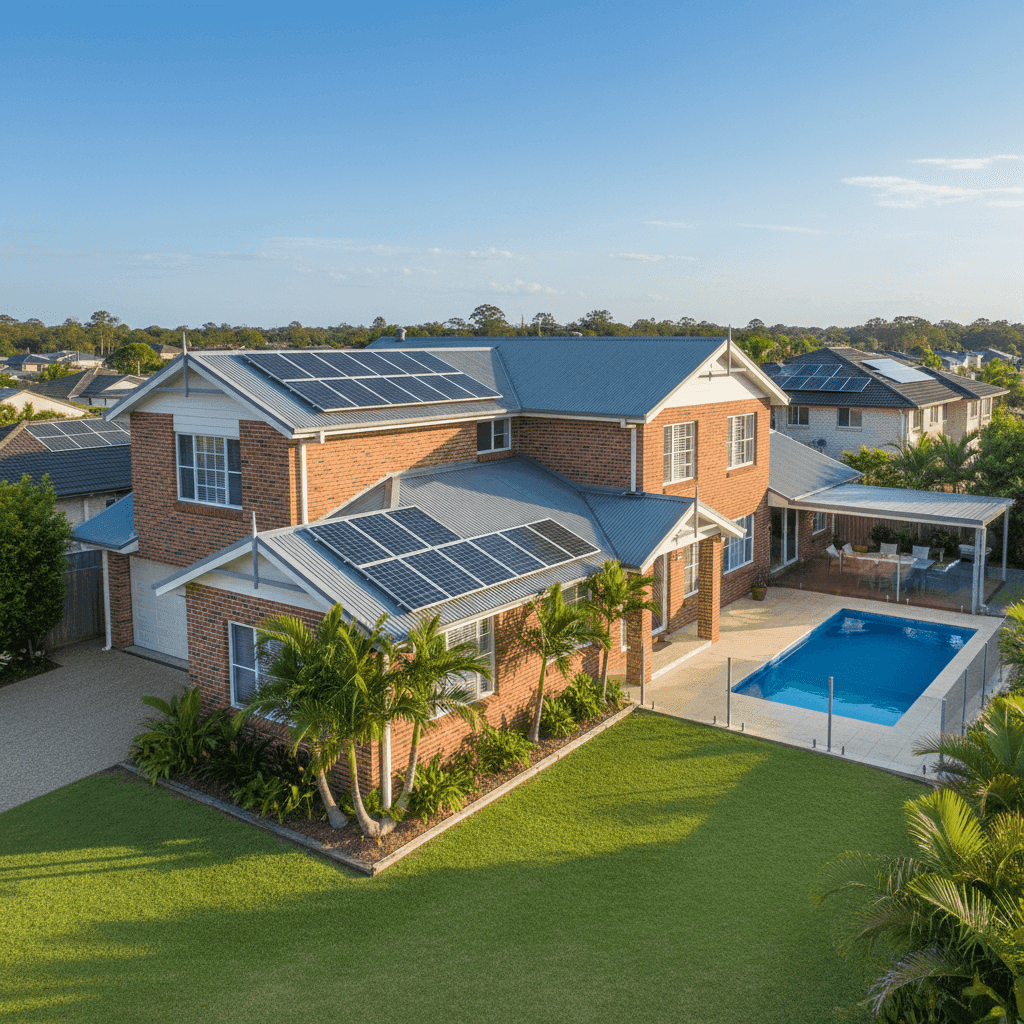
Palm Beach, nestled on the southern Gold Coast, is one of Queensland's most sought-after coastal suburbs — and with that lifestyle comes the responsibility of protecting your home. This article breaks down a real home and contents insurance quote for a three-bedroom, free-standing home in Palm Beach (QLD 4221), compares it against local, state, and national benchmarks, and offers practical tips to help homeowners get the best value cover.
---
Is This Quote Fair?
The annual premium for this property came in at $2,126 per year (or roughly $204 per month), covering a building sum insured of $463,000 and contents valued at $49,000, each with a $2,000 excess.
Based on our pricing data, this quote is rated CHEAP — well below average for the area. To put that in perspective:
- The suburb average for Palm Beach is $5,459/yr
- The suburb median sits at $3,911/yr
- Even the 25th percentile (the cheapest quarter of quotes) is $2,719/yr
At $2,126, this quote sits below the cheapest quarter of all quotes sampled in the suburb — a genuinely strong result. For a homeowner in Palm Beach, this represents meaningful savings of over $1,700 per year compared to the median, and more than $3,300 compared to the suburb average.
It's worth noting that this is based on a sample of 57 quotes in the area, giving a solid statistical picture of what Palm Beach homeowners are typically paying. Always review your policy's Product Disclosure Statement (PDS) carefully to ensure the cover matches your needs — a cheap premium is only good value if the policy actually protects you.
---
How Palm Beach Compares
Home insurance pricing in Palm Beach tells an interesting story when you zoom out to the broader market. Check out the Palm Beach suburb insurance stats for the full picture.
| Benchmark | Average Premium | Median Premium |
|---|---|---|
| Palm Beach (4221) | $5,459/yr | $3,911/yr |
| Gold Coast LGA | $8,161/yr | — |
| Queensland | $9,129/yr | $3,903/yr |
| National | $5,347/yr | $2,764/yr |
A few things stand out here:
- Queensland's average premium ($9,129/yr) is among the highest in the country, largely driven by cyclone-exposed regions in Far North Queensland that push the state average up significantly. The QLD state insurance stats show just how wide the spread is across the state.
- The Gold Coast LGA average of $8,161/yr is notably higher than the Palm Beach suburb average of $5,459/yr, suggesting that some Gold Coast postcodes face considerably higher risk profiles (or simply attract higher-priced policies).
- Palm Beach's median of $3,911/yr is very close to the national median of $2,764/yr, meaning typical Palm Beach homeowners are paying broadly in line with the rest of Australia — despite the coastal location. See how that stacks up on the national insurance stats page.
The wide gap between Queensland's average and median (nearly $5,200) is a classic sign of a skewed distribution — a relatively small number of very high-risk or high-value properties are pulling the average up considerably.
---
Property Features That Affect Your Premium
Several characteristics of this particular property work in favour of a lower premium. Understanding these factors can help you make sense of your own quote.
Brick veneer construction is generally viewed favourably by insurers. It offers solid fire resistance and structural durability compared to weatherboard or fibre cement cladding, which can translate to lower building premiums.
Steel/Colorbond roofing is another tick in the right column. Colorbond is lightweight, resistant to corrosion, and performs well in coastal environments where salt air can degrade other materials. It's also relatively straightforward to repair or replace, which keeps claims costs — and therefore premiums — more predictable.
Stump foundations are common in older Queensland homes, and this property, built in 1975, is a good example. While stumps can occasionally raise concerns around subsidence or pest damage, they're well understood by insurers in the QLD market and don't typically attract a significant loading.
Timber and laminate flooring is standard for homes of this era and doesn't significantly influence the premium either way, though it's worth noting that timber floors can be more costly to repair after water damage than tiles.
The swimming pool and solar panels are both worth flagging. A pool adds to the replacement cost of the property and may have specific liability implications — make sure your policy covers pool-related liability and any associated equipment. Solar panels should also be explicitly listed under your building cover; not all policies include them as standard, so check your PDS.
At 139 sqm, this is a modest-sized home, and the building sum insured of $463,000 reflects a reasonable per-square-metre rebuild cost for a property of this age and construction type in South East Queensland.
---
Tips for Homeowners in Palm Beach
1. Review your building sum insured regularly Construction costs in South East Queensland have risen sharply in recent years. A sum insured that was adequate two or three years ago may no longer cover a full rebuild today. Use a building cost calculator or speak with a quantity surveyor to make sure you're not underinsured.
2. Check your solar panel and pool equipment cover As mentioned above, both solar panels and pool equipment can be expensive to repair or replace. Confirm with your insurer that these are covered under your building policy, and check whether there are any sub-limits or exclusions that apply.
3. Consider your excess carefully This policy carries a $2,000 excess on both building and contents. A higher excess typically lowers your premium, but make sure you can comfortably cover that amount out of pocket if you need to make a claim. If cash flow is a concern, it may be worth comparing quotes with a lower excess.
4. Shop around at renewal time The spread of premiums in Palm Beach is significant — from under $2,719 at the 25th percentile to over $5,275 at the 75th percentile. That's a difference of more than $2,500 per year for broadly similar properties. Loyalty doesn't always pay in insurance; comparing quotes annually is one of the simplest ways to avoid overpaying.
---
Compare Your Own Quote
Whether you're a Palm Beach local or looking at property anywhere in Australia, it pays to compare. CoverClub makes it easy to see how your current premium stacks up against the market — and to find a better deal if one exists. Get a home insurance quote today and see what you could be saving.