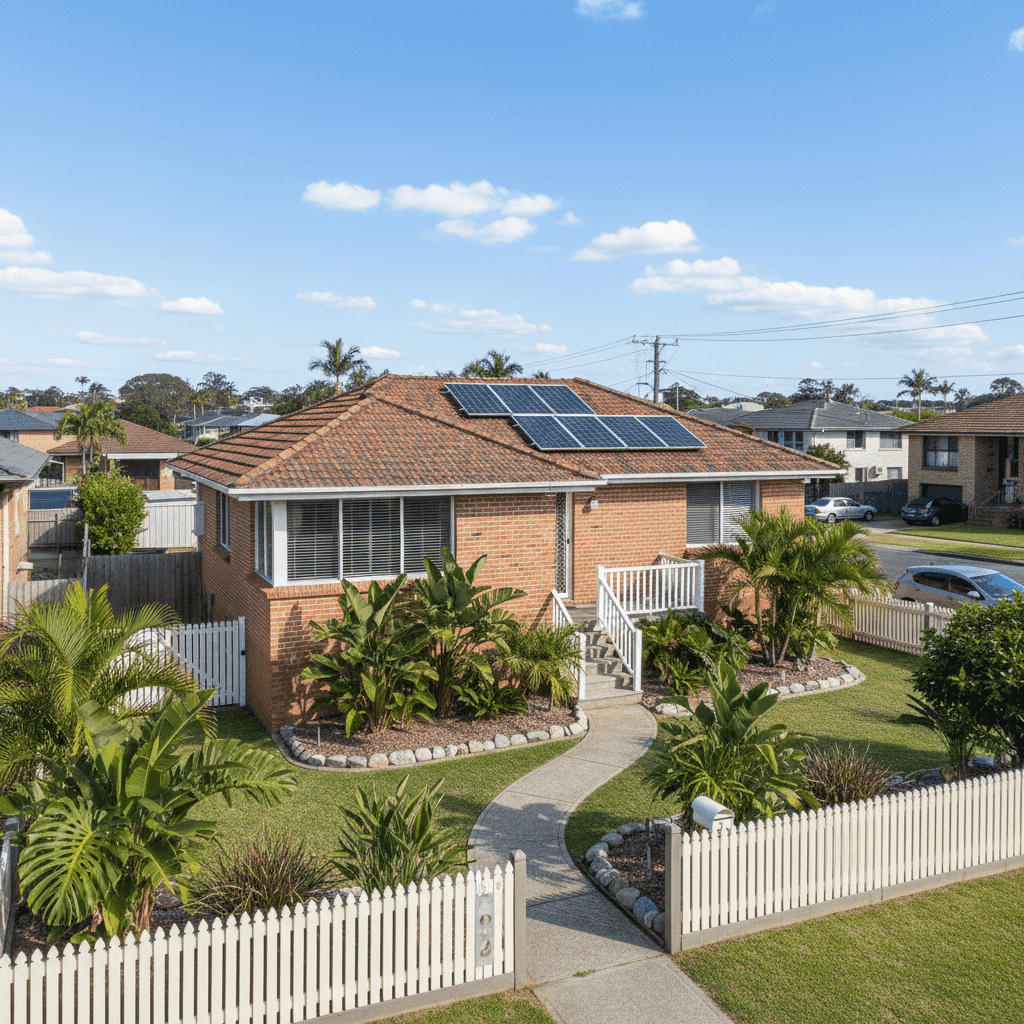
Palm Beach is one of the Gold Coast's most sought-after coastal suburbs — a relaxed, beachside community that attracts families and sea-changers alike. But owning a home here comes with real insurance considerations, particularly given the suburb's coastal exposure and the age of much of its housing stock. This article breaks down a recent home and contents insurance quote for a three-bedroom, free-standing home in Palm Beach (postcode 4221), and puts the numbers into context so you can make a more informed decision about your own cover.
---
Is This Quote Fair?
The quote in question sits at $3,798 per year (or $372/month) for combined home and contents cover, with a building sum insured of $693,000 and contents valued at $92,000. Both the building and contents excess are set at $1,000.
Our price rating for this quote is Fair — Around Average, and when you look at the data, that assessment holds up well. The suburb median for Palm Beach sits at $4,195/yr, meaning this quote comes in roughly $400 below the midpoint of what other homeowners in the area are paying. It also clears the 25th percentile benchmark of $3,248/yr, placing it comfortably in the middle of the local range rather than at either extreme.
What's particularly notable is how this quote compares to the suburb average of $6,364/yr — a figure dragged upward by some very high-end premiums in the area. The 75th percentile reaches $8,202/yr, which tells you that a meaningful proportion of Palm Beach homeowners are paying more than double this quote. In that context, $3,798 looks like a solid result.
At the same time, it's worth being clear-eyed: this isn't a bargain-basement price. Queensland premiums are elevated compared to the rest of the country, and this quote reflects that reality.
---
How Palm Beach Compares
To understand whether this premium makes sense, it helps to zoom out and look at the broader picture. Here's how Palm Beach stacks up against state and national benchmarks:
| Benchmark | Average | Median |
|---|---|---|
| Palm Beach (4221) | $6,364/yr | $4,195/yr |
| Queensland | $4,547/yr | $3,931/yr |
| National | $2,965/yr | $2,716/yr |
| Gold Coast LGA | $8,161/yr | — |
A few things stand out immediately. Queensland premiums are already 53% higher than the national average, reflecting the state's elevated exposure to extreme weather events including storms, flooding, and hail. Palm Beach, sitting within the Gold Coast LGA, pushes even further above the state average — and the Gold Coast LGA average of $8,161/yr is one of the higher figures you'll find anywhere in the country.
This quote, at $3,798/yr, comes in below both the suburb and state averages, and is based on a sample of 57 quotes collected in the Palm Beach area — a solid dataset that gives reasonable confidence in these comparisons.
You can explore the full data for yourself at the Palm Beach suburb stats page, the Queensland state overview, or the national insurance statistics.
---
Property Features That Affect Your Premium
Every home is different, and insurers price risk based on a combination of location and physical characteristics. Here's how the specific features of this property are likely influencing the premium:
Age and construction (1965, brick veneer, tiled roof): At around 60 years old, this home is older than many insurers prefer. Ageing plumbing, wiring, and structural elements can increase the likelihood of claims. That said, brick veneer is generally viewed favourably — it's durable, fire-resistant, and holds up reasonably well over time. A tiled roof is similarly well-regarded for longevity compared to alternatives like Colorbond or fibrous cement.
Stump foundations and timber/laminate flooring: Homes on stumps are common in Queensland's older housing stock, particularly in coastal areas where airflow underneath the home helps manage moisture and heat. However, stumps can be a factor in subsidence or termite-related claims, which some insurers price into their assessments. Timber and laminate flooring can also be more susceptible to water damage than concrete slabs, which is worth keeping in mind.
Solar panels: The presence of solar panels adds modest complexity to a home insurance policy. Panels themselves are typically covered under building insurance, but their replacement cost should be factored into the building sum insured. At $693,000, the sum insured here appears to account for the full rebuild cost of a 214 sqm home with solar — though it's always worth confirming this with your insurer.
No pool, no ducted climate control, not in a cyclone risk zone: These factors work in the homeowner's favour. Pools and ducted systems add to the insured value and can introduce additional liability or mechanical breakdown considerations. Being outside a designated cyclone risk area also removes a significant loading that affects many North Queensland properties.
Standard fittings quality: Mid-range fittings mean the home is neither underinsured through a conservative estimate nor over-insured with a premium sum. This is a sensible baseline for a home of this age and size.
---
Tips for Homeowners in Palm Beach
1. Review your building sum insured regularly. Construction costs have risen sharply in recent years, and a sum insured that was accurate two or three years ago may no longer reflect what it would actually cost to rebuild your home today. A 214 sqm brick veneer home with solar panels in coastal Queensland carries significant rebuild costs — make sure your figure keeps pace with inflation and local builder rates.
2. Check whether your solar panels are explicitly covered. Not all policies automatically include solar panel systems in building cover, and some apply sub-limits. Ask your insurer directly whether your panels are covered, at what value, and whether accidental damage is included — not just fire or storm.
3. Understand your flood and storm surge position. Palm Beach's coastal location means storm and water damage is a genuine risk. Review your policy's definitions carefully — particularly the distinction between "storm," "rainwater runoff," and "flood." These definitions vary between insurers and can significantly affect whether a claim is paid.
4. Compare quotes before renewal. With a suburb average of $6,364/yr, there's clearly significant variation in what insurers are charging for similar properties in Palm Beach. Don't assume your renewal price is the best available — the market is competitive, and a comparison at renewal time can yield meaningful savings.
---
Ready to Compare?
Whether you're reviewing your current policy or shopping for cover on a new property, CoverClub makes it easy to see what the market looks like for your specific home. Get a quote today and compare your premium against real data from homeowners in your suburb, your state, and across Australia.