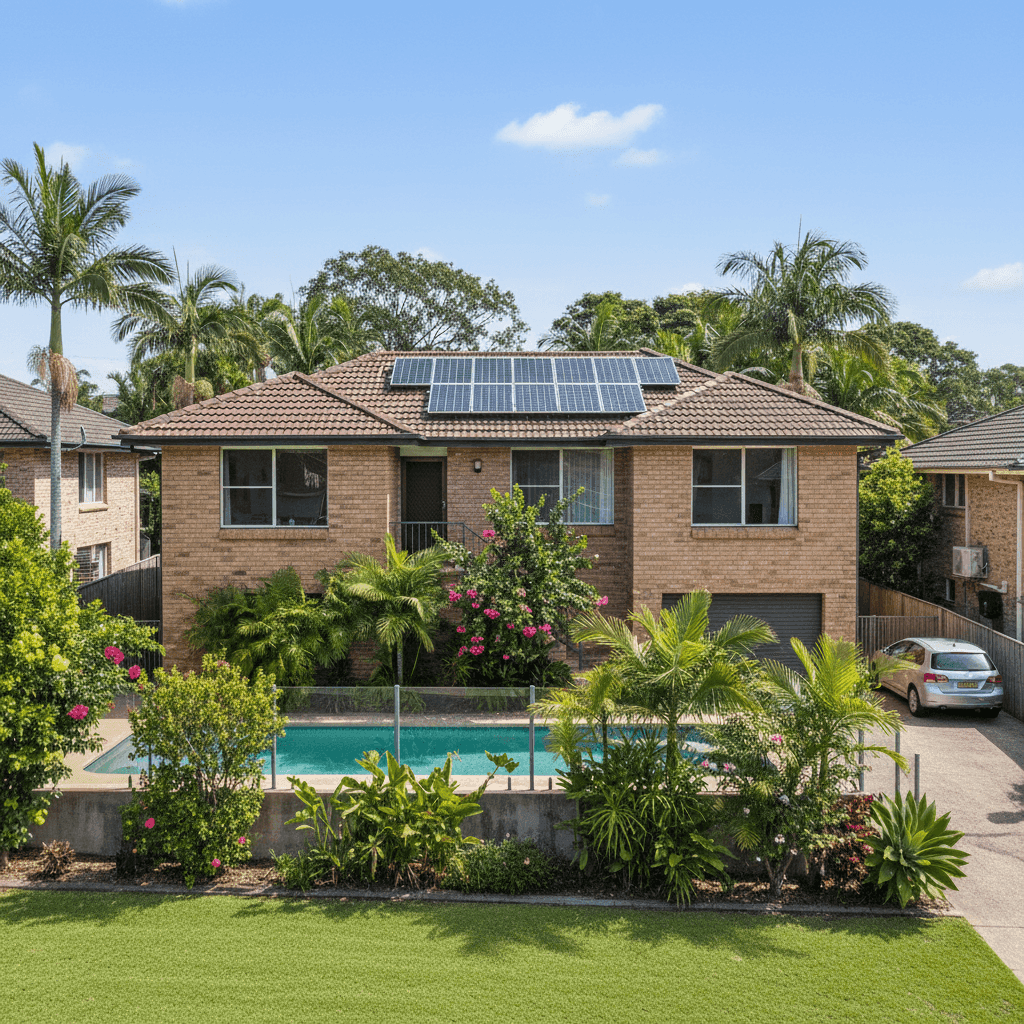
Palm Beach is one of the Gold Coast's most sought-after coastal suburbs — a laid-back beachside community that balances lifestyle appeal with the realities of Queensland's dynamic weather environment. If you own a free standing home here, understanding what you should be paying for home and contents insurance is essential. This article breaks down a real quote for a five-bedroom, double brick home in Palm Beach (QLD 4221) and puts the numbers into context against local, state, and national benchmarks.
---
Is This Quote Fair?
The annual premium for this property came in at $3,773 per year (or $355/month), covering both building (sum insured: $743,000) and contents ($50,000), each with a $1,000 excess.
Our pricing engine has rated this quote as Fair — Around Average, and the data backs that up. Compared to the suburb median of $3,911/yr, this quote sits just slightly below the midpoint — meaning roughly half of Palm Beach homeowners are paying more, and half are paying less. That's a reasonable result, particularly for a larger five-bedroom home with features like a pool, solar panels, and ducted climate control, all of which can nudge premiums upward.
It's worth noting that the quote is well below the suburb average of $5,459/yr. Averages in insurance data tend to be pulled upward by outlier properties with very high premiums — often larger homes, those with significant flood or storm risk, or properties with high replacement values. The median is generally a more reliable benchmark for "typical" pricing, and sitting just under the median of $3,911 is a solid outcome.
For further context on what Palm Beach homeowners are paying, visit our Palm Beach suburb insurance stats page.
---
How Palm Beach Compares
To truly appreciate this quote, it helps to zoom out and look at the broader picture.
| Benchmark | Premium |
|---|---|
| This Quote | $3,773/yr |
| Palm Beach Suburb Median | $3,911/yr |
| Palm Beach Suburb Average | $5,459/yr |
| Gold Coast LGA Average | $8,161/yr |
| QLD State Median | $3,903/yr |
| QLD State Average | $9,129/yr |
| National Median | $2,764/yr |
| National Average | $5,347/yr |
A few things stand out here. First, the Gold Coast LGA average of $8,161/yr is strikingly high — more than double this quote. The LGA encompasses a wide range of property types and risk profiles, including waterfront homes, properties in flood-prone areas, and high-value dwellings that significantly lift the average. Palm Beach itself, while a coastal suburb, appears to attract more moderate premiums at the median level.
Second, the Queensland state average of $9,129/yr is one of the highest in the country, driven by the state's exposure to cyclones, flooding, and severe storms — particularly in North Queensland. However, the QLD median of $3,903/yr tells a more nuanced story: most Queensland homeowners aren't paying $9,000+, but a subset of high-risk properties dramatically inflate the average. This quote aligns closely with the state median, which is reassuring.
Against the national median of $2,764/yr, this quote is higher — but that's expected for a Queensland coastal property with above-average size and features. Interstate comparisons can be misleading given Queensland's unique climate risk profile.
Explore QLD insurance statistics or national home insurance data to dig deeper into these benchmarks.
---
Property Features That Affect Your Premium
Several characteristics of this property have a direct bearing on what insurers charge. Here's how they play out:
Double Brick Construction Double brick is generally viewed favourably by insurers. It's more resistant to fire, wind damage, and general wear than lightweight timber or clad construction. This can contribute to a more competitive premium compared to less robust wall types.
Tiled Roof Terracotta or concrete tiles are durable and perform well in most weather conditions. However, they can be more expensive to repair or replace than Colorbond steel roofing, which may be factored into the building sum insured.
Slab Foundation A concrete slab foundation is standard for Queensland homes of this era and is generally considered low-risk from an insurance perspective. It eliminates concerns around subfloor moisture or pest damage that can affect elevated timber floors.
1983 Construction Homes built in the early 1980s predate some modern building codes, particularly around cyclone tie-downs and energy efficiency. That said, double brick construction of this period is typically solid and well-regarded. Insurers may factor in the age when assessing the likelihood of claims related to ageing systems (plumbing, electrical, roofing).
Swimming Pool A pool adds to the replacement cost of the property and introduces liability considerations. Most insurers include pool coverage under the building policy, but it's worth confirming the scope of cover — particularly for pool equipment and surrounds.
Solar Panels Solar panels are increasingly common on Queensland homes and are typically covered under building insurance. However, it's important to check whether your policy covers accidental damage to panels and inverters, as some standard policies have exclusions or sub-limits in this area.
Ducted Climate Control Ducted air conditioning systems are a significant fixed asset and are generally covered under building insurance. Given the cost of these systems, it's worth ensuring your sum insured adequately reflects the replacement cost.
Building Size: 214 sqm At 214 sqm, this is a generously sized home. The $743,000 sum insured works out to approximately $3,472 per sqm — broadly in line with current construction costs in South East Queensland, though it's always worth reviewing this figure against current builder rates in your area.
---
Tips for Homeowners in Palm Beach
1. Review Your Sum Insured Annually Construction costs in Queensland have risen significantly in recent years due to labour shortages and material price increases. A sum insured set a few years ago may no longer reflect the true cost of rebuilding your home. Use a building calculator or speak with a local builder to sense-check your figure each year.
2. Check Your Pool and Solar Panel Coverage These features are often covered under standard building policies, but the extent of cover varies. Ask your insurer specifically about accidental damage to solar panels, inverter replacement, and pool equipment — and confirm there are no sub-limits that could leave you underinsured.
3. Consider Your Excess Level Both the building and contents excess on this policy are set at $1,000. Opting for a higher excess (e.g., $2,500 or $5,000) can meaningfully reduce your annual premium. If you have a healthy emergency fund and are unlikely to make small claims, a higher excess may offer better value over time.
4. Compare Quotes Before Renewal Insurance premiums can vary significantly between providers for the same property. The fact that this quote sits near the suburb median is encouraging, but there may still be room to save — or to find better coverage at a similar price point. Don't let your policy auto-renew without shopping around first.
---
Ready to Compare?
Whether you're reviewing your current policy or insuring a new property in Palm Beach, comparing quotes is the fastest way to find the right cover at the right price. Get a home insurance quote at CoverClub and see how your premium stacks up against real data from homeowners in your suburb and across Queensland.