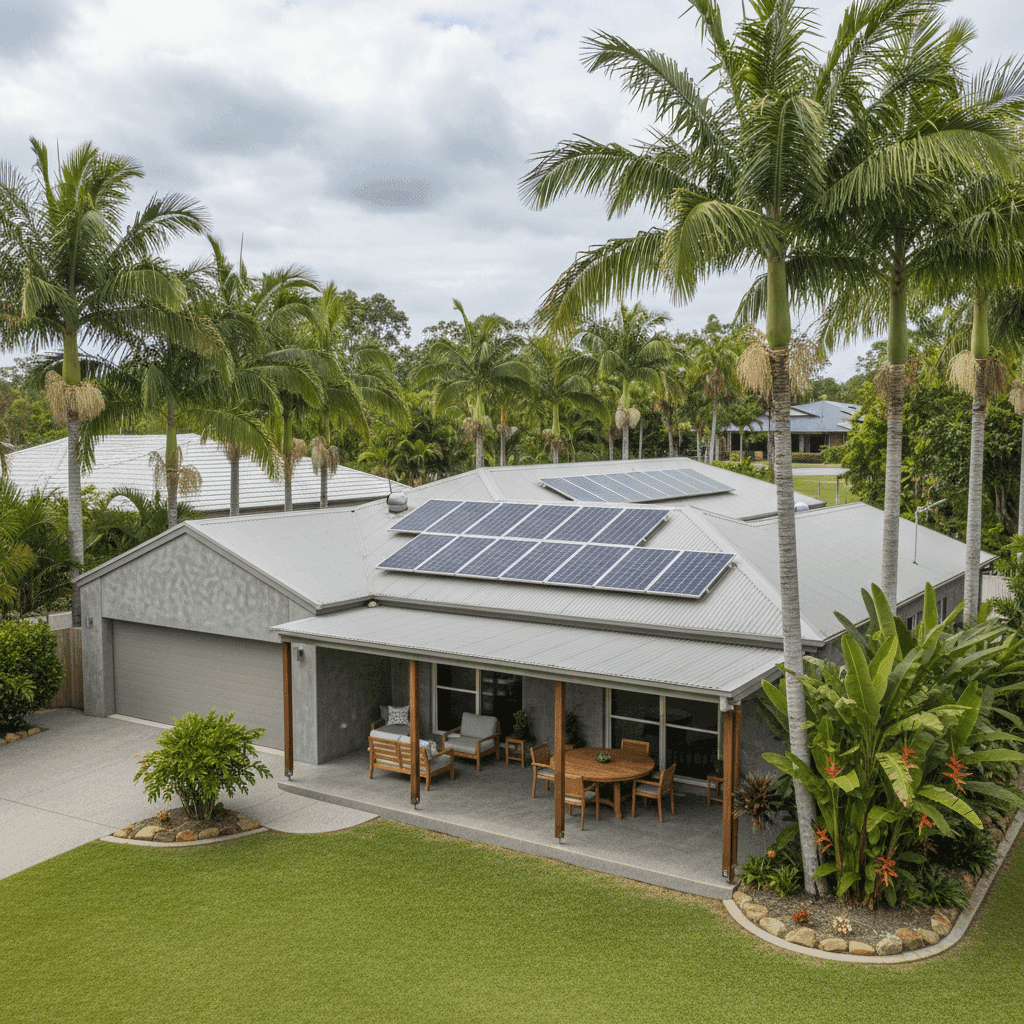
Palm Cove is one of Queensland's most picturesque coastal suburbs — a relaxed beachside village just north of Cairns, known for its esplanade, tropical gardens, and laid-back lifestyle. But owning a home here comes with a very real insurance consideration: this is cyclone country, and premiums reflect that. This article breaks down a recent home and contents insurance quote for a three-bedroom, free-standing home in Palm Cove (QLD 4879), examines how it stacks up against local, state, and national benchmarks, and offers practical guidance for homeowners looking to manage their costs.
---
Is This Quote Fair?
The quote in question sits at $41,412 per year (or $3,969/month) for combined home and contents cover, with a building sum insured of $659,000 and contents valued at $40,000. Both the building and contents excess are set at $2,000.
Our price rating for this quote is Expensive — Above Average.
To put that in perspective: the suburb average for Palm Cove sits at $7,234/yr, with a median of $6,135/yr. This quote is roughly 5.7 times the suburb average and nearly 6.7 times the suburb median — a significant gap that warrants closer examination.
That said, context matters enormously here. The suburb sample size is just 20 quotes, which means the local data has limited statistical depth. Premium variation in cyclone-prone areas can also be extreme depending on the insurer, the specific risk profile of the property, and the level of cover selected. A $659,000 building sum insured is on the higher end for this suburb, and that alone will push the premium upward considerably compared to properties insured for less.
Still, even accounting for those factors, this quote is materially above what most homeowners in the area are paying, and it's worth shopping around.
---
How Palm Cove Compares
Understanding where Palm Cove sits relative to broader benchmarks helps frame just how elevated insurance costs are in this part of Australia.
| Benchmark | Average Premium | Median Premium |
|---|---|---|
| Palm Cove (4879) | $7,234/yr | $6,135/yr |
| Cairns LGA | $12,404/yr | — |
| Queensland | $9,129/yr | $3,903/yr |
| National | $5,347/yr | $2,764/yr |
A few things stand out here. First, the Queensland state average of $9,129/yr is already well above the national average of $5,347/yr — a reflection of the state's exposure to cyclones, flooding, and other severe weather events. Second, the Cairns LGA average of $12,404/yr is the highest benchmark in this comparison, underscoring the elevated risk insurers assign to this region.
Interestingly, the Palm Cove suburb average of $7,234/yr is actually below both the Cairns LGA and Queensland state averages. This may partly reflect the mix of property types and sum insured values in the local sample. The wide gap between the Queensland mean ($9,129) and median ($3,903) also signals a highly skewed distribution — a small number of very expensive policies pulling the average up, which is common in high-risk coastal areas.
---
Property Features That Affect Your Premium
Several characteristics of this property have a direct bearing on the premium calculated by insurers.
Cyclone Risk Area
This is the single biggest factor. Palm Cove falls within a designated cyclone risk zone, and insurers price this risk heavily into premiums for properties in Far North Queensland. Cyclone-related damage — including wind, rain ingress, and storm surge — can be catastrophic, and the cost of rebuilding in a remote coastal location adds further to the insurer's exposure.
Concrete External Walls
Concrete construction is generally viewed favourably by insurers compared to timber or clad weatherboard, as it offers greater resistance to wind and fire damage. In a cyclone-prone area, this is a meaningful risk mitigation factor and may help moderate the premium to some degree.
Steel / Colorbond Roof
Colorbond steel roofing is a popular and practical choice in tropical Queensland. It's durable, lightweight, and performs well in high-wind events when properly installed and secured. Insurers typically view it positively compared to older roofing materials.
Slab Foundation & Tile Flooring
A concrete slab foundation is standard in Queensland and provides solid structural integrity. Tiled flooring is similarly resilient and easy to repair or replace following water damage — a relevant consideration in a region prone to heavy rainfall and storm events.
Solar Panels
Solar panels are listed as a feature of this property. It's important to confirm with your insurer whether the panels are covered under the building policy, as some insurers exclude them or require them to be specified separately. The replacement cost of a solar system can be significant, so this is worth clarifying at renewal.
Ducted Climate Control
Ducted air conditioning is a standard feature in Far North Queensland homes and adds to the overall replacement cost of the property — contributing to the higher building sum insured.
Building Size & Age
At 139 sqm and built in 1998, this is a mid-sized home of moderate age. Properties approaching or exceeding 25 years may attract slightly higher premiums as insurers factor in the potential for ageing infrastructure, plumbing, and electrical systems.
---
Tips for Homeowners in Palm Cove
1. Compare Multiple Insurers — Especially in High-Risk Zones
Premium variation between insurers is far more pronounced in cyclone-risk areas than in lower-risk suburbs. A quote that is double or triple a competitor's price is not unusual in Far North Queensland. Use a comparison service like CoverClub to see multiple quotes side by side and identify whether you're paying a fair price.
2. Review Your Sum Insured Carefully
A $659,000 building sum insured is a substantial figure. Make sure it reflects the actual cost to rebuild the property (not its market value), including demolition, debris removal, and the higher labour costs associated with building in a regional area. Overinsuring unnecessarily inflates your premium, while underinsuring leaves you exposed.
3. Ask About Cyclone Excess Separately
Many insurers in Queensland apply a separate, higher excess specifically for cyclone events — sometimes expressed as a percentage of the sum insured rather than a flat dollar amount. Make sure you understand what your policy's cyclone excess is, as it can be significantly higher than the standard $2,000 excess listed here.
4. Confirm Solar Panel Coverage
As noted above, solar panels are not always automatically covered under a standard building policy. Check your Product Disclosure Statement (PDS) or ask your insurer directly to confirm the panels are included and that the coverage amount is adequate for their current replacement value.
---
Ready to Find a Better Deal?
If this quote has you questioning whether you're getting value for money, you're not alone — many Palm Cove homeowners are paying well above the odds without realising there are more competitive options available. CoverClub makes it easy to compare home and contents insurance quotes tailored to your property. Get a quote today and see how much you could save, or explore the Palm Cove suburb insurance stats to benchmark your current premium against your neighbours.