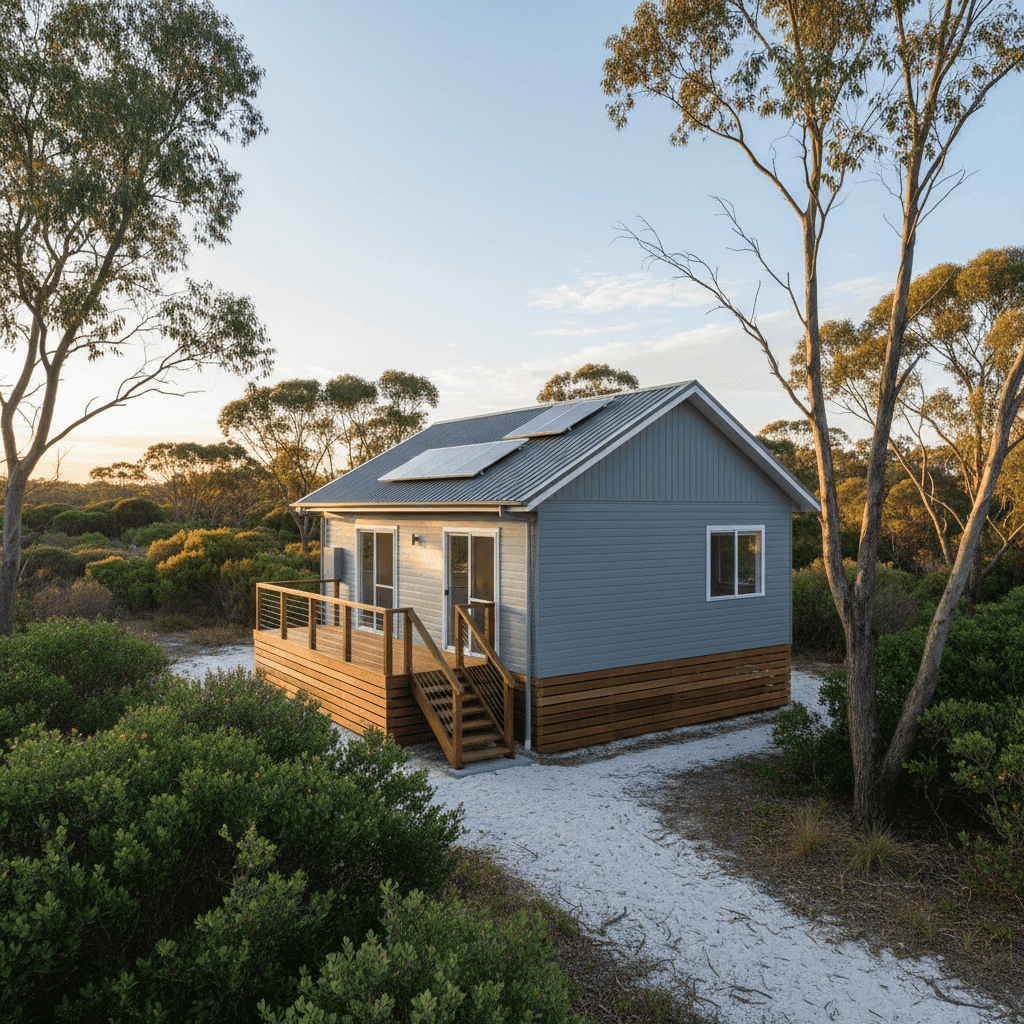
If you own a free standing home in Paradise Beach, VIC 3851, you're living in one of Gippsland's quieter coastal pockets — a relaxed lifestyle destination nestled near the Ninety Mile Beach. But like any property in regional Victoria, insuring your home comes with its own set of considerations. This article breaks down a real home and contents insurance quote for a two-bedroom property in the area, compares it against local, state, and national benchmarks, and offers practical advice to help you get the best value on your cover.
---
Is This Quote Fair?
The quote in question comes in at $2,252 per year (or $216/month) for combined home and contents insurance, with a $500,000 building sum insured and $50,000 in contents cover. Both the building and contents excesses are set at $1,000.
Our price rating for this quote is Expensive — above average for the Paradise Beach area.
To put that in context: the suburb average premium for Paradise Beach sits at $1,680/yr, with a median of $1,655/yr. This quote lands well above both figures — roughly 34% higher than the suburb average. It also sits above the 75th percentile for the area ($2,012/yr), meaning fewer than one in four quotes in this suburb come in this high.
That said, "expensive" doesn't necessarily mean "wrong." Several property-specific features — which we'll explore below — can legitimately push a premium higher than the suburb norm. The key question is whether those features justify the gap, or whether shopping around could close it.
---
How Paradise Beach Compares
Understanding where Paradise Beach sits relative to broader benchmarks helps frame whether this is a localised pricing issue or simply the cost of insuring in regional Victoria.
| Benchmark | Average Premium | Median Premium |
|---|---|---|
| Paradise Beach (suburb) | $1,680/yr | $1,655/yr |
| Wellington LGA | $4,409/yr | — |
| Victoria (state) | $3,000/yr | $2,718/yr |
| National | $5,347/yr | $2,764/yr |
A few things stand out here. First, Paradise Beach premiums are notably lower than the Wellington LGA average of $4,409/yr — suggesting the suburb itself is considered relatively lower risk within the broader local government area. Second, the suburb average is also well below the Victorian state average of $3,000/yr, which is a positive sign for homeowners in the area.
Zooming out further, national average premiums are significantly higher at $5,347/yr (average) or $2,764/yr (median), driven by high-risk areas in Queensland and Western Australia. By that measure, even this "expensive" quote is still quite competitive on a national scale.
The takeaway: Paradise Beach is a relatively affordable suburb to insure — which makes this quote's above-average price rating worth investigating through the lens of the property's specific characteristics.
(Based on a sample of 17 quotes in the Paradise Beach area — a modest sample size, so individual results may vary.)
---
Property Features That Affect Your Premium
Several features of this property are likely contributing to a higher-than-average premium. Here's what insurers are likely weighing up:
Hardiplank / Hardiflex Exterior Walls
Fibre cement cladding like Hardiplank is generally well-regarded by insurers — it's durable, fire-resistant, and low-maintenance. However, it can be more expensive to repair or replace than standard brick veneer, which may nudge premiums slightly higher.
Steel / Colorbond Roof
Colorbond roofing is a popular and practical choice in coastal and rural Victoria. It performs well in high-wind events and is resistant to corrosion. Insurers generally view this positively, though replacement costs for metal roofing can be higher than tiles.
Pole Foundation (Elevated)
This is one of the more significant premium drivers. The home is built on poles and elevated by less than one metre. Elevated homes on pole foundations are common in flood-prone or coastal areas, and insurers factor in the additional structural complexity — both in terms of flood exposure and the cost of repairs to subfloor structures. Even a modest elevation can signal to insurers that the land has a history of water ingress or flooding risk.
Timber / Laminate Flooring
Timber and laminate floors are susceptible to water damage — swelling, warping, and delamination can be costly to rectify. In a coastal environment like Paradise Beach, this is a genuine risk factor that insurers price accordingly.
Above-Average Fittings Quality
The property has been rated as having above-average fittings — think quality kitchen appliances, premium bathroom fixtures, and higher-end finishes. This directly increases the cost to rebuild or repair to the same standard, which flows through to a higher building sum insured and premium.
Solar Panels
The presence of solar panels adds to the replacement cost of the home and introduces additional risk (fire from inverter faults, storm damage to panels). Most insurers include solar panels under building cover, but their value contributes to overall rebuild costs.
---
Tips for Homeowners in Paradise Beach
If you're looking to ensure your cover is both comprehensive and competitively priced, here are four practical steps worth taking:
1. Review your building sum insured regularly. With a $500,000 building sum insured, it's worth checking whether this figure accurately reflects current rebuild costs — not market value. Construction costs have risen significantly in recent years, and being underinsured can leave you seriously out of pocket after a major claim. Use an independent building cost calculator or ask your insurer how the figure was determined.
2. Shop around — especially given the above-average rating. This quote sits above the 75th percentile for the suburb. That's a strong signal to compare at least two or three other quotes before renewing. Different insurers assess pole foundations, fibre cement cladding, and coastal proximity very differently, and you may find meaningfully lower premiums for equivalent cover.
3. Consider your excess strategically. Both excesses are set at $1,000. Increasing your excess — say, to $1,500 or $2,000 — can reduce your annual premium noticeably. If you have the financial buffer to cover a higher excess in the event of a claim, this is often a cost-effective trade-off.
4. Ask about flood and water damage inclusions. Given the elevated pole foundation and coastal location, it's worth scrutinising exactly what your policy covers in relation to flood, storm surge, and water damage. Some policies distinguish between "flood" (rising water from a river or lake) and "storm damage" (rainwater), and exclusions in one area can leave significant gaps in your protection.
---
Compare Your Quote at CoverClub
Whether you're renewing your existing policy or shopping for the first time, it pays to compare. CoverClub makes it easy to benchmark your premium against real quotes from your suburb, your state, and across Australia. Get a quote today and see how your home insurance stacks up — you might be surprised at what's available in your area.